

Soccer - Developing the HK & North American Leagues

  • Welcome to "The New" Wrestling Smarks Forum!

    I see that you are not currently registered on our forum. It only takes a second, and you can even login with your Facebook! If you would like to register now, pease click here: Register

    Once registered please introduce yourself in our introduction thread which can be found here: Introduction Board


PWC2017

Well-Known Member
Joined
Apr 21, 2025
Messages
405
Reaction score
455
Points
63
Age
38

Chapter 49 — Pershing Square, Birmingham, and the Birth of a New Idea (2021–2022)

By 2021, Manson’s relationship with Pershing Square had evolved from exploratory conversations into something far more deliberate. What had begun years earlier as informal dialogue about North American sports ownership had matured into a shared philosophy: long-term asset building, infrastructure first, culture second, and competition as the final layer.

Pershing Square saw in Manson what few others did — a strategist who thought in decades, not cycles.

The Birmingham City Opportunity

The first major convergence of ideas came through English football.

Birmingham City FC represented everything Manson believed modern football ownership had neglected. A historic club. A massive catchment area. Loyal supporters. And yet, underutilised infrastructure, unstable leadership, and no coherent long-term sporting vision.

Throughout 2021, Manson worked closely with Pershing Square advisors to evaluate Birmingham as a case study in football reform:

  • Stadium redevelopment potential
  • Training ground modernisation
  • Academy restructuring
  • A data-driven sporting department aligned with European best practices
Unlike speculative ownership models, the Birmingham plan was rooted in stability and patience. The goal was not immediate promotion at all costs, but controlled growth — creating a club capable of sustaining success rather than chasing it.

By 2022, Pershing Square formally completed its involvement in the Birmingham City takeover, with Manson playing a key strategic role behind the scenes. The club became a living laboratory for ideas that would later influence Project 26: licensing discipline, infrastructure mandates, and a clear separation between governance and football operations.

Birmingham was proof that Manson’s thinking worked outside North America.

Conversations Beyond Football

It was during this same period that discussions between Manson and Pershing Square began to drift beyond football altogether.

Late-night meetings in New York and Las Vegas increasingly touched on a different question:

What would a truly modern combat-sports organisation look like if it were built like football — structured, regulated, global, and sport-first?

Professional wrestling kept resurfacing.

To Manson, wrestling was one of the last major sports-entertainment properties still operating under a closed, territorial mindset. Despite its popularity, it lacked:

  • Transparent rankings
  • Weight divisions treated as legitimate competitive classes
  • Win–loss records that truly mattered
  • Independent governance
Pershing Square saw the commercial upside. Manson saw the structural flaw.

By late 2022, the idea had crystallised: a new professional wrestling promotion, built from the ground up with the same principles guiding Project 26 — legitimacy, global governance, weight classes, and sporting credibility.

It wouldn’t be rushed.
It wouldn’t be loud.
And it wouldn’t be announced.

Not yet.

Internally, the project began to take a name — New World Pro-Wrestling.

The thinking was familiar by now. Lay foundations quietly. Build the framework. Secure talent and governance. Let the market catch up later.

Football remained the priority, but something new had begun to form alongside it — another long-term play, driven by the same belief that sport could be better if it was built properly from the start.

By the end of 2022, Manson was no longer working on just one future.

He was shaping two.
 

PWC2017

Well-Known Member
Joined
Apr 21, 2025
Messages
405
Reaction score
455
Points
63
Age
38

Chapter 50 — 2023: The Apple Deal and the Future of MLS Broadcasting

By 2023, years of quiet negotiation, strategic leaks, and parallel bidding processes reached a decisive moment. What began as exploratory dialogue under Don Garber had evolved into a full-scale rethink of how top-level football in the United States and Canada would be consumed.

That moment arrived with the formal confirmation of the Apple deal.

The Agreement

In early 2023, MLS and Apple officially agreed to a five-year exclusive streaming partnership, set to run from:

August 2026 through the conclusion of the 2030–31 season

The deal was deliberately aligned with:

  • The launch of the new MLS three-division pyramid
  • The transition to the World Soccer Calendar (July–May)
  • The first season of promotion and relegation in North American top-flight football
It was no coincidence. MLS wanted a clean break — structurally and commercially.

What the Deal Covered

The Apple agreement applied only to MLS competitions, specifically:

  • MLS Super League
  • MLS Second League
  • MLS Third League
Every MLS league match would be:

  • Streamed live
  • Available globally
  • Housed on a single platform
  • Free from regional blackouts
For the first time, MLS would operate like a modern global league — one subscription, one destination, every match.

This was a defining philosophical shift. Centralised access replaced fragmented regional deals. Fans no longer had to hunt for games. Clubs gained consistent global exposure regardless of market size.

The Linear TV Exception

Notably, not every MLS match would be exclusive to Apple.

As part of Manson’s insistence on maintaining a traditional broadcast footprint, a secondary linear television package was carved out:

  • A select number of high-profile weekly matches
  • Rivalries, opening weekends, title races, and promotion/relegation deciders
  • Matches deemed part of the main TV package
These fixtures would air on linear networks while remaining excluded from Apple’s exclusivity window, ensuring:

  • Maximum reach for marquee games
  • Continued relevance on traditional television
  • Strong advertising value for sponsors
Apple accepted the structure, understanding that scarcity — not total exclusivity — would protect long-term value.

Why Apple Made Sense

From MLS’ perspective, Apple offered what no traditional broadcaster could:

  • Guaranteed global distribution
  • Predictable long-term revenue
  • No dependency on ratings-based renewals
  • Full control over scheduling
For Manson, the appeal was even more strategic.

Apple’s platform ensured that promotion and relegation — a concept unfamiliar to many North American fans — would be:

  • Explained
  • Visualised
  • Normalised through consistent storytelling
Every match mattered. Apple’s interface would reflect that.

A Line Drawn

The announcement sent a clear message across the football landscape:

  • MLS was no longer building around franchises
  • It was building around competition
  • And it was doing so with a global audience in mind
NASL, regional leagues, and national competitions would follow different broadcast paths, but the signal was unmistakable. The top of the pyramid had chosen its partner.

By the end of 2023, with Apple locked in and the league structure confirmed, there was no longer any doubt.

Project 26 was no longer theoretical.
It was scheduled, funded, and broadcast-ready.
 
  • Like
Reactions: El Hijo Del Ami

PWC2017

Well-Known Member
Joined
Apr 21, 2025
Messages
405
Reaction score
455
Points
63
Age
38

Chapter 51 — 2023: CBS Enters the Pyramid

If the Apple announcement defined the digital future of MLS, the confirmation of the CBS deal cemented its place on traditional television.

Later in 2023, MLS formally announced a landmark linear broadcast agreement with CBS, completing the broadcast framework that Manson, Garber, and McDonough had been quietly assembling since 2021.

The message was clear:
this new pyramid would live everywhere — streaming and linear, domestic and global.

The CBS Package

CBS committed to a weekly slate of seven live matches, spread deliberately across all three professional tiers:

  • 4 matches per week from the MLS Super League
  • 2 matches per week from the MLS Second League
  • 1 match per week from the MLS Third League
This structure was intentional.

Manson believed promotion and relegation could only succeed if fans were exposed to the entire ecosystem, not just the top division. By placing Second and Third League matches consistently on national television, CBS helped legitimise every level of the pyramid.

No league was hidden.
No division was treated as secondary.

Playoffs and Finals

Beyond the regular season, CBS also secured rights to:

  • All MLS promotion and relegation Playoff matches
  • Playoff Finals in the Second and Third Leagues
  • Key end-of-season Super League fixtures tied to:
    • Title races
    • Relegation battles
    • Continental qualification
These matches were viewed as made-for-television drama — high stakes, emotional, and easily understood by American audiences familiar with postseason tension.

For CBS, the playoffs were the crown jewel.
For MLS, they were the bridge between American sports culture and global football tradition.

Why CBS Was the Right Partner

CBS offered what other networks could not:

  • A proven football portfolio
  • Experience with European competitions
  • Flexibility across CBS, CBS Sports Network, and Paramount+
  • Willingness to invest in storytelling across divisions
Crucially, CBS understood Manson’s core belief:

Relegation fights rate as well as title races — sometimes better.
Rather than fearing the concept, CBS leaned into it.

The Completed Broadcast Model

By the end of 2023, the broadcast structure was fully defined:

  • Apple TV
    • All MLS matches live
    • Global streaming
    • August 2026–2031
  • CBS (Linear TV)
    • 7 matches per week
    • Coverage across all three divisions
    • Full playoff and playoff final rights
Together, they created a system where:

  • Hardcore fans never missed a match
  • Casual fans encountered the league weekly
  • Every club had a national platform

Reaction Across the Game

Owners who had once feared relegation began to see opportunity.
Lower-division clubs saw visibility.
Sponsors saw inventory.

Most importantly, players and supporters realised something fundamental had changed.

This was no longer a closed league experiment.
This was a living football pyramid, broadcast nationally, debated daily, and finally treated as sport rather than franchise entertainment.

By the close of 2023, MLS was no longer preparing for change.

It was broadcasting it.
 

PWC2017

Well-Known Member
Joined
Apr 21, 2025
Messages
405
Reaction score
455
Points
63
Age
38

Chapter 53 — Progress, Not Perfection

By late 2023, as Project 26 moved from theory into implementation, Matthew Manson was increasingly asked the same question by media, owners, and critics alike:

“Will every club be ready?”

The honest answer was simple.

No.

And that, in Manson’s view, was not a failure — it was reality.

Accepting the Imperfect Starting Line

From the outset, Project 26 was never built on the idea of instant uniformity.

North American football had grown inside a franchise ecosystem for decades. Stadiums were shared, leases were complex, and land acquisition in major cities often took years, not months.

Manson understood that expecting every club to:

  • Own land
  • Build a soccer-specific stadium
  • Control all matchday revenue
by 2026 was unrealistic.

What mattered was direction, not completion.

Baseball Parks and College Stadiums

By 2023, it was clear that:

  • Several clubs would continue playing in baseball stadiums
  • Others would remain in college football venues
  • A handful would still share multi-purpose facilities
These situations were not ideal.
Sightlines were imperfect.
Scheduling conflicts existed.

But forcing clubs to move before they were financially or logistically ready would risk collapse — the very thing Project 26 was designed to avoid.

Manson was adamant:

Sustainability comes before aesthetics.


The Licensing Philosophy

Rather than hard capacity rules or arbitrary benchmarks, licensing under the new pyramid was built around ownership and control.

Clubs had to demonstrate:

  • A clear stadium strategy
  • Legal access to matchday revenue
  • Training facilities under club control
  • A realistic timeline for stadium development
The requirement was not size.

It was intent and ownership.

A 6,000-seat stadium owned by the club was valued more highly than a 40,000-seat venue rented year-to-year.

Momentum Across the Pyramid

Despite the challenges, progress was undeniable.

By the end of 2023:

  • A significant percentage of MLS and NASL clubs had:
    • Broken ground on new stadiums
    • Secured land
    • Announced relocation timelines
  • USL and regional clubs were following similar paths, scaled to their markets
  • Smaller clubs, once ignored, were now investing in infrastructure for the first time
For many communities, this was the first moment football felt permanent.

2026 as a Milestone, Not a Finish Line

Manson consistently framed 2026 as a beginning.

Promotion and relegation would start then.
The pyramid would become operational then.
The calendar would align then.

But the true transformation — stadiums, academies, identities — would take another decade.

And that was acceptable.

You don’t build a football culture overnight, Manson often said.
You give it somewhere to live.

A Cultural Shift

Perhaps the most important change wasn’t concrete or steel.

It was mindset.

Clubs that once chased short-term survival were now planning ten years ahead.
Owners were thinking in generations, not seasons.
Cities were beginning to see football clubs as civic institutions, not entertainment assets.

Perfection could wait.

Progress could not.

Looking Ahead

As 2023 closed, Project 26 stood on imperfect ground — but solid foundations.

Some clubs would stumble.
Some timelines would slip.
Some stadiums would take longer than promised.

But the direction was set.

And for the first time in North American soccer history, everyone was walking the same way.

Forward.
 

PWC2017

Well-Known Member
Joined
Apr 21, 2025
Messages
405
Reaction score
455
Points
63
Age
38

Chapter 54 — Identity, Place, and the Power of a Name

As the structure of the new pyramid solidified, Matthew Manson turned his attention to something less tangible than stadiums or broadcast contracts — but just as important.

Identity.

By 2023, Manson believed North American football had reached a point where clubs could no longer hide behind abstract branding, corporate naming, or vague regional identities. If promotion and relegation were going to mean something, clubs needed to belong unmistakably to a place.

That belief drove one of the most personal and, at times, contentious phases of Project 26.

A Relentless Schedule of Conversations

Throughout 2023 and into early 2024, Manson’s calendar was dominated by meetings:

  • On-site visits with ownership groups
  • Late-night video calls across time zones
  • Long conversations about history, community, and compromise
Some owners welcomed the discussion.
Others resisted it.

But Manson was consistent.

If your club doesn’t sound like it belongs somewhere, people won’t treat it like it does.


Undoing the Franchise Era

Many club identities were products of a closed-league, franchise-first era — names designed for merchandising rather than belonging.

Manson’s objective wasn’t to erase history.
It was to reconnect it.

Several key changes emerged from those discussions.

Confirmed Identity Changes

Ottawa

  • Atlético OttawaOttawa Fury
    A return to a name with existing emotional equity in the city, restoring continuity rather than importing identity.
New Mexico

  • New Mexico UnitedAlbuquerque United
    A move toward city-first identity, anchoring the club firmly in its metropolitan base.
North Carolina

  • North Carolina FCRaleigh RailHawks
    A revival of a name deeply associated with the region’s football history and supporter culture.
Rhode Island

  • Rhode Island FCProvidence Islanders
    A name that reflected both geography and identity, tying the club unmistakably to its home city.

The Canadian Push: Cities First

Nowhere was Manson more deliberate than in Canada.

Working closely with Canadian federation officials and club owners, he pushed for clear city identification across the former Canadian Premier League, ahead of its transition under the NASL umbrella.

The objective was consistency — and clarity.

By late 2023, the proposed identities were aligned as follows:

  • Victoria Pacific FC
  • East Vancouver FC
  • Halifax Wanderers
  • Ottawa Fury
  • Winnipeg Valour
  • Hamilton Forge
  • Calgary Cavalry
  • York United FC
Some names required minimal change.
Others were reshaped deliberately to emphasize city over region, community over concept.

Resistance and Reality

Not every owner was enthusiastic.

Some worried about:

  • Merchandise resets
  • Brand recognition
  • Short-term revenue disruption
Manson didn’t dismiss those concerns — but he challenged the premise.

Short-term comfort is not the same as long-term value.
He pointed repeatedly to Europe and South America, where clubs tied to cities survived relegation, ownership changes, and decades of upheaval — precisely because their identity was immovable.

Why Names Mattered in a Pyramid

In an open system, names weren’t cosmetic.

They were functional.

Promotion and relegation required:

  • Local pride
  • Emotional attachment
  • A sense of loss and achievement
A club named after a state, a sponsor, or a vague idea struggled to carry that weight.

A club named after a city did not.

Quiet Wins

By early 2024, the results were visible:

  • Supporter groups responded positively
  • Local media narratives became clearer
  • Municipal partnerships strengthened
  • Clubs began to feel less like franchises and more like institutions
It wasn’t dramatic.
There were no press conferences.

But it mattered.

Manson’s Long View

For Manson, this phase of Project 26 was deeply personal.

He had seen in Hong Kong what happened when clubs floated without roots.
He had watched North American teams disappear without trace.

This was his safeguard.

Stadiums can be rebuilt. Owners can change. Leagues can evolve.
But if a club belongs to a place, it survives.
As the pyramid edged closer to reality, the names on the shirts finally began to match the cities in the stands.

And that, Manson believed, was how football truly began.
 

PWC2017

Well-Known Member
Joined
Apr 21, 2025
Messages
405
Reaction score
455
Points
63
Age
38

Chapter 55 — Homes of the Pyramid (Confirmed Stadiums for 2026)

By late 2024, there was no longer any ambiguity.

What had once been feasibility studies, renderings, land options, and political discussions were now signed, funded, and approved projects. As part of the final licensing confirmations ahead of August 2026, every club listed below formally committed to opening the new era inside a permanent home.

For Matthew Manson, this moment mattered as much as the pyramid itself.

Promotion and relegation could not exist on temporary ground.
Football clubs could not be institutions without addresses.

From 2016 onward, the stadium strategy had been deliberate: urban, identifiable, soccer-first, and owned or controlled by the club. Some were bold landmarks. Others were intimate neighborhood grounds. All were permanent.

By Summer 2026, the following stadiums were confirmed to open or be in full operation.

Flagship & Super League Stadiums

Philadelphia Union

South Philadelphia Stadium26,500
A brick-and-steel urban stadium designed to integrate with South Philly’s sports corridor. Steep single-tier stands, safe-standing sections behind both goals, and a public plaza connecting matchdays to year-round commercial use.

Inter Miami

Freedom Park25,000
A palm-lined, modern venue forming the centerpiece of a mixed-use district. Designed with open concourses, shaded seating, and a strong Latin American aesthetic, anchoring football firmly within Miami’s civic fabric.

Vancouver Whitecaps

Hastings Racecourse Stadium33,000
A dramatic coastal redevelopment with mountain sightlines. Hybrid roof structure, wide concourses, and strong transit connectivity, built to host both league and international fixtures.

New York City FC

Etihad Park, Queens26,000
Compact, vertical design inspired by European urban grounds. Close proximity to the pitch, covered stands on all sides, and integrated community football facilities beneath the main stand.

Chicago Fire

The 78 Stadium28,500
A river-adjacent stadium within one of the city’s largest new developments. Industrial design language, rail-accessible, with an emphasis on supporter culture and downtown visibility.

Salt Lake City Saints

North Temple Street Stadium31,000
A bold, cathedral-style design reflecting regional identity. Stone facades, enclosed bowl, and a strong downtown presence tied directly to light rail.

Denver Rapids

Ball Arena District Stadium28,500
Urban infill project replacing surface parking. High-altitude pitch design, steep seating, and shared district infrastructure with existing downtown sports venues.

Boston Pride

Everett Stadium24,500
A compact waterfront venue with brick detailing and industrial heritage cues. Designed to fit tightly into the urban grid while creating a hostile home atmosphere.

The Super Clubs

New York Cosmos

Harlem Rail Yards Stadium41,500
A statement venue. Large-scale, iconic, and unapologetic. Rail-inspired architecture, multi-tiered bowl, and designed to host continental finals and international events.

Los Angeles Aztecs

Anaheim Stadium District42,500
Southern California’s football cathedral. Open bowl design, canopy roof, and a festival-style concourse. Built to reflect the scale and ambition of the Aztecs brand.

Detroit Express

Corktown Stadium27,500
Industrial-modern aesthetic with exposed steel and brick. Integrated supporter bars, rail access, and deep community integration within Detroit’s rebirth narrative.

Baltimore Athletic

Fallsway Stadium27,000
Downtown, walkable, and tightly packed. Traditional English-inspired design with four distinct stands and a strong emphasis on atmosphere.

Golden City (San Francisco)

Kezar Stadium Redevelopment26,500
Historic ground reborn. Modern bowl within preserved outer structure. Community-first design respecting Golden Gate Park’s footprint.

Club Deportivo Las Vegas

Hidden Well Drive Stadium26,000
Desert-modern architecture with full canopy roofing. Built for night matches, climate efficiency, and spectacle, located south of the Strip near the airport corridor.

Established & Growth Clubs

Indy Eleven

Eleven Park20,000
A football-first venue with safe-standing ends and mixed-use integration. Designed as a community hub seven days a week.

Sacramento Republic

Railyards Stadium22,000
Rail-inspired architecture, enclosed bowl, and downtown connectivity. Designed to grow with the club.

Albuquerque United

Balloon Fiesta Park Stadium12,500
High-desert design with shade structures and expansion-ready stands. Community-driven and accessible.

Oakland Roots

Howard Terminal Stadium25,000
Waterfront stadium blending port heritage with modern football culture. Designed for atmosphere over scale.

Cleveland City FC

Canal Road Stadium14,000
Compact urban venue with steep seating and strong local character.

FC NOLA

River City Stadium20,000
New Orleans-inspired design, open concourses, and festival zones.

Memphis 901

Desoto Bayou Stadium18,000
Southern industrial aesthetic with community fields and academy facilities integrated.

OKC Energy FC

Bricktown Stadium16,500
Downtown infill with strong supporter sections and mixed-use surroundings.

Sporting Club Jacksonville

Gator Bowl Blvd Stadium12,000
Riverfront design with future expansion capability.

Regional & NASL Foundations

Every remaining NASL and regional club — from Milwaukee Iron’s Iron District to St. Paul United’s Union Depot — confirmed purpose-built or fully controlled stadiums designed to match their scale, market, and ambition.

Capacities ranged from 5,000 to 18,500, but the criteria were identical:

  • Soccer-specific
  • Club-controlled
  • Permanent
No exceptions.

The Moment It Became Real

By confirming every stadium ahead of 2026, Manson had quietly achieved what many believed impossible in North America.

Not perfection.
But permanence.

Leagues rise and fall on results.
But football survives on place.
When the first ball was kicked in August 2026, every club would do so from home.
 
Last edited:

PWC2017

Well-Known Member
Joined
Apr 21, 2025
Messages
405
Reaction score
455
Points
63
Age
38

Chapter 56 — South America Aligns (2024)

By 2024, what had once sounded radical was no longer hypothetical.

For nearly a decade, Matthew Manson had argued that a true World Soccer Calendar could only exist if the biggest footballing regions moved together. Europe alone was not enough. North America could not move in isolation. And without South America — football’s emotional and technical heartbeat — alignment would be impossible.

That year, the breakthrough finally came.

The CONMEBOL Shift

In a joint series of announcements across Buenos Aires, São Paulo, and Asunción, CONMEBOL confirmed a historic reform package that would take effect from the 2026–27 season.

At its core were two fundamental changes:

  1. A move to a July/August–May calendar
  2. The end of split-season formats
For leagues that had lived for generations with Apertura and Clausura, it was nothing short of seismic.

Brazil Leads the Way

Brazil were first to commit.

After extensive consultation with clubs, broadcasters, and the CBF, the Campeonato Brasileiro Série A confirmed:

  • Transition to an August–May calendar
  • Retention of a single-table league format
  • A revised domestic cup schedule aligned with continental competitions
Brazil’s reasoning was pragmatic:

  • Improved alignment with global transfer windows
  • Reduced fixture congestion with Libertadores
  • Greater commercial coherence with European and North American broadcasters
Once Brazil moved, momentum followed.

Argentina Ends the Split Season

Argentina’s announcement carried the greatest symbolic weight.

The AFA confirmed:

  • The abolition of Apertura and Clausura
  • A permanent return to a single-table championship
  • Calendar alignment beginning August 2026
For decades, Argentine football had oscillated between formats, often driven by short-term politics. This time, the decision was framed as structural and irreversible.

Privately, officials acknowledged that continental alignment — and growing integration with North American competitions — had made the old system untenable.

A Continental Decision

Following Brazil and Argentina, confirmations quickly arrived from across South America:

  • Chile — Single-table, August–May
  • Colombia — Gradual phase-out of split seasons
  • Uruguay — Calendar alignment with modified domestic cups
  • Paraguay & Ecuador — Unified schedules aligned with CONMEBOL tournaments
By the end of 2024, CONMEBOL formally ratified the changes, confirming that all major leagues would operate on a unified calendar by 2026.

Why It Mattered

For Manson, this was one of the most important moments of Project 26 — even though it happened thousands of miles from North America.

Calendar alignment meant:

  • Clean continental scheduling
  • Fairer international qualification
  • Synchronised transfer windows
  • Legitimate integration of U.S. and Canadian clubs into CONMEBOL competitions
It also removed one of the final arguments against promotion and relegation in North America.

There was no longer a scheduling excuse.
No longer a continental mismatch.

Quiet Influence

Manson was not on stage for the announcements.
He gave no interviews.
His name was not mentioned.

But inside football governance circles, it was understood.

The conversations that began in 2018, the lobbying through 2020, the framework discussions of 2021–2023 — all of it had contributed to this moment.

A senior South American official put it simply:

“Once North America committed, we had no reason not to.”

The World Soccer Calendar Becomes Real

By the close of 2024, the picture was clear:

  • Europe: August–May
  • South America: August–May
  • North America: August–May
  • Continental competitions: Fully aligned
What had once been a theory now had dates.

And with that, the final structural pillar of the new football era locked into place.

The world was ready.

Now the leagues had to prove they deserved it.
 

PWC2017

Well-Known Member
Joined
Apr 21, 2025
Messages
405
Reaction score
455
Points
63
Age
38

Chapter 57 — The New Clubs (August 2026)

The stadiums had been confirmed.
The calendar was aligned.
Now came the final piece — the clubs themselves.
By the spring of 2024, league officials quietly acknowledged that expansion was no longer speculative. These were not bids or concepts. These were institutions in formation, backed by ownership groups with capital, land agreements, and long-term sporting models already approved.
All would enter competition in August 2026, together.


The Super Club Era

At the top of the structure sat the Big 6 Super Clubs — global-facing institutions designed from day one to operate at Champions League scale. Their identities, stadiums, and commercial strategies had been finalized earlier, and their admission was never in doubt.
They were the standard-bearers.
The financial anchors.
The global broadcast drivers.
But beneath them — and just as important — was the next tier.
These were clubs built not to dominate headlines, but to anchor cities, revive football cultures, and prove that the new pyramid worked at every level.


Confirmed Expansion Clubs (August 2026 Entry)

Ottawa Fury

Ownership: Ottawa Sports and Entertainment Group
Revived under stable, multi-sport ownership, Ottawa Fury returned as a national capital club with deep institutional backing. Designed to represent Eastern Canada in the new pyramid, the Fury emphasized youth development and regional identity over celebrity spending.


Cleveland City FC

Ownership: Michael Murphy & Nolan Gallagher
A purpose-built club for a football-hungry market. Cleveland City FC positioned itself as a blue-collar, supporter-driven institution, mirroring the city’s sporting ethos while operating with disciplined financial controls and strong academy investment.


FC NOLA

Ownership: Gale Benson
New Orleans’ long-awaited top-tier football project arrived with credibility and permanence. Backed by Saints ownership, FC NOLA embraced a cultural-first identity, blending local heritage with modern infrastructure and strong regional scouting across the Gulf Coast.


Centro Dallas

Ownership: TPG Inc.
Perhaps the most strategically ambitious of the group. Centro Dallas was built to capture the heart of American player development, operating as a hub club tied directly to elite academies and international recruitment pipelines. Less spectacle — more production.


Milwaukee Iron

Ownership: Kacmarcik Enterprises
Milwaukee Iron embodied the league’s industrial roots philosophy — strong branding, community ownership principles, and a clear regional footprint. The club committed early to infrastructure and supporter culture as its competitive edge.


Buffalo City FC

Ownership: Terry Pegula & Arctos Partners
With NFL- and NHL-proven ownership, Buffalo City FC entered with immediate credibility. Designed as a year-round football venue club, Buffalo aimed to become a northern powerhouse built on infrastructure, analytics, and long-term squad continuity.


Fort Lauderdale Strikers

Ownership: CVC Capital
A historic name reborn with modern ambition. The Strikers’ return was framed as a global investment platform, blending South American recruitment, European commercial strategy, and Florida’s international appeal.


St Paul United

Ownership: RedBird Capital
RedBird’s involvement ensured a multi-league, data-driven approach. St Paul United was positioned as a technically sophisticated club, prioritizing sporting directors and development pipelines over marquee signings.


Tucson Sun

Ownership: Sun Capital Partners
Built for climate, culture, and cross-border engagement, Tucson Sun leaned into its Southwest identity, acting as a bridge club between U.S. and Mexican football markets with a strong emphasis on regional talent.


Boise Bears

Ownership: Brad Stith, Steve Patterson, David Wali & Bill Taylor
A model small-market club. Boise Bears focused on sustainability, local engagement, and smart recruitment. Their admission was seen as proof that the new system wasn’t only for megacities.


Glendale Monsoon

Ownership: Michael Bidwill
With NFL ownership backing, Glendale Monsoon entered as a commercially disciplined, infrastructure-first club, leveraging Arizona’s population growth and sports market maturity.


Billings FC

Ownership: Main Street Sports Group & Steven Titus
A frontier club in every sense. Billings FC represented the league’s commitment to geographic breadth, regional loyalty, and long-term football education in underserved markets.


Des Moines City FC

Ownership: Jeff Lamberti & Orchard View Sports & Entertainment
Purpose-built for stability, Des Moines City FC emphasized municipal partnerships and academy development, positioning itself as a long-term pyramid fixture rather than a speculative expansion.


Tacoma Stars

Ownership: Redpoint Ventures
Reviving a historic name with modern backing, Tacoma Stars leaned into Pacific Northwest football culture, analytics-led operations, and tech-sector ownership philosophy.

A Different Kind of Expansion

What separated this group from previous eras of American expansion was simple:
  • No temporary venues
  • No speculative ownership
  • No short-term survival models
Every club entered with:
  • Stadium certainty
  • Long-term capital commitments
  • Promotion-and-relegation readiness
They were not “franchises waiting to be tested.”
They were clubs.
 

PWC2017

Well-Known Member
Joined
Apr 21, 2025
Messages
405
Reaction score
455
Points
63
Age
38

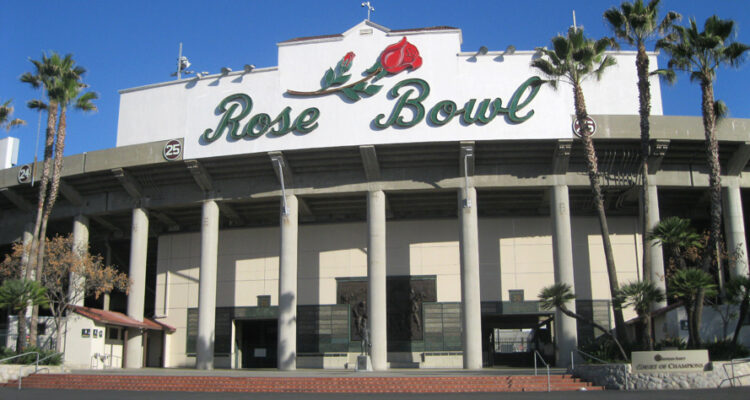
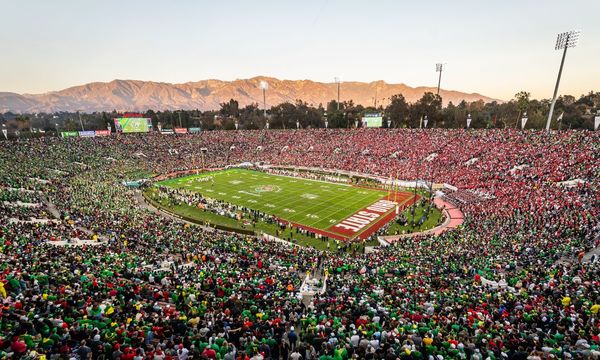
Chapter 58 — The Rose Bowl - The New Home of North American Soccer


https://www.laconservancy.org/wp-content/uploads/2022/11/AFTER-Rose-Bowl-exterior-by-DAIQ-750x400.jpg

https://media.sciencephoto.com/image/c0575594/800wm/C0575594.jpg

https://img-estaticos.atleticodemadrid.com/system/file5s/92875/medium2x2/a8VFaVqCJy_rose_bowl.jpg?1748706383=


By the time the league structures, calendars, and clubs were confirmed, one final question remained unanswered:

Where would American football crown its champions?

For Manson, this was never a secondary detail. He believed that if the new pyramid was to feel real — unified, historic, and nationally significant — it required a single focal point, a place that belonged not to one club, but to the entire game.

A national football home.

Why a National Focal Point Mattered


From the outset, Manson argued that domestic finals scattered across rotating venues diluted meaning. Finals should not feel temporary or opportunistic. They should feel earned — and anticipated years in advance.

His vision was clear:
  • One stadium
  • One destination
  • One stage for the biggest moments

Every SuperCup Final.
Every MLS Play-Off Final, across two divisions.

A shared destination where history accumulated season after season.

Why Not the Middle of the Country?


Internally, the first debates were geographical.

On paper, a more central U.S. location made sense — better average travel distances, less coastal bias. Cities like Dallas, Kansas City, or even Chicago were considered in early conversations.

But Manson pushed back.

Finals were not just sporting events — they were global broadcasts, multi-day spectacles, and cultural moments. Reliability mattered more than symmetry.

And that is where Los Angeles separated itself.

Why Los Angeles Won


Los Angeles offered three advantages no other city could combine:

  1. Weather Certainty
    Finals scheduled for late May or early June required near-guaranteed conditions. Southern California eliminated weather risk entirely.
  2. Global Accessibility
    Los Angeles International Airport and its surrounding hubs provided unmatched connectivity. Direct flights from virtually every major U.S. and Canadian city — and easy international access — made travel predictable for fans, media, and teams.
  3. Cultural Neutrality
    Unlike traditional club cities, Los Angeles could host finals without feeling like home territory. It was neutral ground — a destination rather than a fortress.

Once Los Angeles was agreed, the stadium decision followed naturally.

The Rose Bowl Decision


There was no modern stadium debate.

Manson wanted heritage, not novelty.

The choice was the Rose Bowl Stadium.

A venue synonymous with American sporting history, capable of holding national-scale crowds, and visually unmistakable on broadcast.

It was not the newest stadium.
It was not the most technologically advanced.

But it meant something.

The 25-Year Agreement


In late 2023, negotiations concluded with a landmark agreement:

  • 25-year exclusive deal
  • The Rose Bowl to host:
    • All SuperCup Finals
    • All MLS Play-Off Finals ( Second League, Third League)
  • Finals locked in annually through 2048

The deal was intentionally long-term. Manson wanted generations of players and supporters to grow up knowing exactly where championships were decided.

Just as Wembley defined English football, the Rose Bowl would define this new era.

More Than a Stadium


The Rose Bowl was not positioned as just a venue — it became part of the competition’s identity.

  • Finals weekends would be multi-day events
  • Fan festivals would take over Pasadena
  • Youth finals, legends matches, and league ceremonies would surround the main event
The message was simple and deliberate:


This is where American football history is written

A Symbol of Permanence

In many ways, the Rose Bowl decision symbolized everything Manson was trying to build.

Not speed — but permanence.
Not experimentation — but belief.
Not fragmentation — but unity.

When the first SuperCup Final kicked off in Pasadena, it would not feel like a one-off event.


It would feel like something that had always been meant to be there —
and always would be.
 
Last edited:

PWC2017

Well-Known Member
Joined
Apr 21, 2025
Messages
405
Reaction score
455
Points
63
Age
38

Chapter 59 — Commercial Foundations: League & Cup Sponsorship

By the time the sporting structure was settled, Manson turned his attention to something far less romantic — but just as essential.

Money.

Not reckless spending, not short-term sugar highs, but predictable, sustainable commercial income that could underpin the pyramid for decades. Sponsorship, in Manson’s view, was not simply about logos on sleeves or banners around pitches. It was about shared growth.

If the leagues were going to ask clubs to invest in stadiums, training facilities, academies, and staff, then the league itself had a responsibility to generate meaningful revenue streams in return.

Everything Open for Tender

Unlike previous eras of North American soccer, nothing was pre-assigned or inherited.

From 2022 onward, all major competitions were opened to competitive tender, including:

  • The National SuperCup
  • The MLS Super League
  • The MLS Second League
  • The MLS Third League
  • NASL East & West Conference Leagues
  • NASL Interstate and State Leagues
Each competition was treated as its own commercial product, with different audiences, values, and sponsorship profiles.

This modular approach allowed flexibility — and prevented one sponsor from dominating the entire ecosystem.

The Philosophy Behind Sponsorship

Manson’s belief was clear:

Sponsorship income should not disappear into league offices — it should flow back into the clubs.
The model was built around three pillars:

  1. Central Sponsorship Deals
    League-level sponsors would fund:
    • Prize money
    • Solidarity payments
    • Operational costs
  2. Performance-Based Distribution
    Clubs would earn money based on:
    • Final league position
    • Promotion or survival
    • Cup progression
  3. Protection for Smaller Clubs
    NASL and lower-league sponsorships were structured to ensure:
    • Guaranteed minimum payments
    • Travel and operational cost support
    • No financial cliff edges after relegation
The aim was not to widen the gap between rich and poor — but to raise the floor across the pyramid.

The SuperCup as a Commercial Anchor

The National SuperCup was seen as the crown jewel.

An open competition.
Every club eligible.
Every round televised.

Sponsors were drawn to three key elements:

  • David vs Goliath narratives
  • Guaranteed national exposure
  • A fixed annual Final at a national stadium
Manson wanted the SuperCup sponsor to feel like a partner in storytelling, not just branding. The right sponsor would grow alongside the competition, year after year.

League Sponsorship & Prize Money

Each MLS division would carry its own title sponsor, allowing:

  • Different market positioning
  • Different financial thresholds
  • Clear separation between tiers
Crucially, league position mattered financially.

Even a move from 12th to 10th place carried tangible reward.

Promotion meant:

  • Immediate commercial uplift
  • Higher sponsorship distributions
  • Increased media exposure
Relegation still hurt — but it was no longer fatal.

NASL and Regional Identity

For NASL Conference and State leagues, sponsorship was handled differently.

These deals focused on:

  • Regional brands
  • Infrastructure partners
  • Community-facing sponsors
The logic was simple:
A club playing in front of 5,000 people didn’t need the same sponsor as one playing in front of 40,000 — but it still deserved stability.

Regional sponsorships reinforced local identity, something Manson had learned years earlier in Hong Kong.

No Naming the Clubs

One line was never crossed.

Sponsors could name:

  • Competitions
  • Awards
  • Tournaments
They could not name clubs.

No sponsored team names.
No corporate rebrands.
No identity-for-sale culture.

Clubs belonged to their cities — not balance sheets.

Long-Term Thinking

Most sponsorship contracts were structured on 4–6 year cycles, deliberately aligned with the 2026 launch and the first phase of the pyramid.

The objective was stability, not churn.

By the time promotion and relegation began, clubs would already understand:

  • What league survival was worth
  • What promotion unlocked
  • What a deep cup run could fund
Success would no longer be abstract.

It would be measurable.

Revenue as Responsibility

For Manson, sponsorship wasn’t about excess.

It was about responsibility.

If the league was asking clubs to take risks — to build, to invest, to dream — then it owed them a system where ambition was rewarded and failure wasn’t terminal.

League position mattered.
Cup runs mattered.
Growth mattered.

And sponsorship was the quiet engine that made all of it possible.
 

PWC2017

Well-Known Member
Joined
Apr 21, 2025
Messages
405
Reaction score
455
Points
63
Age
38

Chapter 60 — Commercial Confirmation (2024): The Sponsors Step Forward


In early 2024, the final commercial pieces fell into place.

After nearly four years of structured negotiations, competitive tenders, and alignment with the long-term vision of the new pyramid, Manson and league executives confirmed the first full generation of headline sponsors ahead of the August 2026 launch.

The message was clear:

this was not a short-term experiment — it was a decade-long commitment.

https://upload.wikimedia.org/wikipedia/commons/thumb/c/ce/Coca-Cola_logo.svg/1280px-Coca-Cola_logo.svg.png


https://preview.thenewsmarket.com/Previews/ADID/StillAssets/960x540/689347.jpg


https://upload.wikimedia.org/wikipedia/commons/3/3e/Ford_logo_flat.svg


Allstate-Logo-2017.png


bmo-logo.png


The National Cup: Coca-Cola SuperCup

The flagship knockout competition received its title sponsor first.
The Coca-Cola SuperCup was confirmed on a 10-year agreement, beginning with the inaugural 2026 edition.
Coca-Cola were drawn to:
  • Nationwide reach across all levels of the pyramid
  • A single, iconic annual Final
  • Storytelling potential through underdog narratives
The SuperCup would become the most visible domestic competition in North American soccer — and Coca-Cola its long-term commercial partner.
Deal length: 2026–2036
Competition covered: All rounds, all participating clubs

Top Tier: Adidas MLS Super League

At the summit of the pyramid, Adidas secured naming rights to the top division.
The Adidas MLS Super League agreement reflected:
  • Global alignment with elite competition
  • A performance-driven, international-facing league
  • The end of short-cycle commercial churn
Adidas also committed to:
  • Match ball exclusivity
  • Referee and league-wide technical partnerships
  • Youth and academy development initiatives
Deal length: 10 years
League covered: MLS Super League only

Second Tier: Ford MLS Second League

The newly formed second division attracted a different profile of partner.
Ford signed on as title sponsor of the MLS Second League, seeing value in:
  • Regional reach
  • Travel-heavy competition across North America
  • Strong ties to working-class and industrial cities
Ford’s involvement was positioned around reliability, progression, and upward mobility — a natural thematic fit for a promotion-driven league.
Deal length: 10 years
League covered: MLS Second League

Third Tier: Allstate MLS Third League

The development-focused third division found its partner in Allstate.
The Allstate MLS Third League sponsorship centered on:
  • Stability and protection
  • Community-based clubs
  • Long-term planning over short-term success
Allstate’s presence reinforced the idea that survival, sustainability, and smart growth were just as valuable as rapid ascent.
Deal length: 10 years
League covered: MLS Third League

NASL Conferences: BMO Steps In

For the regional backbone of the pyramid, BMO took a comprehensive role.
BMO secured full naming sponsorship across:
  • NASL East – First & Second Divisions
  • NASL West – First & Second Divisions
The deal reflected BMO’s strong footprint in both the United States and Canada, and their desire to support:
  • Cross-border football integration
  • Community-anchored clubs
  • Regional identity and growth
Deal length: 10 years
Competitions covered: All NASL East & West Conference divisions

Why the Deals Mattered

These confirmations were not just about branding.
They represented:
  • Guaranteed income streams for leagues and clubs
  • Prize money funding tied to league position and cup runs
  • Commercial certainty through the critical 2026–2036 phase
Every deal was aligned to the same principle:
Sponsors grow with the pyramid — not above it.

A Line in the Sand

By the end of 2024, the commercial framework was no longer theoretical.

  • The sponsors were committed.
  • The timelines were fixed.
  • The pyramid was funded.

For the first time, North American soccer had something it had rarely enjoyed before:

Patience, stability — and belief.

The stage was now set for 2026.
 
Last edited:

PWC2017

Well-Known Member
Joined
Apr 21, 2025
Messages
405
Reaction score
455
Points
63
Age
38

Chapter 61 — The Line Is Drawn (2025): Setting the 2026 Pyramid


By the start of the 2025 MLS season, everyone understood the stakes.

This was no longer a transition year in theory — it was a sorting year in practice.

For the first time in North American soccer history, league position would determine where clubs began life inside a true pyramid. Not in marketing decks. Not in projections. But on the table.

The One-Time Alignment Season


The 2025 season was formally designated as the Alignment Season.

Its purpose was singular:

  • To determine which clubs would begin in the MLS Super League
  • Which would start in the MLS Second League
  • And how newly formed and external clubs would be integrated fairly

There would be no promotion or relegation during the season itself — but its final standings would lock in the starting structure for August 2026.

Manson insisted on clarity early:

Everyone knows the rules before a ball is kicked.

The Bottom Six Reality

For MLS clubs, the pressure was unprecedented.

It was confirmed that:

  • The bottom six teams in the 2025 MLS table would not begin the 2026/27 season in the Super League
  • Instead, they would form part of the foundational MLS Second League

This single decision changed the tone of the season overnight.

Clubs that had spent years insulated by franchise protection now faced real sporting consequence — not relegation yet, but status.

Finishing 25th through 30th place each season no longer meant embarrassment alone.
It meant starting the new era one level down.

The Super Clubs: A Different Starting Point

For the newly announced Super Clubs, the path was already clear.

Clubs like New York Cosmos and Los Angeles Aztecs knew where they would be starting in 2026, they watched on, knowing their fate:

  • They would begin in the MLS Second League in 2026/27
  • No exceptions
  • No political shortcuts

Manson was firm on this point.

The Super Clubs were built for long-term dominance, not immediate entitlement.
Their rise would be earned, not gifted.

Starting in the Second League was seen internally as:

  • A branding opportunity
  • A chance to build supporter culture
  • A clear narrative for promotion

Canadian Integration: The CPL Factor

A critical part of the alignment involved Canada.

As confirmed earlier, the Canadian Premier League would dissolve in 2026, with clubs entering the NASL/MLS pyramid under license.

To ensure competitive balance:

  • The top three CPL clubs from the 2025 season were awarded MLS Second League starting positions
  • This acknowledged:
    • Their on-field quality
    • Their operational readiness
    • Their importance to Canadian representation at a higher level

The remaining CPL clubs were distributed across the MLS Third League and NASL Conference divisions based on licensing strength and infrastructure readiness.


This decision was widely praised for avoiding tokenism while still rewarding merit.

A Season Played Differently

Across the league, behavior changed.

Owners attended more matches.
Budgets were adjusted mid-season.
Coaching changes came earlier than usual.

Players felt it too.

Every point in 2025 carried weight beyond trophies or playoff positioning.
It carried placement.

Manson’s Position

Throughout the season, Manson stayed deliberately quiet in public.

Privately, he reiterated one message to owners:

This is the last season without consequences. Treat it accordingly.

There would be no appeals.
No rebalancing.
No closed-door corrections.

When the final whistle blew on the 2025 season, the pyramid would be set.

The Threshold Moment

By autumn 2025, it was obvious:

North American soccer had crossed a threshold.

Some clubs would enter 2026 as top-flight institutions.
Others would enter with something to prove.

And for the first time, where you stood on the field actually mattered — not just for today, but for the decade ahead.

The hierarchy was about to become real.
 
Last edited:

PWC2017

Well-Known Member
Joined
Apr 21, 2025
Messages
405
Reaction score
455
Points
63
Age
38

Chapter 62 — The Long Pause (Winter 2025 to Summer 2026)

Of all the structural challenges in Project 26, none caused more debate — or required more restraint — than the question of what came next.

By November 2025, the final whistle had blown on:

  • The last traditional MLS season
  • The final USL campaign
  • The concluding Canadian Premier League season
From that moment, North American soccer entered unfamiliar territory.

There would be no domestic league football until August 2026.

And that decision was deliberate.

The Temptation of the Stopgap

Almost immediately, proposals flooded in.

Owners, broadcasters, and sponsors suggested:

  • A short “Sprint League”
  • A temporary SuperCup-style competition
  • Regional mini-tournaments
  • Showcase seasons with reduced squads
The logic was understandable.
Momentum was precious.
Fans had been promised a new era.

But to Manson, every one of those ideas carried the same risk:

They would cheapen the moment.

You only get one first season, he told league executives.
If it feels improvised, it will be remembered as such.

Why Waiting Mattered

Manson’s view was rooted in long-term thinking.

The 2026 launch was not just another season — it was a reset of the entire ecosystem.

Rushing football onto the field between November and August would:

  • Blur the line between old and new systems
  • Exhaust players already facing calendar changes
  • Undermine preseason preparation
  • Distract clubs from structural work still underway
Most importantly, it would risk confusing supporters.

The message had to be clean:

The new pyramid begins in August 2026. Nothing before it counts.

The Stadium Factor

A major influence on the decision was infrastructure.

By late 2025:

  • Dozens of clubs were mid-construction
  • Several stadiums were scheduled for handover in spring or early summer 2026
  • Training complexes were still being completed
Launching a temporary competition would have forced clubs to:

  • Play in unfinished venues
  • Return to temporary homes
  • Delay construction timelines
None of that aligned with the promise of permanence.

Holding off allowed clubs to open their stadiums properly — with full fanfare, not soft launches.

A Summer of Preparation, Not Panic

Instead of competition, the period became one of intentional rebuilding.

Clubs were encouraged to:

  • Tour internationally
  • Host preseason exhibitions
  • Play in South America, Europe, and Asia
  • Build global relationships
  • Integrate new players and staff
This was the first time North American clubs were given permission to prepare like global clubs, not franchises rushing to opening day.

Owners, initially nervous, began to see the value.

Commercial Alignment

Broadcasters and sponsors were briefed early.

Rather than risking diluted audiences, the leagues agreed:

  • Marketing would build steadily toward August 2026
  • Sponsor activations would focus on launch moments
  • Preseason content would be documentary-driven, not competitive
The absence of matches became part of the story.

Anticipation replaced noise.

A Rare Act of Patience

In a sports culture often obsessed with filling every gap, the pause was radical.

But Manson held firm.

Football doesn’t need to be constant, he said privately.
It needs to be meaningful.
By summer 2026, clubs would be:

  • Organised
  • Housed
  • Prepared
  • Clear in identity
The break ensured that when the new pyramid finally kicked off, it would feel earned, not rushed.

The Calm Before the Beginning

As preseason camps would open in June 2026, something would feel different.

Players would be rested.
Fans would be ready.
Stadiums would be finished.
Clubs would stand on equal footing.

There was no overlap with the past.

Only a beginning.

And for once, North American soccer had chosen patience over panic — trusting that the wait would make the moment last.
 

PWC2017

Well-Known Member
Joined
Apr 21, 2025
Messages
405
Reaction score
455
Points
63
Age
38

Chapter 63 — A New Continental Order (2026)

By early 2026, one of the final pillars of the global realignment was confirmed.

After years of negotiation, modelling, and political compromise, CONMEBOL formally ratified sweeping changes to its two flagship club competitions — changes designed to match the scale, ambition, and expanded geography of the post-2026 football world.

The announcement landed quietly at first.

But its implications were enormous.

A July Beginning

Both the Copa Libertadores and the Copa Sudamericana would now:

  • Begin in July 2026
  • Fully align with the August–May World Soccer Calendar
  • Run parallel to European competitions for the first time
This shift completed the calendar transition first discussed in the early 2020s and confirmed in principle in 2024.

For Manson, it marked the end of a long argument:

Global competition only works if everyone is playing to the same clock.

The Swiss Model Arrives

The most radical change came in the competition format.

Following qualification rounds, both tournaments would move to the Swiss model, replacing traditional group stages.

Copa Libertadores — New Format

  • Expanded league-style phase
  • Clubs play a fixed number of matches against varied opponents
  • No traditional “groups”
  • A single league table determines progression
  • Top-ranked teams advance to knockout rounds
The goals were clear:

  • More meaningful matches
  • Fewer dead rubbers
  • Broader competitive balance
  • Increased broadcast value
For clubs entering from North America, Mexico, and the Caribbean, the Swiss model removed the historical disadvantage of being locked into an early “group of death.”

Performance, not geography, would now decide fate.

Copa Sudamericana — A True Second Tier

The Copa Sudamericana adopted the same philosophy.

No longer a fragmented mix of regional paths and uneven groups, it became:

  • A unified continental competition
  • A proving ground for emerging clubs
  • A genuine pathway to elite continental relevance
For MLS Super League clubs qualifying via league positions five and six, the Sudamericana was no longer a consolation prize — it was a competitive platform with global visibility.

Qualification Meets the New Pyramid

With formats confirmed, qualification slots were locked in alignment with the new North American pyramid:

  • MLS Super League
    • Positions 1–4 → Copa Libertadores
    • Positions 5–6 → Copa Sudamericana
    • Positions 7–8 → CONCACAF Cup
This dual-path approach preserved CONCACAF relevance while allowing the strongest North American clubs to test themselves consistently against South America’s elite.

Manson viewed this balance as essential:

You don’t grow by abandoning your region — you grow by stepping beyond it.

CONCACAF Holds Its Ground

While CONMEBOL evolved, the CONCACAF Cup deliberately remained unchanged.

The competition would:

  • Retain its existing group and knockout structure
  • Continue to serve as the primary continental tournament for:
    • Caribbean clubs
    • Central American leagues
    • Developing North American sides
Keeping the format intact avoided destabilising federations still building professional depth.

In short:
CONMEBOL pushed forward.
CONCACAF consolidated.

Both roles mattered.

Broadcast and Commercial Impact

Broadcasters immediately understood the significance.

The Swiss model:

  • Guaranteed top clubs facing each other more often
  • Increased high-stakes fixtures across the calendar
  • Reduced reliance on random group draws
Sponsors saw continuity.
Fans saw clarity.
Clubs saw opportunity.

A Door Finally Opened

For over a century, South American competitions had been geographically and structurally closed systems.

By July 2026, that era ended.

Not through revolution — but through alignment.

The Libertadores and Sudamericana didn’t lose their identity.
They expanded it.

And for North American clubs preparing to enter continental competition under the new pyramid, the message was unmistakable:

This was no longer an invitation.

It was an expectation.
 

PWC2017

Well-Known Member
Joined
Apr 21, 2025
Messages
405
Reaction score
455
Points
63
Age
38

Chapter 64 — The Final Whistle (November 2025)


When the 2025 MLS season ended, it did not feel like the close of another year.

It felt like the end of an era.

For the first time, the final table was not just a record of success and failure — it was a map of the future. Where a club finished would determine where it began life in the new world of August 2026.

There would be no revisions.
No safety nets.
No quiet adjustments behind closed doors.

The line had been crossed.

The Continental Reward


At the top of the table, triumph carried more than domestic pride.


Four clubs earned the historic distinction of becoming the first North American representatives in the newly aligned Copa Libertadores under the new calendar and qualification system:

  • Philadelphia Union
  • FC Cincinnati
  • Inter Miami CF
  • San Diego FC

For players, staff, and supporters, the significance was immediate.


These were not exhibition invitations.
These were earned places — into South America’s most demanding competition, now beginning in July 2026 under the Swiss-model format.


For Philadelphia and Cincinnati, it felt like validation of years of steady growth.
For Inter Miami, it was global relevance.
For San Diego, it was an arrival statement few expansion clubs in history had ever made.

The Next Tier: Sudamericana


Just below them, two clubs found themselves stepping onto a different continental stage — no less meaningful.

  • Vancouver Whitecaps
  • Los Angeles FC

Both qualified for the Copa Sudamericana.

In previous decades, such qualification might have been dismissed as secondary.

Now, with the Swiss model and global broadcast reach, the Sudamericana was seen as:

  • A proving ground
  • A chance to build international pedigree
  • A genuine route toward continental credibility

For Vancouver in particular, it carried symbolic weight — a Canadian club stepping fully into Continental American competition for the first time.

CONCACAF Representation

Positions seven and eight brought a different reward.

  • Charlotte FC
  • Minneapolis United

Both earned qualification to the CONCACAF Cup.

For Charlotte, it was a landmark moment — the club’s first continental campaign.
For Minneapolis, newly renamed and reshaped, it marked the start of a new identity on a regional stage.

The Fall Into the Second League


But while some clubs looked outward to the continent, others stared inward — at the consequences of finishing at the bottom.

The table was unforgiving.

Having finished in the lowest positions, the following clubs were confirmed to begin the 2026/27 season in the MLS Second League:

  • Toronto FC
  • LA Galaxy
  • Sporting Kansas City
  • CF Montréal
  • Atlanta United FC
  • D.C. United

For some, the shock was existential.

These were not small clubs.
They were champions, flag-bearers, Original-era institutions.

To fall — even administratively — felt like humiliation.

Executives spoke of “reset seasons.”
Supporters spoke of betrayal.
Players spoke of uncertainty.

In several cities, silence followed the final whistle.

Fear, Heartbreak — and Resolve


The emotional divide was stark.

At one end:
  • Joy
  • Anticipation
  • The promise of continental nights in Buenos Aires, São Paulo, Medellín

At the other:

  • Fear of lost relevance
  • Questions about budgets and squads
  • Anxiety about sponsorships and perception

Manson acknowledged it privately:

If this doesn’t hurt, it doesn’t work.

Yet even among the demoted clubs, something else emerged.

Resolve.

These teams were not being expelled.
They were being challenged.

The Second League was not exile — it was a battleground.
Promotion remained open.
Status could be reclaimed on the field.

A Table That Changed Everything


When the season ended, no trophies were handed out for bravery.

Only positions.

But those positions reshaped North American soccer forever.

For the first time:
  • League standing dictated continental destiny
  • Failure had consequence
  • Success opened doors beyond the continent

As winter set in, clubs began planning not just for another season — but for their place in history.

August 2026 was coming.

And nothing would be the same again.