

★ WRESTLEMANIA 41 ★
Presented by Snickers
――――――――――――――――――――――――――――――――
The broadcast begins in absolute, pitch-black silence. A single, digitized mechanical hum reverberates through the speakers, building in pitch until it snaps into the iconic, thundering metallic slam of the WWE signature. The screen flashes with rapid-fire, high-contrast black-and-white clips of legends—Bruno, Andre, Austin, Rock, Undertaker—before bursting into vibrant color with today's modern titans. The powerful, rhythmic drumbeat drives the montage forward as the golden, monolithic text slams onto the screen in sync with the heavy percussion:
THEN. NOW. FOREVER. TOGETHER.
A soft, golden light slowly fades in, revealing the breathtaking, cavernous expanse of a sold-out Allegiant Stadium in Las Vegas. Eighty thousand fans are on their feet, bathing the darkened arena in a sea of twinkling cell phone lights. In the center of the ring, standing on a lush crimson carpet, is a towering, fifty-person gospel choir dressed in shimmering gold and black robes. The conductor raises his hands, and a single, flawless soprano voice pierces the silence, singing the opening lines of America the Beautiful a cappella. As she hits the second verse, the entire choir joins in, their voices swelling into a massive, wall-of-sound harmony that vibrates through the stadium. The camera sweeps over the crowd, capturing fans with their hands over their hearts, before panning up to the colossal WrestleMania 41 stage set—a neon-drenched, towering homage to the Vegas strip, complete with massive digital slot machines and a gargantuan roulette wheel canopy hanging over the ring. As the choir hits the final, triumphant crescendo, four colossal fighter jets roar over the stadium’s glass roof in a perfectly timed flyover. The crowd explodes into a deafening roar of sheer patriotism and adrenaline.
The broadcast feed shifts from the roaring live crowd into absolute, pitch-black silence. For five agonizingly long seconds, the only sound is the slow, rhythmic thump... thump... of a racing heartbeat. A single match is struck in the dark. The sudden flare of amber light illuminates the weathered, intensely serious face of Samuel L. Jackson. He exhales a slow plume of cigar smoke that curls and dances in the spotlight, shifting fleetingly into the shape of a spade before dissipating.
"Las Vegas," Jackson begins, his voice a rich, gravelly baritone that commands immediate and absolute reverence, carrying the weight of a gritty neo-noir masterpiece. "A neon-soaked mirage built squarely on the bones of broken dreamers. A place where kings are crowned on the unpredictable turn of a card, and empires crumble into dust on the roll of a die. Every year, millions of people walk down this strip, their pockets heavy with hope and their heads filled with impossible dreams. They bet on red. They bet on black. They bet on themselves." The camera cuts to a macroscopic, extreme slow-motion shot of a silver roulette ball bouncing violently across a spinning mahogany wheel. "But the cold, unforgiving reality of this desert is a lesson learned the hard way. Eventually... the house always wins."
A haunting, cinematic orchestral track begins to swell—a mournful cello melody underscored by a pulsating, anxiety-inducing bassline. "Tonight, the chips aren't just down; they are stained with the blood of the past," the narration continues. The visual shifts to a dark, smoky, velvet-lined room. John Cena sits entirely alone at a high-stakes poker table. He isn't looking at cards; he is staring solemnly at a melted, disfigured lump of gold and steel. The camera pushes in close on Cena’s face, highlighting the lines of age, the physical toll of a twenty-three-year war etched into his skin. "Some men come to this desert chasing ghosts," Jackson’s voice echoes softly. "Trying to buy back the time they’ve already spent. Pushing a failing mortal coil to the absolute brink, praying for one last, impossible miracle." The scene violently smash-cuts from Cena's vulnerable eyes to the terrifying, statuesque posture of the Ring General, Gunther. Gunther stands atop a literal mountain of black casino chips, his trench coat immaculate, his gaze dead and emotionless. "But time... time bows to the Ring General. In a city built on gambles, he is the mathematical certainty. Cold. Absolute. Unforgiving."
The cello gives way to a screeching, dissonant violin note as a strobe light flashes blood-red. "But what happens when the wager isn't for gold... but for your very soul?" The sound of grinding, rusted metal screeches through the audio mix. Seth Rollins is revealed, bathed in crimson light, laughing hysterically. His hands grip the chain-link fence of the Hell in a Cell so tightly that his knuckles are bleeding. His eyes are wide, paranoid, and completely unhinged. "Some men don't want the jackpot," Jackson’s voice booms, dripping with a sinister, theatrical amusement. "They just want to watch the house burn down right on top of them." In the pitch-black shadows just over Rollins' shoulder, the stoic, predatory silhouette of CM Punk appears. Punk's eyes are locked dead on his prey as he slowly, methodically taps an imaginary watch on his wrist. "Trapped in a prison of their own design, begging for a destruction they engineered themselves. Where the only payout... is pain."
The beat drops heavily, introducing a massive, hip-hop-infused industrial drum loop that perfectly syncs with the orchestral swells. "Survival in this town isn't about the hand you're dealt. It's about what you're willing to sacrifice to stay at the table." A sprawling, breathless drone shot dives off the edge of the Stratosphere, plummeting toward the neon-lit Las Vegas strip before transitioning into the grimy, concrete bowels of Allegiant Stadium. The sharp, echoing CRACK of a leather strap snaps in time with the music. Jacob Fatu is shown wrapping a thick, worn leather strap around his fist, his face contorted in violent, terrifying devotion. The image is spliced against Zilla Fatu, roaring defiantly into the camera, a massive welt already visible on his chest. "Here, blood isn't thicker than water. It's just another commodity to be traded. Another piece of collateral leveraged to survive the night."
The camera hard-cuts to a dramatic, split-screen visual masterpiece. On the left, Rhea Ripley sits upon a towering, gothic throne made of polished skulls, effortlessly flipping a blackened Queen of Spades between her studded fingers. On the right, Bianca Belair stands radiant and fierce in a shower of golden sparks, aggressively slamming down an Ace of Diamonds onto a glass table. "To survive the Strip, you cannot leave your fate to chance. You must be undeniable. The Unstoppable Force colliding with the Immovable Object to crown the one, true undisputed ace of the deck."
The music builds into a deafening, overwhelming crescendo. The symphony orchestra clashes violently with the heavy, distorted beats as hyper-stylized, rapid-fire flashes of the night's impending carnage cut across the screen: Ilja Dragunov screaming through a crimson mask of his own blood, AJ Styles flying gracefully through the neon-lit air, Drew McIntyre roaring with a massive claymore sword raised high, and Oba Femi shattering a concrete block with a barbell.
"The chips are all in. The wheel is spinning. There is no tomorrow... there is only tonight!" Samuel L. Jackson steps out of the shadows, looking dead into the camera lens with a piercing intensity. He flicks a heavy, solid-gold coin into the air. The coin spins endlessly in extreme slow motion. "Place your bets, ladies and gentlemen. Because at WrestleMania..."
The coin lands in his palm with a resounding CLINK.
"...The House. Always. Wins."
The final shot shows the neon lights of the Las Vegas strip short-circuiting and exploding into showers of sparks as the monolithic WRESTLEMANIA 41 logo burns itself into the screen.
AND NOW...
▬▬▬▬▬▬▬▬▬▬▬▬▬▬▬▬▬▬▬▬▬▬▬▬▬▬▬▬▬▬
SNICKERS PRESENTS
▬▬▬▬▬▬▬▬▬▬▬▬▬▬▬▬▬▬▬▬▬▬▬▬▬▬▬▬▬▬
THE GREATEST LIVE EVENT
IN ENTERTAINMENT
. . . . .
. . . .
. . .
. .
.
W R E S T L E M A N I A
▬▬▬▬▬▬▬▬▬▬▬▬▬▬▬▬▬▬▬▬▬▬▬▬▬▬▬▬▬▬
SNICKERS PRESENTS
▬▬▬▬▬▬▬▬▬▬▬▬▬▬▬▬▬▬▬▬▬▬▬▬▬▬▬▬▬▬
THE GREATEST LIVE EVENT
IN ENTERTAINMENT
. . . . .
. . . .
. . .
. .
.
W R E S T L E M A N I A
BOOM! The broadcast smashes back to live action as Allegiant Stadium detonates. A blinding, sequential wall of emerald green, golden yellow, and bright crimson pyrotechnics erupts from the top of the massive entrance ramp, cascading down the sides of the stage like a waterfall of fire. The noise is apocalyptic—a continuous, earth-shaking roar of explosions paired with the screaming lungs of eighty thousand unhinged wrestling fans. Giant concussion mortars fire from the steel scaffolding high above the ring, sending shockwaves through the air. Lasers slice through the thick, swirling smoke that quickly fills the stadium. The camera violently shakes as it pans across the sea of humanity, capturing signs, screaming faces, and the sheer, overwhelming scale of the grandest spectacle in sports entertainment.
The cameras cut from the roaring stadium to the private loading dock beneath Allegiant Stadium, where a black SUV rolls to a stop in the concrete quiet of the tunnel. The door opens and Gunther steps out. He adjusts his lapels once — a single, precise movement — and that is the entirety of his acknowledgment of the moment. He does not look at the cameras tracking him. Does not look at the stadium staff lining the corridor. Does not look at the building around him or the city beyond it or anything that exists in this space except the corridor ahead, which he fixes with the dead, forward stare of a man who made all his decisions before he arrived and has nothing left to deliberate.
"There he is," Cole says over the footage, his voice carrying the specific gravity of a broadcaster who has identified something significant and is choosing his words accordingly. "The Ring General. The most dominant, unapologetic World Heavyweight Champion of the modern era. He didn't come to Las Vegas for the lights. He didn't come for the glitz. He came to do what no man in twenty-three years has been able to do."
"He came to kill a legend, Cole," Graves answers. "He's not just facing a man tonight. He's facing a movement. He's facing two decades of Never Give Up — and Gunther's mission statement is simple: that fairy tale ends tonight."
Gunther moves through the corridor and passes a promotional poster mounted on the concrete wall — full color, floor to ceiling, John Cena's face above the words CENA: FINAL TOUR. He does not glance at it. Does not slow. Does not register its existence in any way that the cameras can detect. He simply walks past it and the poster remains on the wall behind him and the distance between Gunther and John Cena's image grows with every step until the corridor bends and Gunther disappears into the shadows of the gorilla position entirely, swallowed by the dark.
The stadium audio begins to bleed into the footage — the roar of eighty-five thousand people warping slightly at the edges, the sound deepening, the frequencies shifting into something lower and more resonant, the noise of the crowd becoming something that feels less like sound and more like pressure.
"History is calling," Cole says quietly. "Seventeen — or the end of an era. Witness the genesis of the ultimate collision."
The corridor is empty now.
The poster remains on the wall.
The stadium roars above it all.
The feed cuts back to the broadcast table for just long enough for Michael Cole to look directly into the camera and say, "This is what it all comes down to," before the arena lights die completely — and the video package begins.
――――――――――――――――――――――――――――――――
★ WRESTLEMANIA 41 VIDEO PACKAGE: GUNTHER/CENA ★
――――――――――――――――――――――――――――――――
The video package opens with grainy, high-contrast footage of the Royal Rumble, immediately capturing the sheer exhaustion and magnitude of the moment. The deafening roar of the Indianapolis crowd swells as John Cena, having entered at number five, strains with every ounce of his remaining strength to toss the final man over the top rope. The camera pushes in on Cena’s face—a portrait of sweat, sheer disbelief, and profound relief. Over this triumphant visual, Cena’s voice cuts through, haunting and vulnerable: "I wake up in the morning... my back screams at me. My knees are gone. The clock is ticking, and midnight is approaching fast."
The scene cuts abruptly to the tense, suffocating atmosphere of Monday Night Raw for the championship contract signing. The audio focuses on a heavy, metallic thud echoing through the arena as Gunther drops a black velvet pouch onto the mahogany table. He slowly pulls out a deformed, melted lump of gold and slides it toward Cena. With chilling composure, Gunther explains the brutal reality of the business: "This is what happens to history when it meets the heat of reality. It loses its shape. It becomes... scrap." The camera zooms in for an intense close-up, Gunther’s face just inches from Cena’s, as the Ring General delivers his absolute judgment: "You are the ultimate impurity. You are a fairy tale. And I am the monster that ends it."
As those words hang in the air, the music shifts from a dark, ominous cello to a driving, epic orchestral rendition of "The Time Is Now." The screen explodes into a rapid-fire montage of Cena’s most violent, career-defining wars: bleeding heavily against Umaga, locked inside Hell in a Cell with Randy Orton, and enduring the absolute brutality of Brock Lesnar. Cena’s voice booms over the carnage with defiant, unyielding passion: "You can melt down a belt. You can melt down a ring. But you cannot melt down what I have built with these people for twenty-three years!" The montage hits a crescendo as Cena promises to drag Gunther into deep water, into a bitter dogfight, daring the world to see what the Ring General does when the soldier across from him simply refuses to die.
The soaring orchestral music is suddenly violently cut off, replaced by the horrifying slow-motion footage of "The Boston Massacre." The TD Garden is shown shaking with deafening "THANK YOU CENA" chants, only for the audio to be pierced by the gunshot-like crack of Gunther’s single, devastating chop. Cena instantly drops to his knees. The camera lingers on the gruesome reality of the Gojira Clutch. Cena’s face turns a terrifying shade of purple, his eyes rolling back as he desperately reaches out toward his hometown crowd. Corey Graves' voice panics on commentary, crying out, "The body can only take so much! He's fading, Cole!" The horrific sequence ends with the stark, unforgettable visual of Gunther stepping effortlessly over Cena’s limp, unconscious body, holding the World Title high in the air.
The package reaches its climax with a tense, atmospheric split-screen. On one side, Cena stands in a dark room, visibly weary but resolutely focused. On the other, Gunther is shown in a sterile, brightly lit gym, moving with the terrifying precision of a machine. Gunther’s voice echoes one final, chilling ultimatum: "I will force you to do the one thing you said you would never do. I'm going to force you to give up." Cena doesn't flinch. Looking directly into the lens, his response is quiet but absolute: "Seventeen is coming." The screen instantly cuts to a sweeping, glorious wide shot of the WrestleMania 41 set in Las Vegas, as the words WORLD HEAVYWEIGHT CHAMPIONSHIP flash across the screen in bold gold and black before violently slamming to pitch black.
――――――――――――――――――――――――――――――――
★ ENTRANCES ★
――――――――――――――――――――――――――――――――
The screen fades up from pitch black, revealing a sweeping drone shot of Allegiant Stadium. Eighty thousand cell phone flashlights twinkle like stars in the Las Vegas night. The deafening buzz of anticipation vibrating through the crowd is so loud it bleeds into the broadcast microphones.
In the center of the ring, standing under a single, brilliant spotlight, is the ring announcer, Alicia Taylor.
ALICIA TAYLOR:
"Ladies and gentlemen... the following contest, scheduled for one fall, is the opening match of WrestleMania... and it is for the WORLD! HEAVYWEIGHT! CHAMPIONSHIP!"
The crowd roars in approval. The stadium suddenly plunges into total, pitch-black darkness. A dead, heavy silence falls over the arena for exactly three seconds.
Then, a massive heartbeat echoes through the stadium's sound system. Thump-thump.
On the colossal, curved LED screens above the entrance stage, a rapid-fire, glitching montage of years flashes in bright green: 2005. 2006. 2006. 2006. 2009. 2009. 2010. 2010. 2011. 2011. 2013. 2013. 2014. 2017. 2017. The sixteen years John Cena captured a World Championship.
AUDIO: The iconic, scratchy vocal hook of “Your time is up, my time is now...” echoes out slightly distorted.
Then—BRRRRAPPADOOO!
The blaring horns of "The Time Is Now" explode through the stadium. The entrance stage erupts in a blinding array of green, purple, and gold pyrotechnics, shooting fifty feet into the air. The Las Vegas crowd loses its collective mind, letting out a pop so thunderous the camera physically shakes.
John Cena bursts through the smoke. He is wearing his iconic denim shorts, black sneakers, and a brand-new, neon-green "Final Tour" t-shirt. He doesn't just walk; he sprints to the top of the ramp, completely overwhelmed by the emotion of the moment. He turns his back to the camera, showcasing the "16X" printed on the back of his shirt, and violently pumps his arms, screaming, "LET'S GO!"
MICHAEL COLE (Shouting over the crowd): "Listen to this place! Eighty thousand strong, on their feet, paying respect to the Greatest of All Time! The Franchise! John Cena is marching into the fire for one last ride!"
Cena charges down the massive WrestleMania ramp. He slides into the ring, pops right back up to his feet, and tosses his baseball cap deep into the sea of fans in the front row. He runs to the ropes, hits his classic military salute, and throws his rally towel to the camera. But as the music fades, the trademark Cena smile vanishes. He retreats to his corner, bouncing on his toes, his face hardening into the grim, focused visage of a soldier preparing for his final war.
The stadium lights cut out again. The colorful WrestleMania graphics are instantly replaced by a sterile, blindingly white glow.
A heavy, velvet curtain parts on the entrance stage, revealing a live, fifty-piece symphony orchestra dressed entirely in black. The conductor raises his baton. With a sweeping motion, the orchestra begins to play a live, soaring, and terrifyingly imposing rendition of Antonín Dvořák's Symphony No. 9.
COREY GRAVES (In a hushed, reverent tone): "The pomp. The circumstance. The absolute, unyielding dominance. Las Vegas, brace yourselves."
The music swells. The stage fills with thick, low-lying white fog. From the center of the mist, the World Heavyweight Champion emerges.
Gunther stands at the top of the ramp, draped in a floor-length, military-style black trench coat. The World Heavyweight Championship is secured firmly around his waist. Flanking him slightly behind, standing at strict attention with their hands behind their backs, are Ludwig Kaiser and Timothy Thatcher. Gunther’s face is a mask of pure, unfeeling stone. He looks at the 80,000 screaming fans not with hatred, but with utter, chilling indifference.
MICHAEL COLE: "He is the immovable object. The Ring General. And he has promised to dismantle the fairy tale tonight."
Gunther begins his slow, methodical march down the long ramp. He takes his time, forcing Cena to stand in the ring and wait for his executioner. Every step Gunther takes aligns perfectly with the crashing cymbals of the live orchestra. When he reaches the ringside area, Kaiser and Thatcher stop, holding their positions at the bottom of the ramp. Gunther climbs the steel steps alone. He wipes his boots on the apron—respecting the mat—before stepping through the ropes.
He unhooks the World Heavyweight Championship from his waist and holds it high in the air with one massive arm, his long black coat billowing slightly. The boos are deafening, but Gunther doesn't blink. He hands the championship to the referee and slowly unbuttons his coat, handing it off to a ringside attendant.
Cena and Gunther are now in the ring together. The energy is suffocating. The ring announcer steps between them for the official, in-ring championship introductions.
RING ANNOUNCER: "This match is for the World Heavyweight Championship! Introducing first... the challenger. From West Newbury, Massachusetts... weighing in at two hundred and fifty-one pounds... He is a sixteen-time World Champion... 'The Greatest of All Time'... JOHN! CENA!"
The crowd erupts, chanting "CENA! CENA! CENA!" He rips his neon green shirt off, tossing it into the crowd, and steps forward, eyes locked entirely on the champion.
RING ANNOUNCER: "And his opponent... from Vienna, Austria... weighing in at two hundred and sixty-eight pounds. He is the WORLD! HEAVYWEIGHT! CHAMPION... The Ring General... GUNTHER!"
Gunther takes a single half-step forward, clasping his hands behind his back. He stares down at Cena, puffing his chest out, his scarred, imposing physique looking like it was carved from granite. The referee holds the massive gold title directly between the two men, making sure both see exactly what they are fighting for, before lifting it high above his head for the entire stadium to witness.
The referee signals the timekeeper.
DING. DING. DING.
━━━━━━━━━━━━━━━━━━━━━━━━━━━━━━━━━━━━━━
★ WORLD HEAVYWEIGHT CHAMPIONSHIP ★
JOHN CENA vs. GUNTHER (Champion)
━━━━━━━━━━━━━━━━━━━━━━━━━━━━━━━━━━━━━━
The bell rings and Gunther does not move.★ WORLD HEAVYWEIGHT CHAMPIONSHIP ★
JOHN CENA vs. GUNTHER (Champion)
━━━━━━━━━━━━━━━━━━━━━━━━━━━━━━━━━━━━━━
He stands in the center of the ring with his hands clasped behind his back, his feet planted at shoulder width, and he stares at John Cena the way a man might stare at a piece of furniture he is about to move out of his house. There is no malice in it. There is no excitement. There is only the cold, absolute certainty of a man who has already decided how this evening ends. At ringside, Ludwig Kaiser and Timothy Thatcher stand at attention like sentinels, arms folded, eyes forward.
Cena reads the posture. He has been across from every permutation of arrogance and intimidation this industry has ever produced, and he knows the difference between a man performing confidence and a man who simply has it. Gunther simply has it. Cena bounces on his toes twice, shakes out his wrists, and advances.
Gunther still doesn't move.
Cena closes the distance to arm's reach and reaches for a collar-and-elbow tie-up—and the moment his hands make contact, Gunther grabs both of Cena's wrists, wrenches them outward with a twisting, mechanical force that immediately puts Cena's joints at a severe mechanical disadvantage, and drives him two full steps backward into the ropes. The referee calls for a break. Gunther releases. He steps back. He clasps his hands behind his back again.
The crowd buzzes. That exchange lasted four seconds and Gunther just sent a very clear message about the difference in technical leverage between these two men.
COREY GRAVES: "No preamble. No posturing. Gunther just showed Cena exactly where the power differential lives in this match."
Cena tries again. This time he shoots lower, trying to get underneath Gunther's frame, and the champion sprawls with practiced efficiency and gets behind Cena, wrapping both arms around his waist. He does not immediately throw him. He squeezes—a standing bear hug from behind—and Cena feels the compression immediately, his ribs contracting under pressure that most human beings cannot generate with their bare hands. Cena drives his elbows back into Gunther's forearms, once and twice, enough to loosen the grip, and spins out. He is breathing noticeably harder than he was thirty seconds ago.
Gunther allows the spin. He watches Cena reset. He waits.
Cena changes tactics entirely and fires a hard right hand directly at Gunther's jaw—none of the technical preamble, just a closed-fist punch from a two-hundred-and-fifty-one-pound man. It lands. Gunther's head turns three inches from the impact. He turns it back. He looks at Cena. Cena throws another. Gunther takes it and reaches out and grabs Cena by the back of the head and simply shoves him across the ring with one arm, and Cena hits the ropes and has to grab them to stay upright. The crowd reacts with genuine alarm.
MICHAEL COLE: "Gunther is absorbing those punches like they're nothing. Like they're an inconvenience."
Cena charges back in and this time gets a shoulder block—not the traditional Cena shoulder block that staggers opponents, but a shoulder-to-shoulder collision that stops both men dead. Cena bounces off it and hits the ropes and comes back with a second shoulder block and Gunther rocks backward a half-step, which is apparently enough to satisfy Cena's diagnostic test. He grabs Gunther's arm, Irish whips him into the ropes, and goes for the hip toss on the rebound—but Gunther plants his feet and converts the hip toss into a standing arm wringer, twisting Cena's right arm over at the elbow joint and forcing him down to one knee with the leverage.
Gunther steps over the arm, sits on Cena's wrist, and drives a forearm into the back of the elbow—once, measured and precise, directly into the joint—and Cena yells and rolls through to relieve the pressure. Gunther lets him up. He is not in a hurry.
From this point forward, Gunther begins doing to John Cena's body what a Ring General does to a battlefield: he controls the terrain. He locks in a standing side headlock and cranks it with those enormous forearms, and when Cena attempts to shove him off into the ropes, Gunther outweighs him by seventeen pounds of legitimate muscle and does not go anywhere. He re-wrenches the headlock, stepping across Cena's body to block the hip escape, and drives a knee into the back of Cena's thigh to compromise the base. Cena drops to one knee. Gunther drops with him, maintaining the headlock from a standing-to-kneeling position, which actually gives him more cranking leverage, and he uses it.
Cena fights up with a sheer act of will—pushing from his knees back to a standing position with Gunther's full weight working against him—and finally gets enough separation to shove the champion into the ropes. Gunther bounces back and runs directly into Cena's shoulder block, and this time Gunther goes down.
Both men register the moment. The crowd registers it.
Gunther stands back up. He looks at Cena. Something shifts behind those cold eyes—not alarm, but a slight upward revision of the scale of engagement. He adjusts the sleeves of his wrist tape. He advances.
They tie up again, and this time Gunther transitions immediately from the lockup into a double underhook, lifting Cena cleanly off the mat with a short-range double underhook suplex that plants him hard on the back of his neck. Gunther doesn't cover. He stands over Cena and drops a precise knee into his collarbone—the specific, chosen target of a man with a game plan—and then grabs Cena's arm and wrenches it into a cross armbreaker from a standing position, grinding the elbow upward.
Cena rolls through it, gets to his feet, and pushes forward with a running shoulder block that clips Gunther and sends the champion stumbling sideways into the ropes. Cena charges with a clothesline attempt and Gunther ducks under it, and when Cena turns around, Gunther unloads the first chop of the match.
The sound of it fills the entire stadium.
It is not a chop. It is a structural event. The open palm of Gunther's right hand connects across Cena's chest with a force that has ended careers and crumbled monuments, and Cena staggers backward three full steps and his hand flies to his sternum, and his eyes go briefly, involuntarily, wide.
COREY GRAVES: "There it is. That is the weapon. That is the equalizer."
Cena composes himself. He straightens. He drops his hand from his chest—refusing, visibly, to let the pain show—and walks back toward Gunther. And there is a "CENA" chant building in the stadium but also a recognition, a held-breath awareness, that the human body has limits and that Gunther has just introduced himself to those limits in the most direct possible terms.
Gunther chops him again.
Cena's entire upper body torques from the impact. He spins halfway around and catches himself on the ropes, and the crowd sees the red blooming across his chest even from the upper deck. He pushes off the ropes and drives a forearm into Gunther's face that snaps the champion's head back, and Gunther responds with a third chop that drops Cena to one knee.
Cena on one knee. In the center of Allegiant Stadium. Five minutes into WrestleMania.
Gunther grabs him by the back of the head, drags him upright, and hurls him into the corner chest-first. Cena hits it hard and bounces back, and Gunther is already there with a running forearm to the back of the neck that sends Cena face-first into the second turnbuckle. He crumbles into the corner in a seated position, and Gunther grabs him, sets him upright against the turnbuckle, and drives three measured, short-range chops into his chest—each one landing in the same strip of skin, the skin already angry and raw—and the crowd winces in sympathy with each one.
MICHAEL COLE: "This is the methodical, systematic destruction that has defined Gunther's reign. He is not performing. He is processing."
Gunther whips Cena across the ring into the opposite corner, and Cena hits it back-first and staggers out holding his spine, and Gunther catches him coming out with a perfect, overhead belly-to-belly suplex. He covers: one—two—kickout.
Gunther applies a rear chinlock. In a lesser match from a lesser man, this would be a rest hold. From Gunther, it is load-bearing architecture—his forearm across Cena's throat, his body weight driving downward, his knee planted in the small of Cena's back to prevent the bridge. He is using the hold to wear down the oxygen supply, the neck, and the lower back simultaneously, because all three of those things will matter in the final minutes of this match.
Cena does not flail. He is a twenty-three-year veteran and he is fighting this hold with technical intelligence—chin to chest to protect the throat, feet finding purchase, hands working to pry the forearm free. The Las Vegas crowd begins the slow, rhythmic clapping that travels through arenas like a heartbeat, and Cena feeds from it the way he always has, the way he was designed to. He pushes to his knees. He plants a foot. He rises, and Gunther shifts his weight, but Cena spins out and drives Gunther into the ropes and breaks the hold.
Gunther bounces off the ropes and Cena drops him with a quick, ugly right hand. Gunther goes down—not dramatically, but economically, the way a heavy object drops—and Cena throws his arm up. The crowd responds instantly with the conditioned, Pavlovian recognition of what comes next.
He doesn't set up the Five Knuckle Shuffle. Not yet. He grabs Gunther's leg and starts working a modified single-leg crab, bending the knee at a sharp angle, targeting the quad. It is not a signature move. It is a veteran improvisation, choosing a body part and going to work on it. Gunther pushes to the ropes with his free leg, and Cena drags him back to the center of the ring and re-applies the pressure. The referee watches. Gunther's jaw tightens—the closest thing to a pain reaction the Ring General publicly displays—and he uses the controlled mechanical fury of his own technique to kick his leg free, sending Cena stumbling forward.
Gunther stands. He rolls his neck. He looks at Cena with what might be the first genuine, engaged expression he has worn all match—not respect exactly, but the acknowledgment that this is costing him slightly more than he projected.
He charges. Cena ducks under the first big boot attempt, and Gunther's leg sails over his head. Cena rebounds off the ropes and hits a shoulder block. Then a second. Gunther is on his feet but shaky, and Cena calls for the Attitude Adjustment—the crowd erupts—and he hauls Gunther up onto his shoulders in the fireman's carry position, and for one magnificent, surreal second, the two hundred and sixty-eight pound champion is draped across the back of a forty-seven-year-old man in Las Vegas.
Gunther kicks free. He slides off the back, shoves Cena into the ropes, and when Cena comes back, Gunther drops him with a European uppercut of such force that Cena does a full backward somersault and lands chest-down on the mat. The crowd makes the sound they make when something unexpected and violent happens.
Gunther follows him to the mat, and now he goes after the neck—deliberately, systematically, with the clinical focus of a surgeon who has identified the organ he intends to remove. He drives a forearm into the back of Cena's neck. He locks in a grounded rear naked choke, his forearm pressing across the carotid, and Cena reaches back and grabs Gunther's wrist with both hands and is pulling with everything, and the referee is checking the arm. Cena's hand stays up.
Cena makes it to the ropes.
Gunther releases. He steps back, and as Cena uses the ropes to pull himself to his feet, Gunther drives a chop into his back—a back chop, knife-edge across the spine—and Cena arches violently away from it. Gunther grabs his wrist and throws him into the ropes, and on the rebound he launches himself into Cena with a massive running crossbody block that takes both men to the mat. Gunther rolls through, hooks the leg: one—two—Cena kicks out.
Gunther stands and begins to unbutton his right wrist tape.
COREY GRAVES: "When Gunther adjusts his wrist tape in the middle of a match, that is not a coincidence. He is preparing for something."
He hauls Cena upright and drapes him across the top rope, Cena's throat across the cable. He pulls back on both of Cena's arms, stretching the chest and throat against the rope, leaning back with his full body weight, and the referee counts—one, two, three, four—Gunther releases at four. He steps back, measures the distance from across the ring, charges, and hits a running kick that clips the side of Cena's head while he's still draped on the ropes. Cena spills to the floor.
The crowd noise drops into a hum of deep, sustained concern.
On the floor, Gunther doesn't follow immediately. He stands in the ring and watches. At ringside, Kaiser and Thatcher take a single, coordinated step toward Cena—not touching him, but present, part of the architecture of pressure. The referee begins to count. Cena reaches the announce table and uses it to drag himself upright. His chest is a vivid, alarming red. His right eye has a puffiness to it from the accumulated contact. He looks at the ring.
He slides in at eight.
Gunther is immediately on him with a stomp to the lower back that presses Cena flat. He drags him to the center of the ring, hooks both arms, and hoists him into the air—and comes down with a powerbomb that shakes the ring on impact. He bridges for the cover: one—two—two and a half. Cena's shoulder comes up and the crowd exhales.
Gunther sits back on his haunches and looks at the referee's fingers. He stands. He walks to the corner, climbs to the second rope, and drops a knee drop onto Cena's sternum from the second turnbuckle. He covers again: one—two—kickout. He sits back. He thinks.
MICHAEL COLE: "Eleven minutes in and Gunther has dominated the vast majority of this match. Cena has been fighting from underneath, which is the story of his career—but I'm not sure he's ever had to fight from this far underneath."
Gunther reaches down to finish it—he has decided—and locks in the Gojira Clutch.
The moment the hold locks, the entire stadium changes. The memory of Boston is in every person in Allegiant Stadium at once—the purple face, the rolling eyes, the limp body. The "THANK YOU CENA" chants from Boston echo in collective memory and suddenly they are chanting it here, in Las Vegas, and it sounds less like gratitude and more like prayer. Gunther has the hold fully locked, his forearm compressed across Cena's windpipe, his body weight dragging Cena backward and downward.
Cena's face changes color.
He drives his elbows back. Gunther absorbs them. He drives his hips forward. Gunther shifts his weight to counter. He grabs Gunther's forearm with both hands and his knuckles go white with the effort of pulling, and the referee is watching the eyes, checking the arm. Cena's hand drops once. The referee catches it. The crowd screams.
Cena's hand drops a second time. The crowd screams louder.
The referee reaches for the hand a third time. Cena's arm extends at the elbow, horizontal, parallel to the mat—and stops. His fist clenches. The crowd detonates. He drives his chin to his chest, protecting the throat. He plants both feet. He begins to stand—with Gunther still attached, with that arm still across his throat, he begins to physically, impossibly stand—and the crowd is making a sound that has no category.
He stands.
He runs backward and drives Gunther into the turnbuckle. The impact breaks the hold. Cena stumbles forward, both hands on his knees, gasping. Gunther pushes off the turnbuckle. He reaches for Cena—and Cena drops him with a shoulder block. Then another. The crowd is a solid, continuous wall of noise. Cena hits the ropes, drops the fist pump—he pumps once, twice, three times—and delivers the Five Knuckle Shuffle with authority. He stands up and points. One word. From eighty thousand people at once:
YOU CAN'T SEE ME.
He hauls Gunther up—the fireman's carry again—and this time, the Attitude Adjustment connects. Gunther crashes to the mat. Cena falls across him, hooks the leg:
ONE.
TWO.
GUNTHER KICKS OUT.
The kickout is enormous—a full-body explosion that nearly sends Cena sideways off the cover—and the stadium absorbs the impact of it like a physical blow. Cena sits up. He looks at his hands. He looks at Gunther.
At ringside, Kaiser takes a single step toward the apron. Thatcher grabs his arm and stops him. Gunther raises one hand from the mat—directing them to stay back. Even in this. Even now. On his own terms.
Both men rise. They meet in the center of the ring. Gunther is not finished—the machine is still running—and he unloads a chop that spins Cena halfway around. Cena turns back. Gunther chops him again. Cena takes it and fires a right hand. Gunther eats it and grabs Cena's head and drives a European uppercut into his jaw. Cena staggers back, comes forward, and hits a hard clothesline that turns Gunther inside out.
Cena grabs the legs. He drops back into the STF—the STFU—locking it deep in the center of the ring, his forearm under Gunther's chin, his legs controlling the hips, every pound of his body pressing the champion into the mat.
Gunther immediately begins to drag. His enormous hands find the canvas and he begins pulling with both arms toward the ropes, and it is like watching a glacier move—massive, unstoppable, indifferent to the force being applied against it. Cena re-wrenches the chin. Gunther drags. Six inches. A foot. He is nearly there—his fingertips are six inches from the bottom rope.
Cena releases the chin, grabs Gunther's free arm, folds it behind his back, and re-locks the STF from the modified position, now also controlling the shoulder. Gunther's chin hits the mat. His free arm is pinned. He cannot drag.
The referee is on the mat, asking the question. Gunther's jaw tightens. His eyes are open, staring at the bottom rope six inches from his face. His chest is against the mat. His free arm cannot reach. His pinned arm cannot reach.
Gunther does not tap.
He bridges. He uses the muscles in his lower back to arch up, to create enough space between his body and the mat to relieve the pressure, and the bridge is extraordinary—a man built like a vault door defying geometry out of sheer refusal. Cena rises with him, trying to flatten him back down, but Gunther walks his feet outward and collapses sideways, rolling through the hold, and they both end up in a tangled heap near the ropes. Cena releases.
They are both on the mat. Both of them still. Sixteen minutes of violence accumulating in their joints and on their skin.
It is Cena who stands first.
He is not celebrating. He is staggering slightly, his hand on the ropes, his breath ragged. He looks down at Gunther, who is moving—pushing to his hands and knees—and Cena makes the decision that defines this entire match, that defines his entire career. He does not wait. He does not look at the crowd for validation. He picks his spot.
Gunther rises to one knee.
Cena grabs him. Hoists him. Fireman's carry. The crowd is on its feet as one organism.
ATTITUDE ADJUSTMENT.
Gunther goes up and comes down with everything Cena has left, and the ring thunders on impact, and Cena falls across the chest of the World Heavyweight Champion and hooks both legs and the referee drops:
ONE.
TWO.
THREE.
DING. DING. DING.
WINNER AND NEW WORLD HEAVYWEIGHT CHAMPION: JOHN CENA
The bell rings, and the stadium literally shakes from the sheer volume of the pop. "The Time Is Now" blares through the speakers as a tidal wave of golden pyrotechnics cascades from the roof of Allegiant Stadium. Michael Cole is screaming on commentary, his voice cracking: "HE DID IT! HE DID IT! SEVENTEEN! HISTORY IS MADE IN LAS VEGAS! THE GREATEST OF ALL TIME STANDS ALONE ON THE MOUNTAINTOP!" Cena sits slumped in the corner of the ring, burying his face in his hands as tears stream down his face. The referee brings the World Heavyweight Championship over, handing it to the new champion. Cena presses the gold against his chest, clutching it tightly as he finally stands up, raising his seventeenth World Championship high into the air as the opening match of WrestleMania 41 instantly passes into legend.
The camera lingers on John Cena at the top of the entrance ramp — the newly won World Heavyweight Championship draped over his right shoulder, the gold plate catching the full blaze of the WrestleMania production lighting and throwing it back at eighty-five thousand people who are still on their feet, still making the sound they have been making since the three count landed. Cena stands there and lets it wash over him — the noise, the light, the full weight of the moment — and then he turns. He faces the crowd one final time. His right hand comes up slowly, deliberately, the fingers pressing together in the clean lines of a military salute, the gesture he has made a thousand times in a thousand arenas across twenty-three years, delivered now with the full knowledge that the number of times remaining is finite and getting smaller. His eyes are wet. He does not appear embarrassed by this. He holds the salute for three full seconds — his gaze moving across the sections, taking in the faces, filing them away — and then he drops the hand, turns, and walks through the curtain. The heavy black fabric swings closed behind him and the crowd, which has been roaring, shifts into something unified and sustained: Thank you Cena. Thank you Cena. Thank you Cena. The chant moves through the building in waves, section by section, the call and response of eighty-five thousand people who have been given something tonight that they will not be able to fully articulate for years but will carry with them regardless.
Michael Cole waits for the chant to complete one full cycle before he speaks, and when he does his voice carries the specific thickness of a man who is performing a professional function while also being moved by something personal.
"A picture-perfect ending to a legendary chapter," he says. "The Franchise stands alone at the summit. But the night is still incredibly young — and the fallout from this monumental shift will be felt across the entire landscape of WWE."
Graves leans back in his chair, exhaling slowly. "Gunther's reign of terror is over, Cole. The foundation has been cracked. What happens to the Ring General now?"
"We will undoubtedly find out on Monday Night Raw," Cole answers, already transitioning with the practiced efficiency of a broadcaster who understands that WrestleMania does not pause for sentiment. "But right now — we need to catch our breath. WrestleMania 41, live from Las Vegas, is brought to you by Snickers — you're not you when you're hungry — and by Prime Hydration. We will be right back."
――――――――――――――――――――――――――――――――
The commercial block runs sixty seconds — a comedic WWE-themed Snickers spot in which Braun Strowman bites into a Snickers bar and immediately becomes a yoga instructor, followed by a high-octane Prime Hydration advertisement featuring slow-motion footage of championship moments intercut with athletes drinking from neon-colored bottles, followed by a cinematic sixty-second promo for the upcoming Backlash premium live event, the visuals sweeping and the voiceover promising that what WrestleMania started, Backlash will escalate. Then the feed returns.
――――――――――――――――――――――――――――――――
The broadcast comes back on a blimp shot.
The camera is floating high above the Las Vegas Strip — several hundred feet above the neon and the glass, the city spread out below in its full, magnificent, artificial splendor, the Bellagio fountains dancing in the warm Nevada night, the Sphere glowing amber on the eastern edge of the frame, the Luxor's beam cutting straight up into the sky like a beacon aimed at something beyond the atmosphere. The shot holds for three seconds — just long enough for the viewer at home to recalibrate, to remember where they are and what city this is and what a city like this does to a night that is already larger than ordinary — before the camera begins to descend. It drops toward the stadium, the roof approaching, the lights inside visible through the open panels above, and then it is through the roof and inside and the full, electric, undiminished interior of Allegiant Stadium fills the screen in a single sweeping shot that makes it clear, beyond any remaining question, that the hour-long break in this building's energy has produced nothing resembling a cooling. The crowd is still standing in the sections nearest the entrance. The people further back are leaning forward. The noise has not come down. It has simply been waiting.
"Welcome back to the Neon Mecca!" Cole's voice arrives with the energy of a man who has used the commercial break to recharge and is running at full output. "Allegiant Stadium is absolutely vibrating after that historic opening matchup! And Corey — when WrestleMania comes to Sin City, you know the stars come out to shine!"
The camera cuts from the aerial sweep to the hard camera side barricade, tracking slowly along the front row — and the front row at WrestleMania in Las Vegas is a different species of front row from any other event in sports entertainment. It is a collection of people for whom the word celebrity is insufficient, arrayed in the ringside seats with the specific, natural ease of individuals accustomed to occupying the most important seat in any room they enter.
The first face the camera finds is Dana White — TKO's UFC CEO, sitting in a tailored charcoal suit that cost more than most people's monthly rent, holding court at ringside with the proprietary comfort of a man in his own backyard, which Las Vegas functionally is. He is flanked by two UFC Heavyweight fighters whose combined walking weight approaches seven hundred pounds and who look, sitting in standard stadium seats, like adults who have been given children's furniture. White spots the camera, grins, and throws a quick double-point directly into the lens — the gesture of a man who is comfortable with cameras and always has been. The crowd's reaction is the specific, Vegas-native mixed response of people who know exactly who Dana White is and have a full spectrum of opinions about him, the cheers and the playful boos arriving simultaneously and canceling each other into a sustained, ambiguous roar.
"That's right Cole!" Graves says, the delight in his voice genuine. "TKO is in full force tonight! Look right there — the boss himself, Dana White, holding court in his own backyard!"
The camera moves.
Zac Efron is two seats down from White, and the moment the camera finds him he stands — not because he has been prompted or cued but because he is twenty minutes into the greatest live event he has ever attended and standing is the only appropriate posture. He is wearing a vintage, faded WrestleMania III t-shirt — the kind of shirt that communicates, without a word, that whoever is wearing it has done the homework, that this is not a celebrity appearance but a genuine, longstanding affiliation. He grins at the camera with the unguarded, total delight of someone experiencing something they love in the best possible version of the setting it can be experienced in, and then — to the crowd's instant, explosive recognition — he raises his right hand and spreads his fingers into the Von Erich Iron Claw, the legendary grip that he spent months perfecting for The Iron Claw and that he clearly has not forgotten how to form. The crowd pops enormously, the specific, appreciative explosion of wrestling fans watching someone demonstrate that they understand the language.
"Zac Efron is in the house!" Cole announces. "The star of The Iron Claw — and Zac knows a thing or two about the sacrifices made inside a professional wrestling ring!"
"He lived it, Cole," Graves says. "He understands what this takes in a way that most people sitting in those seats never will."
The camera continues its survey of the row and finds, three seats further along, a combination of star power that produces a sound from the crowd that is less a cheer and more a collective, delighted recognition — the noise people make when they see something that confirms their understanding of how large this moment is.
George Kittle — San Francisco 49ers tight end, a man whose relationship with professional wrestling is not a celebrity affectation but a documented, years-long, fully committed love affair that the internet has catalogued in considerable detail — is sitting in his seat wearing a custom ring gear-style t-shirt that he has clearly had made specifically for tonight, his enormous frame occupying the standard stadium seat with the cheerful, total disregard for standard-seat dimensions that elite NFL tight ends bring to every piece of furniture they encounter. The moment the camera finds him he explodes out of the seat — fully vertical, arms spread, the complete physical expression of a man who has been waiting for this camera to find him and has prepared accordingly. He beats his chest once, points at the ring, and then turns to the camera with the specific, wide-open, completely unguarded grin of a person who is having the best night of their year and wants every single person watching at home to know it. The crowd's response is immediate and enormous — the recognition roar of eighty-five thousand wrestling fans greeting one of their own, a genuine member of the community who happens to also be one of the best football players alive.
Beside him — already on his feet before the camera even fully arrives, his long beard and his tattoos and his unmistakable physical presence identifiable from the upper deck — is Jelly Roll. The Nashville musician, who has spent the last three years becoming one of the most beloved figures in American music on the strength of songs about redemption and survival and the specific human experience of coming back from places most people don't come back from, is standing at ringside at WrestleMania wearing a black WWE t-shirt stretched across his considerable frame and holding both arms out to the crowd with the open, grateful, this-is-everything energy of a man who understands, in his bones, what it means to be in a room full of people who are feeling something together. The crowd gives him everything — a full, sustained, genuine ovation that has warmth in it rather than just volume, the specific sound of an audience greeting someone they feel they know personally, which after three years of his music most of them do.
"George Kittle and Jelly Roll are in the building!" Cole announces, the delight in his voice entirely authentic. "Two of the most genuine wrestling fans in the entire country — sitting front row at WrestleMania in Las Vegas!"
"George Kittle has been talking about coming to WrestleMania since before he was drafted," Graves says. "And Jelly Roll — that man lives every emotion at full volume. He is going to be absolutely wrecked by the end of tonight and I mean that as the highest possible compliment."
"Both of them," Cole agrees, watching the camera linger on Jelly Roll who is already visibly emotional just being in the building. "Both of them."
The camera cuts from the celebrity row and the crowd and the neon and the spectacle of the room—cuts all of it away in a single, breathless edit—and finds the absolute center of the ring. The referee stands perfectly still, holding a championship belt beneath a heavy black velvet cloth. The fabric conceals the title completely, though the unmistakable shape of it presses against the velvet—the gold not yet revealed, the history not yet begun.
"For the first time ever," Cole says, the words delivered with the weight of something genuinely unprecedented, "the Women's United States Championship will be crowned. A Fatal Four-Way collision course—"
――――――――――――――――――――――――――――――――
★ WRESTLEMANIA 41 VIDEO PACKAGE: WOMEN'S UNITED STATES CHAMPIONSHIP★
――――――――――――――――――――――――――――――――
The live feed abruptly cuts to black. A sharp, digital siren wails as the broadcast slams into a high-octane, adrenaline-fueled mini video package. The screen fractures into four distinct visual quadrants, each bathed in a different colored light, before full-screen graphics violently push forward to introduce the combatants.
First, the screen fills with the golden-blue glow of Bayley. Archival footage flashes of her holding every major women's championship in WWE history, her trademark smile quickly replaced by a look of gritted, veteran intensity. She is shown delivering brutal Rose Plants and rallying the crowd, her voiceover echoing over the highlights. “I’ve done everything there is to do in this business,” Bayley declares, her voice unwavering. “But you don’t become immortal by just repeating history. You become immortal by making it. That title belongs to the Role Model.” The screen shatters like glass, replaced by sweeping, ethereal emerald and silver visuals. Feathers drift across the screen in slow motion before the footage snaps to the lightning-fast, high-flying offense of Lyra Valkyria. She is shown soaring through the air, hitting devastating spin kicks, and roaring with the unbridled passion of a hungry, rising star. “They look at me and they see the future,” Lyra’s voice echoes, laced with her fierce Irish accent. “But I’m not waiting for tomorrow. I am taking the present. At WrestleMania, the Morrigan takes flight, and I take the gold.”
A heavy, distorted bass drop hits, and the aesthetic violently shifts to stark, glamorous crimson and black. Giulia struts down the entrance aisle, dripping in international megastar aura, before the footage cuts to her inside the ring, delivering horrifying, stiff knee strikes and brutalizing her opponents with strong-style aggression. She looks directly into the camera, a terrifying, beautiful smirk crossing her face. “I didn't cross the ocean to wait in line,” Giulia whispers coldly in a mix of Italian and Japanese, translated by harsh yellow subtitles at the bottom of the screen. “I came to take over. And I will leave a trail of broken bodies to be the first.”
Finally, the screen is swallowed by a swirling, toxic cloud of neon green and pink mist. The Empress of Tomorrow, Asuka, emerges from the fog wearing a terrifying, demon-horned mask. The highlights are pure chaos—rapid-fire strikes, bone-snapping submissions, and Asuka screaming maniacally as she locks in the Asuka Lock. “No one is ready!” she shrieks in Japanese, her chaotic laughter echoing over the soundtrack. “I am the Empress! I conquer everything!” The four women are suddenly shown in a rapid-fire, four-way split-screen, all staring dead into the lens with absolute, murderous intent. The words INAUGURAL WOMEN'S UNITED STATES CHAMPIONSHIP slam onto the screen in bold, chrome lettering, instantly shattering into a million pieces as the live feed snaps back to Allegiant Stadium.
――――――――――――――――――――――――――――――――
★ ENTRANCES ★
――――――――――――――――――――――――――――――――
The live feed snaps back to Allegiant Stadium, and the eighty-five thousand fans are immediately plunged into total darkness. A single, piercing gold spotlight hits the center of the massive entrance stage. The triumphant, brass-heavy opening notes of "Deliverance" blast through the stadium speakers, and the crowd erupts into a massive, sustained cheer of pure respect. Bayley steps into the light. She is stripped of the playful hugs of her past and the bitter vitriol of her Damage CTRL days; tonight, she looks like absolute royalty. Wearing stunning crimson and gold ring gear that pays homage to her legendary career, she takes a deep breath, looking around the cavernous stadium as if soaking in the culmination of her life's work. Golden pyrotechnics shoot off in a staggered wave behind her. She marches down the long ramp with the focused, measured stride of a veteran who knows exactly how to perform when the lights are brightest. Sliding into the ring, she climbs the turnbuckle, raises her arms, and screams to the Las Vegas crowd, demanding they match her energy.
The stadium goes black again. The sound of a harsh, howling wind echoes through the speakers, followed by the distinct, echoing caw of a raven. A heavy, rhythmic Celtic drumbeat begins to pound, vibrating in the chests of everyone in the arena. Brilliant emerald-green lasers slice through the darkness, cutting through a thick layer of fog rolling across the stage. Slowly, rising from a mechanical trapdoor in the center of the ramp, is Lyra Valkyria. She is wearing a breathtaking, intricately designed set of massive black-feathered wings attached to her entrance gear, looking like the literal embodiment of the Morrigan. She steps off the platform, spreading the wings wide as a burst of silver sparks rains down from the lighting rig above. Lyra sheds the wings at the bottom of the ramp, her eyes locked onto the ring with a fierce, unwavering intensity. She slides under the bottom rope and immediately gets into Bayley’s face, the rising star refusing to show an ounce of intimidation toward the veteran.
Suddenly, the massive LED screens glitch, violently flashing black and white. A gritty, distorted guitar riff tears through the speakers, and the stadium is instantly bathed in a dangerous, blood-red glow. Giulia steps out from the curtain. She doesn't pose. She doesn't play to the crowd. She simply walks. Draped in a flawless, custom-tailored white and gold trench coat, she exudes the terrifying, untouchable aura of an international mafia boss stepping onto her territory. Her face is a stoic mask of sheer confidence. As she slowly stalks down the ramp, the camera tracks alongside her, sweeping past the barricade and briefly catching a frenzied fan in an Orioles jersey desperately waving a neon "WrestleWizard's Journal" sign. Giulia ignores the chaos around her, her eyes fixed solely on the squared circle. She slowly climbs the steel steps, wipes her boots on the apron, and steps through the ropes, unbuttoning her coat with one hand while never breaking eye contact with Lyra and Bayley.
Before Giulia can even take her corner, the stadium is violently drowned in an eerie, toxic wash of hot pink and neon green lighting. A haunting, traditional Japanese Noh flute melody plays for just a fraction of a second before being absolutely shattered by the chaotic, heavy bass of Asuka’s theme. The Empress of Tomorrow bursts onto the stage in a frantic, unhinged sprint. She is wearing an oversized, grotesque, multi-horned demon mask and a flowing kimono covered in chaotic splashes of neon paint. Asuka dances and twitches her way down the aisle, a terrifying hybrid of playful entertainer and merciless killer. She slides into the ring, rips the demon mask off her face to reveal a chilling, asymmetrical face-paint design, and screams maniacally at all three of her opponents.
With all four women in their respective corners, the stadium lights slowly rise to a brilliant, crystalline white, cutting through the lingering neon fog of the entrances. Standing dead center in the squared circle is WWE’s powerhouse ring announcer, Alicia Taylor. She raises the microphone to her lips, her signature gravelly, rock-and-roll cadence vibrating through the eighty-five thousand fans in attendance, commanding the absolute attention of the room.
"The following Fatal Four-Way contest is scheduled for one fall..." Taylor’s voice echoes, building into a fierce crescendo. "...and it is to crown the FIRST-EVER... Women's United States Champion!"
The crowd roars as the referee steps forward into the center of the ring, grasping the edge of the black velvet cloth resting on his arm. With a swift, dramatic pull, the velvet is ripped away. The camera violently zooms in to capture the Inaugural Women's United States Championship. The belt is magnificent—a pristine, shining gold faceplate featuring a modernized, elegant interpretation of the stars and stripes, bordered by silver eagles and resting on a pure, heavy white leather strap. The stadium explodes at the sight of the new prize. Bayley stares at it with a hungry familiarity, Lyra with wide-eyed awe, Giulia with cold calculation, and Asuka with a manic, unhinged grin.
Alicia Taylor turns precisely toward the top-left corner of the ring, extending her arm. "Introducing first! Fighting out of San Jose, California... she is the Grand Slam Champion... the Role Model... BAY-LEYYYY!" Bayley steps out of the corner, the crowd greeting her with a massive, respectful ovation. She doesn't smile or play to the audience; instead, she points a single finger directly at the white-and-gold championship in the referee's hands, her eyes burning with the determination of a veteran looking to etch her name into the history books one more time.
Taylor pivots smoothly to the opposite corner. "Next! Fighting out of Dublin, Ireland... she is the Morrigan... LYRA! VALKYRIA!" A huge contingent of international fans pops loudly. Lyra steps forward to the middle rope, her feathered entrance gear abandoned on the floor outside. She beats her chest twice, her intense, icy blue eyes locked in a dead stare with Bayley, entirely unfazed by the legendary resume of the woman standing across from her.
The announcer turns again, the pitch of her voice dropping into a dangerous, theatrical growl. "Fighting out of Osaka, Japan... she is the Empress of Tomorrow... AH-SOO-KAH!" Asuka erupts from the turnbuckle, violently thrashing her neon-painted hair from side to side. She lets out a piercing, chaotic shriek that echoes over the stadium speakers, mocking her three opponents by dancing mockingly in the center of the ring before the referee forces her back to her corner.
Finally, Taylor turns to the final corner, her voice hitting its absolute, raspy peak. "And finally! Fighting out of Tokyo, Japan... she is the Beautiful Madness... GIUUUU-LIA!" The arena responds with a booming, heavy mixture of cheers and awe. Giulia doesn't step forward. She doesn't flex. She simply leans against the top turnbuckle in her tailored ring gear, her arms casually draped over the top rope. She flashes a terrifying, confident smirk directly at Alicia Taylor, completely unbothered by the chaos around her.
The referee takes the white-and-gold championship and holds it high above his head, rotating slowly so that every single person in Allegiant Stadium—and the millions watching at home—can see exactly what is on the line. He hands the title through the ropes to the ringside official, checks all four corners one last time to ensure the competitors are ready, and calls for the bell.
━━━━━━━━━━━━━━━━━━━━━━━━━━━━━━━━━━━━━━
WOMEN’S UNITED STATES CHAMPIONSHIP - FATAL FOUR WAY MATCH
BAYLEY vs. GIULIA vs. LYRA VALKYRIA vs. ASUKA
━━━━━━━━━━━━━━━━━━━━━━━━━━━━━━━━━━━━━━
DING. DING. DING.WOMEN’S UNITED STATES CHAMPIONSHIP - FATAL FOUR WAY MATCH
BAYLEY vs. GIULIA vs. LYRA VALKYRIA vs. ASUKA
━━━━━━━━━━━━━━━━━━━━━━━━━━━━━━━━━━━━━━
The bell rings, and the tension shatters instantly into pure, unadulterated violence. There is no feeling-out process. Giulia immediately charges Bayley, blasting her with a running shotgun dropkick that sends the veteran crashing to the ringside floor. At the exact same second, Asuka unloads a lightning-fast spinning backfist that catches Lyra Valkyria flush on the jaw, dropping the Irish phenom to her knees. Suddenly, the ring is empty except for Giulia and Asuka. The Las Vegas crowd recognizes the history, letting out a massive, rumbling buzz as the two international killers slowly turn to face each other in the center of the ring. They don't exchange words; they exchange flesh. Asuka throws a blistering roundhouse kick, but Giulia ducks and answers with a sickeningly stiff European uppercut. They stand toe-to-toe, trading blindingly fast forearm strikes that echo through the stadium. The crowd counts along with every impact until Asuka gains the upper hand, bouncing off the ropes for a hip attack, but Giulia catches her mid-air and dumps her on her neck with a high-angle Saito suplex.
Before Giulia can even capitalize, Lyra Valkyria launches herself off the top rope with a breathtaking missile dropkick that sends Giulia tumbling to the outside. The pacing is absolute whiplash. Bayley slides back into the ring, catching Lyra with a veteran knee to the gut, followed instantly by a snap suplex. Bayley is moving with absolute precision, utilizing her decade of main roster experience to slow the chaotic tempo. She drags Lyra to the corner, working over the younger star's back, but Asuka is already back on her feet. The Empress of Tomorrow scales the opposite turnbuckle and launches herself completely across the ring, wiping out both Bayley and Lyra with a terrifying flying crossbody. Asuka pops up, screaming in Japanese, her chaotic energy infecting the eighty-five thousand fans in Allegiant Stadium. She begins a sequence of rapid-fire Yes Kicks to the chests of both grounded women, finishing with a brutal buzzsaw kick to Bayley’s temple that nearly knocks the Role Model unconscious.
Just as Asuka goes for the cover, Giulia slides into the ring and breaks it up with a vicious double stomp to the back of Asuka’s head. The match transitions into a beautiful, breathless sequence of continuous counters. Giulia attempts a Northern Lights Bomb on Asuka, but Lyra springboards off the middle rope, catching Giulia with a flying hurricanrana. Bayley seizes the opportunity, grabbing Lyra out of the roll and hitting a devastating Bayley-to-Belly suplex! She hooks the leg, but Asuka dives in to break the pin at the last possible microsecond. The crowd is on its feet, chanting "THIS IS AWESOME!" as all four women drag themselves to opposite corners of the ring, breathing heavily, realizing the sheer physical toll required to make history tonight.
Bayley takes control, violently tossing Asuka over the top rope and focusing her veteran aggression entirely on Giulia. She hits her signature sliding clothesline under the bottom rope, but when she turns around, she realizes she has lost track of the Morrigan. Lyra Valkyria hits the ropes at a dead sprint, soaring through the air like a missile and crashing into both Bayley and Giulia on the ringside floor with an unbelievable tope con giro. The impact is sickening, and Michael Cole is screaming on commentary that the young star is literally sacrificing her body for the gold. Lyra rolls Bayley back into the ring and climbs to the top turnbuckle. She launches herself for a massive diving splash, but Bayley rolls out of the way! Lyra crashes into the canvas, gasping for air. Bayley quickly locks Lyra in a modified Indian Deathlock, leaning back to inflict maximum punishment. But out of nowhere, Asuka slithers into the ring, wrapping her legs around Bayley’s neck and locking in a suffocating Asuka Lock while Bayley still has Lyra trapped! It is a breathtaking double-submission spot. Bayley’s face turns bright red as she refuses to tap, while Lyra screams in agony.
The stadium absolutely erupts when Giulia climbs to the top turnbuckle and executes a breathtaking, soaring diving headbutt that crashes directly into Asuka’s chest, shattering the double submission and saving the match. The chaos escalates to its terrifying peak. Asuka and Lyra end up battling on the top turnbuckle. Asuka is trying to set up a superplex, but Lyra fights back with heavy elbows. Bayley sees the opening and slips directly underneath Asuka, looking for the powerbomb. Giulia, refusing to be left out, charges the corner and grabs Bayley around the waist. In a feat of incredible, superhuman strength and coordination, all four women come crashing down to the canvas in a colossal Tower of Doom powerbomb-superplex combination! The ring actually bounces. The thunderous impact shakes the hard camera. The eighty-five thousand fans lose their minds, chanting "HOLY SHIT!" as all four competitors lie completely motionless on the mat.
Slowly, painfully, Bayley and Lyra roll under the bottom ropes, their bodies completely spent. It comes down to the two international megastars. Giulia and Asuka use the ropes to drag themselves to their feet, staring at each other from across the ring. Asuka's face-paint is smeared, her eyes wide with unhinged fury. Giulia wipes a trickle of blood from her lip and just smiles. They charge. It is a terrifying, final-act striking exchange. Forearms, headbutts, and knees. Asuka throws a spinning heel kick; Giulia ducks. Giulia throws a lariat; Asuka catches the arm and transitions beautifully into a flying cross-armbreaker attempt. Giulia refuses to go down to the mat, deadlifting Asuka with raw, terrifying strength. Asuka escapes the lift, landing on her feet, and violently rears her head back. She goes for the green mist!
But Giulia has it scouted perfectly. She drops to her knees, and the toxic green mist sprays harmlessly into the air, coating the referee's shirt but missing Giulia completely. Asuka freezes in shock. Giulia lunges forward, blasting Asuka right under the chin with a horrific, jumping V-Trigger knee strike that sounds like a baseball bat hitting a watermelon. Asuka goes completely limp. Giulia drags the Empress up by her hair, hooks the arm, and lifts her high into the air. With absolute, definitive authority, Giulia spikes Asuka directly on the crown of her head with a flawless Glorious Driver! The crowd counts in unison with the referee's hand. ONE! TWO! THREE!
Winner and NEW WOMEN’S UNITED STATES CHAMPION - GIULIA
The bell rings, and a triumphant, heavy rock anthem blares through the stadium. Michael Cole and Corey Graves are losing their minds on commentary, officially declaring that the Beautiful Madness has conquered the United States. Giulia sits on her knees in the center of the ring, her chest heaving, her hair plastered to her face with sweat. The referee brings the pristine, white-and-gold Inaugural Women's United States Championship into the ring and hands it to her. Giulia looks down at the gold, her terrifying smirk returning, before she stands up and raises it high into the Las Vegas night sky.
At that exact, triumphant second, Allegiant Stadium detonates. A massive, concussive boom shakes the hard camera as a blinding volley of crimson, gold, and pure white pyrotechnics erupts from all four ring posts, shooting thirty feet straight up into the air. The fireworks trigger a chain reaction, and a glorious waterfall of golden sparks begins to cascade down from the towering roulette wheel canopy suspended high above the ring. The noise is deafening—a mixture of explosive mortars echoing through the cavernous arena and eighty-five thousand fans roaring in sheer awe at the spectacle. Standing dead center in the torrential rain of sparks, bathed in the flashing stadium lights and the glow of the fireworks, Giulia doesn't even flinch. She just holds the championship higher, soaking in the absolute majesty of her WrestleMania moment.
――――――――――――――――――――――――――――――――――――――――――――――――――――――――――――――――
The ad block opens with a high-energy Slim Jim spot featuring LA Knight "snapping" into a locker room and causing a chaotic explosion of meat sticks, followed by a sleek, Las Vegas-themed DraftKings commercial where a tuxedo-clad fan hits a parlay on the WrestleMania main events against the backdrop of the Bellagio fountains. Finally, a cinematic 30-second spot for Prime Hydration shows Logan Paul and KSI racing high-speed go-karts down the Las Vegas Strip, ending with a massive "Hydrate Like a Boss" graphic before the feed snaps back to the arena.
――――――――――――――――――――――――――――――――
★ BACKSTAGE SEGMENT ★
――――――――――――――――――――――――――――――――
The broadcast returns to a quiet, high-definition shot of the backstage area. The chaotic roar of the stadium is muffled here, replaced by the industrial hum of cooling fans and the distant, rhythmic thud of production crates being moved. The camera finds John Cena walking down a narrow, dimly lit hallway. He is physically spent—his chest is a lattice of deep purple and red welts from Gunther’s chops, his breathing is still heavy, and he is clutching the World Heavyweight Championship against his ribs like it’s the only thing keeping him upright. He stops for a moment, leaning his forehead against a cold concrete pillar, closing his eyes to finally let the reality of "Seventeen" sink in. He looks like a man who has just survived a car wreck and realized he won the lottery at the same time.
The atmosphere in the hallway shifts instantly. The temperature seems to drop, and the background noise of the stagehands vanishes. Cena’s eyes snap open. He senses it before he sees it. Standing twenty feet down the hall, bathed in the expensive, amber glow of the VIP lighting, is The Rock.
The Final Boss looks like a billion dollars of corporate malice. He is wearing a custom-tailored, shimmering gold-and-black Versace vest that fits his massive frame with surgical precision, his arms—mapped with tattoos and veins—crossed over his chest. He isn't smiling. He isn't the "People’s Champion" tonight; he is the high-ranking board member, the absolute power, the man who owns the air everyone else is breathing. He stares at Cena with a look of profound, icy condescension. Cena slowly pushes himself off the pillar, clutching the title tighter, and walks toward him until they are standing mere inches apart. The silence between them is heavy enough to crack the floor.
THE ROCK (Voice a low, dangerous rumble): "Look at you. Look at the Golden Boy. Seventeen. The fairytale. The 'Final Tour' reaches its peak in the neon lights of Las Vegas. The children are crying, the fans are cheering... and John Cena finally gets to feel like a man again."
The Rock tilts his head, his eyes scanning Cena’s battered body with genuine disgust. He reaches out a single, gold-ringed finger and taps the center of the World Heavyweight Championship on Cena's shoulder.
THE ROCK: "It’s a beautiful story, John. Truly. It’s the kind of story that makes for a great DVD. But while you’re out there chasing ghosts and counting your little trophies, The Final Boss is busy running the world. You had your moment. You had your fun. But let’s be very clear about the hierarchy in this kingdom. You are a legend of the past. I am the owner of the future."
Cena doesn't back down. He steps even closer, his face inches from The Rock’s. The sweat from Cena's brow drips onto the floor between them.
JOHN CENA (Voice hoarse, but steady): "You’re right about one thing, Dwayne. It is a story. But it’s not a fairytale. It’s the result of twenty-three years of showing up when you were busy in a trailer in Hawaii. You call yourself the Final Boss? You talk about owning the future? You’ve spent so much time in the boardroom that you’ve forgotten what the mat feels like. I didn't win this for a DVD. I won this because I’m the only one left who isn't afraid of you."
The Rock’s jaw tightens. A small, dark smirk plays at the corner of his mouth—the kind of look a predator gives its prey right before the strike. He leans in, whispering directly into Cena’s ear so the microphones barely catch it.
THE ROCK: "Enjoy the gold while it’s warm, John. Because tomorrow night, after I destroy Roman... after I leave him bleeding and broken in the middle of that ring... I just might decide I want that World Heavyweight Championship. And when I do, I'll take it from you, and I will destroy you too. Just like old times."
The Rock pulls back, gives Cena one final, dismissive look-over, and walks past him, his heavy boots echoing with a rhythmic, terrifying authority. Cena remains standing in the center of the hall, the World Heavyweight Championship reflecting the dim light, looking after the man who intends to burn Night Two to the ground. The camera lingers on Cena’s face—the triumph of his victory now shadowed by the chilling reality of The Final Boss’s threat.
The broadcast cuts from the chilling backstage encounter between John Cena and The Rock directly to a sprawling, high-angle stadium shot of the Las Vegas crowd. The eighty-five thousand fans are buzzing, the energy still crackling from the sheer star power that just shared the screen. Michael Cole's voice breaks through the ambient noise, his tone shifting from the shock of The Final Boss's threat to a heavy, serious cadence. He announces that it is time to shift gears from the boardroom to the battlefield, declaring the next matchup to be nothing short of a heavyweight collision designed to leave a permanent scar on the canvas of WrestleMania.
――――――――――――――――――――――――――――――――
★ ENTRANCES ★
――――――――――――――――――――――――――――――――
The stadium plunges into pitch-black darkness. A massive, thumping tribal drumbeat echoes through the arena—a slow, earth-shaking rhythm that vibrates directly in the chest. BOOM. BOOM. BOOM. A singular, massive golden spotlight hits the center of the entrance stage. The heavy, imposing brass of "Hands of Fate" blasts through the speakers. The Las Vegas crowd instantly recognizes the cue, raising their arms and syncing their voices to the deafening, stadium-wide chant: "OOO-BAAA! OOO-BAAA! OOO-BAAA!" Oba Femi steps into the golden light. He doesn't just walk onto the stage; he occupies it. The Nigerian monster stands nearly six-foot-six, his physique a terrifying display of raw, unfiltered power. He is wearing a regal, custom-designed entrance robe woven with vibrant green, gold, and black traditional Nigerian patterns, draped over his massive shoulders like the armor of a conquering warlord. He looks out over the eighty-five thousand screaming fans with a chilling, dead-eyed lack of emotion. As the bass drops in his theme, Oba throws his arms wide, and a synchronized burst of deep golden pyro erupts from the stage floor. He begins his march down the ramp. He moves with the slow, deliberate confidence of a man who knows he can break anyone in the building in half. He doesn't look at the crowd; he looks straight through the ring. When he reaches the apron, he effortlessly vaults over the top rope without using his hands, landing flawlessly in the center of the ring. He strips off his robe, revealing his massive, carved frame, and stands perfectly still in the center of the squared circle, waiting.
The arena goes black again, but this time, the silence is allowed to linger for an uncomfortable, agonizing five seconds. A thick, swirling fog begins to pour out from beneath the entrance ramp, bleeding over the edge of the stage like a waterfall of dry ice.
Then, a haunting, isolated acoustic guitar riff pierces the silence.
The crowd realizes what is happening instantly. A low, collective murmur of disbelief builds into a roaring, primal scream as the gruff, legendary vocals of Shaman’s Harvest echo through Allegiant Stadium:
“Out of time... so say goodbye...”
The pop for "Broken Dreams" is absolutely biblical. It isn't just a theme song; it is the resurrection of a decade of blood, sweat, and unfulfilled prophecies. The giant LED screens above the stage flicker to life, bathed in storm-cloud gray and deep blood-red visuals, showing slow-motion, grainy footage of Drew McIntyre’s tumultuous career—the firings, the grueling independent circuit, the triumphant return, and the heartbreaking near-misses.
“What is yours... now is mine...”
A singular crack of lightning strikes the digital screens, and the heavy, distorted rock guitars finally kick in. The stage erupts in a massive, sprawling wall of silver and blue sparks. Drew McIntyre steps through the smoke and the fire. He is dressed for an absolute war, wearing an intricate, battle-worn Scottish kilt lined in silver and black. But it is what he is holding that commands the room. In his right hand, gripped tightly, is the massive, five-foot-long Scottish Claymore sword. He doesn't thrust it into the air or play to the crowd. He holds it at his side, his face a terrifying portrait of pure, unadulterated focus. The Scottish Warrior has brought his past into the present, and he looks ready to commit a murder.
He walks slowly down the massive WrestleMania ramp, the sheer intensity radiating off him so powerfully that it almost feels tangible through the screen. Michael Cole and Corey Graves are silent on commentary, letting the haunting lyrics and the deafening roar of the crowd tell the story. McIntyre stops at the bottom of the ramp. He stares up at the ring, locking eyes with the towering Oba Femi. The two behemoths stare unblinkingly at each other. McIntyre climbs the steel steps, walks across the apron, and steps over the top rope. He walks to the center of the ring, stopping just two feet away from Oba. McIntyre slowly raises the heavy Claymore sword, resting the blade gently against his own shoulder, never breaking eye contact. The referee steps between them, visually intimidated by the sheer mass and violence contained in the ring, and calls for the bell.
━━━━━━━━━━━━━━━━━━━━━━━━━━━━━━━━━━━━━━
DREW MCINTYRE vs. OBA FEMI
━━━━━━━━━━━━━━━━━━━━━━━━━━━━━━━━━━━━━━
The bell rings, and the eighty-five thousand fans in Las Vegas brace for impact. There is no feeling-out process. There is no circling the mat or grappling for a technical advantage. Drew McIntyre and Oba Femi charge out of their corners and collide in the absolute dead center of the ring like two runaway freight trains. The thud of their bodies crashing together echoes through the stadium microphones. They instantly lock up in a collar-and-elbow tie, both men digging their boots into the canvas, their massive arms trembling as they vie for dominance. McIntyre, fueled by the aggressive resurrection of his "Broken Dreams" persona, snarls and tries to overpower the younger superstar. But Oba Femi doesn't budge an inch. With a sudden, terrifying display of raw, unfiltered power, the Nigerian monster simply lifts McIntyre entirely off his feet and violently hurls the two-hundred-and-sixty-five-pound Scotsman halfway across the ring. McIntyre crashes onto his back, sliding all the way to the bottom turnbuckle. The stadium lets out a collective gasp.
McIntyre pops up instantly, his eyes wide with a mixture of shock and sheer, unadulterated fury. He realizes immediately that he cannot treat Oba Femi like a rookie; he is facing a genetic anomaly. McIntyre charges again, abandoning the grapple to unleash a blinding flurry of heavy, right-hand haymakers. Oba eats the first two punches, steps into the third, and fires back with a sickening European uppercut that snaps McIntyre’s head back. The match instantly devolves into a brutal, meat-slapping heavyweight bar fight. They stand toe-to-toe, trading devastating forearm strikes and open-handed chops that turn both men's chests bright red. McIntyre gains the upper hand with a sudden, wily veteran eye-rake that the referee misses, immediately following it up with a thunderous belly-to-belly suplex that incredibly launches Oba overhead! The crowd erupts as McIntyre kips up, letting out a primal Scottish roar.
Sensing blood in the water, McIntyre ruthlessly isolates the big man. He traps Oba in the corner, laying in vicious, stomping mudholes, before dragging him out for a stalling suplex. Holding the nearly three-hundred-pound Oba vertical in the air for an agonizing ten seconds, McIntyre drops him with a sickening thud. He hooks the leg, but Oba powers out before the referee’s hand even hits the mat for a one-count. Frustrated, McIntyre attempts to lock in a Kimura submission, trying to ground the powerhouse and snap his arm. But Oba’s sheer strength is too much. With McIntyre clinging to his arm like a rabid dog, Oba simply stands up, deadlifts McIntyre off the canvas with one arm, and violently rams him spine-first into the steel ring post. McIntyre collapses to the apron, gasping for air.
This is where Oba Femi takes absolute control. The Nigerian monster slides out to the floor, scoops McIntyre up onto his shoulders, and drives him head-first into the LED ring apron with a devastating lawn-dart toss. Oba rolls McIntyre back into the ring and begins systematically dismantling the former World Champion. He hits a massive, high-angle spinebuster that practically folds McIntyre in half, followed by a terrifying, running corner avalanche that squashes McIntyre flat against the turnbuckles. Michael Cole and Corey Graves are screaming on commentary about Oba's terrifying athleticism, noting that a man of his size should not be able to move with such explosive, frightening speed. Oba stalks McIntyre, waits for him to stagger to his feet, and hits the ropes for a massive lariat—but McIntyre ducks!
Desperation takes the wheel. As Oba rebounds, McIntyre launches himself into the air and connects with a devastating Glasgow Kiss headbutt. The sickening crack of skull-on-skull echoes through Allegiant Stadium. Both men are severely staggered, but McIntyre finds his second wind. He catches a dazed Oba, hooks the arms, and spikes him head-first into the canvas with a flawless Future Shock DDT! McIntyre hooks both massive legs. ONE! TWO! Oba violently kicks out, the sheer force of his shoulder throwing McIntyre completely off of him.
The eighty-five thousand fans are on their feet, completely unglued. McIntyre sits up, his hair plastered to his face with sweat, realizing that conventional offense is not going to put this monster down. He drags himself to the corner, his eyes burning with a desperate, manic intensity. He retreats to the furthest turnbuckle and begins the countdown. The stadium joins him in a deafening, unified roar: "THREE! TWO! ONE!" McIntyre charges out of the corner like a missile and connects flush with the Claymore Kick! The boot blasts Oba squarely in the jaw, sending the giant crashing backward to the mat. McIntyre scrambles for the cover, hooking the leg with everything he has. ONE! TWO! TH—NO! Oba Femi kicks out at two and nine-tenths! The stadium explodes. McIntyre falls off the pin, clutching his own head in absolute disbelief. He has thrown his best weapon, and the monster is still breathing.
A manic, panicked rage takes over McIntyre. He drags himself back to the corner, pointing at Oba, screaming that it ends right now. He sets up for a second, immediate Claymore. Oba uses the ropes to slowly, groggily pull himself to his feet. He looks out on his feet, practically swaying in the center of the ring. McIntyre charges at full speed, launching himself into the air for the second Claymore.
But Oba Femi isn't dazed. He was waiting for it.
As McIntyre flies through the air, Oba steps forward and catches the Scotsman mid-flight. The sheer, unfathomable core strength required to stop McIntyre’s momentum instantly sucks the air out of the stadium. Oba hoists a panicked, thrashing McIntyre high into the air. With a guttural, terrifying roar, Oba brings him crashing down with a catastrophic Pop-Up Powerbomb. The ring physically bounces from the impact. Oba hooks both of McIntyre's tree-trunk legs.
ONE! TWO! THREE!
WINNER: OBA FEMI
The bell rings, and the heavy, brass-filled horns of "Hands of Fate" blast through the arena. The crowd lets out a massive, shocked roar- Oba Femi sits up slowly, his chest heaving, his face returning to that cold, emotionless mask. He rises to his feet, standing tall over the decimated body of Drew McIntyre as the referee raises his massive arm in victory. He has just definitively conquered a former World Champion on the Grandest Stage of Them All, cementing his arrival as the most dangerous force on the main roster.
The camera lingers on the cold, emotionless face of Oba Femi as he stands tall over the shattered body of Drew McIntyre, his massive arm raised in absolute victory. The crowd is still buzzing from the sheer, concussive violence of the pop-up powerbomb. Michael Cole’s voice cuts through the heavy atmosphere, noting that a new, terrifying hierarchy has just been established in the heavyweight division. Corey Graves adds that the landscape of WWE is shifting right before our eyes tonight in Las Vegas. Cole then seamlessly pivots, reminding the world that while Night One is rewriting history, Night Two promises to tear the entire Bloodline family tree out by its roots. He throws the broadcast to a spectacular, cinematic promotional trailer for WrestleMania Sunday.
The screen goes pitch black, pierced by the haunting sound of a ticking clock and a slow, echoing heartbeat. The words NIGHT TWO burn onto the screen in blood-red lettering. The promo cuts to a sprawling, high-definition shot of the Las Vegas Strip, but the neon lights are flickering, overwhelmed by a terrifying digital thunderstorm. The heavy, orchestral horns of Roman Reigns' theme blend ominously with the iconic, electrifying drumbeat of The Rock. The footage flashes between The Tribal Chief, sitting at the Head of the Table with a look of paranoid, desperate rage, and The Final Boss, draped in corporate gold, looking down at his own flesh and blood with profound disgust. A booming voiceover declares that family ties have been severed, replaced by corporate mandates and unbridled ego. Highlights of their brutal road to Vegas flash in rapid succession: The Rock laying out Roman in the center of the ring, Roman tearing through The Bloodline's security, the contract signing descending into absolute anarchy. The text BLOODLINE RULES slams onto the screen like a gavel. The promo ends with a dramatic split-screen of Roman Reigns and The Rock staring directly into the camera, neither man blinking, before the massive WrestleMania 41 logo shatters the tension.
As the Night Two promo fades, the broadcast transitions immediately into a chilling, deeply personal video package setting the stage for the No Holds Barred Lucha Tornado Tag match.
――――――――――――――――――――――――――――――――
★ WRESTLEMANIA 41 VIDEO PACKAGE: SIX-MAN NO HOLDS BARRED TAG TEAM MATCH ★
――――――――――――――――――――――――――――――――
The package opens with a slow, acoustic Spanish guitar melody. Grainy, beautiful black-and-white footage plays, showing generations of masked luchadors soaring through the air, culminating in a young Rey Mysterio. A narrator asks a chilling question: What happens when someone believes that legacy is nothing more than a profitable lie? The peaceful music is violently interrupted by the screech of a record scratch. The screen flashes to stark, obnoxious gold lighting as Chad Gable stands in the center of the ring in Philadelphia, his face twisted in disgust. He screams into the microphone, accusing Rey Mysterio of spending three decades conning the world into believing flips matter more than fundamentals. He promises to go to Mexico, not to learn their secrets, but to expose their mythology.
The video transitions into a rapid-fire, clinical montage of Gable’s transformation. Viewers watch through chilling, voyeuristic vignettes as Gable sits in the legendary gyms of Guadalajara, taking cold, detached notes on a clipboard like a scientist dissecting a dying specimen. When the footage returns to the present, the transformation is complete. Draped in a stunning, five-thousand-dollar gold-trimmed suit, Gable reintroduces himself as "El Estándar de Oro"—The Gold Standard. Speaking fluent, arrogant Spanish, he declares that he has decoded the myth of the luchador in just six weeks, finding the fatal flaws in a design that took Rey a lifetime to build.
The narrative shifts to the heartbreaking betrayal. Bright, hopeful footage shows Andrade returning to aid Rey Mysterio, the two forming what seemed like an unbreakable alliance defending their culture. The referee raises their hands in victory, but the feel-good moment is instantly incinerated. In agonizing slow motion, Andrade spins Rey around and spikes him with a devastating Brillante Driver. The music drops into a dark, mournful drone as Andrade commits pure sacrilege: he unties his own mask, the ultimate symbol of his rebirth, and drops it onto Rey’s unconscious body like a burial shroud. Andrade’s voice echoes over the footage, bitter and venomous, declaring that he is done carrying the suffocating weight of Rey's outdated legacy. “Rey isn’t a hero,” Andrade spits. “Rey is the ceiling.” To complete this abomination, Gable introduces his ultimate weapon: El Grande Americano. The screen trembles as the seven-foot, three-hundred-pound behemoth marches to the ring wearing a grotesque, star-spangled parody of a lucha mask. The video highlights his unnatural agility, showing the giant executing a flawless standing moonsault while the WWE Universe rains down deafening boos. Gable smirks at the camera, boasting that Americans do physics better than anyone in the world, reducing a sacred tradition to mere mechanics.
With the walls closing in, the video shows Rey Mysterio making a desperate phone call. The response is legendary. The screen cuts to total darkness, and a familiar, thundering chant rises from the void: “CERO! MIEDO! CERO! MIEDO!” The lights blast back on, revealing Penta El Zero Miedo and Rey Fenix standing on the entrance ramp. The Lucha Alliance is born. Penta leans inches from Gable’s face in a tense confrontation, his voice a dangerous growl, promising that they are not there to wrestle—they are there to break him.
The music kicks into a frantic, chaotic heavy metal track as the package recaps the absolute anarchy of the Chicago Riot. A four-minute match descends into a six-man war. Penta spikes Andrade with a Canadian Destroyer. The brawling spills through the crowd, over the barricades, and into the concession stands. It takes twenty-five security guards to separate the bloodied and battered combatants. The chaos forces SmackDown General Manager Adam Pearce to make the historic announcement: at WrestleMania, it will be a No Holds Barred Tornado Tag match. Pearce makes it clear—the lack of rules isn't to protect the competitors from each other; it is to protect everyone else from the violence they are about to unleash.
The package builds to a fever pitch, flashing through the violent final confrontation on the go-home show. Fenix hits a picture-perfect frog splash to win a traditional tag match, but the celebration is cut sickeningly short. Chad Gable slides into the ring, and the crack of a steel chair against Fenix’s spine echoes like a gunshot. Absolute hell breaks loose. The giant El Grande Americano military presses Rey Mysterio completely through the announce table in a terrifying display of raw power. As security floods the ringside area, the camera focuses on the chilling final image: Chad Gable standing victorious over the broken bodies of the Lucha Alliance. He picks up a torn lucha mask from the mat, holds it high above his head, and slowly rips it completely in half.
The final seconds of the video package slow down, sweeping across the faces of all six men as the narrator lays out the ultimate stakes. Sixty-five thousand fans will witness a war that transcends sport. Rey Mysterio carries the weight of thirty years of history, fighting for every child who was told they were too small or that their culture was a handicap. The Lucha Brothers bring the fearless philosophy of Cero Miedo, willing to sacrifice everything to defend the soul of their sport. Against them stands El Estándar de Oro—men who believe tradition is a cage, that culture is just a commodity, and that calculation will always conquer heart. The screen cuts to black as a single, defiant whisper echoes through the darkness: Cero Miedo.
――――――――――――――――――――――――――――――――
★ ENTRANCES ★
――――――――――――――――――――――――――――――――
The video package fades to pitch black, and a suffocating, heavy silence falls over Allegiant Stadium. The eighty-five thousand fans know exactly what is coming. Michael Cole’s voice breaks the quiet, speaking in a hushed, reverent tone, stating that tonight is not about championships or rankings—it is about the very soul of an entire culture. Corey Graves adds that we are about to witness a collision between the cold, hard mechanics of the future and the sacred, bleeding heart of the past.
Suddenly, the stadium is blinded by a wash of piercing, sterile white and obnoxious, shimmering gold light. A remixed, slowed-down, trap-heavy version of Chad Gable’s theme music echoes through the arena, layered with a menacing, cartel-style brass section. On the massive LED screens, a cascade of golden digital coins falls endlessly, each stamped with the logo of El Estándar de Oro. The crowd unleashes a deafening, venomous chorus of boos as a line of ten extras walks onto the stage. They are all wearing cheap, mass-produced, identical Lucha Libre masks and cheap suits. They stand in a rigid, lifeless line, completely stripping the individuality and soul from the masks they wear.
From behind them, Chad Gable, Andrade, and the terrifying El Grande Americano emerge. They do not walk around the masked extras; they walk violently through them. Americano swats one away like a fly, sending him crashing off the stage, while Gable literally steps on the chest of another. It is a brilliant, sickening display of absolute disrespect. Gable is wearing a custom, pristine white amateur wrestling singlet heavily trimmed in real 24-karat gold, looking every bit the arrogant Olympian who believes he has solved the math of professional wrestling. Andrade walks beside him, wearing a stunning, tailored black-and-gold suit, but his face is covered by his old, iconic shadow mask. He stops at the top of the ramp, stares dead into the hard camera, and aggressively rips the mask off his own face, throwing it disrespectfully into the front row. Looming behind them is El Grande Americano, a walking eclipse in his star-spangled, grotesque parody mask, flexing his unbelievable, three-hundred-pound frame as synchronized, perfectly calculated golden pyrotechnics fire off around them—a visual representation of Gable’s obsession with perfect physics. They march down the ramp with cold, corporate precision, sliding into the ring and demanding a microphone, though the referee refuses to give them one. They settle into their corner, looking like a synchronized, mechanical hit squad.
The stadium lights abruptly cut out. Total, pitch-black darkness.
A single, deep, resonating blast from a traditional Aztec conch shell echoes through the cavernous expanse of Allegiant Stadium. The sound vibrates in the chest of every fan in the building. Then, the rhythmic, thunderous pounding of massive tribal drums begins. A singular spotlight illuminates the stage, revealing two dozen traditional Danza Azteca performers. They are adorned in breathtaking, massive feathered headdresses, vibrant marigold body paint, and ankle rattles that shake violently as they perform a high-energy, stomping ceremonial dance that brings the crowd to a fever pitch.
As the dancers part down the middle, a massive wall of actual, searing-hot fire erupts from the stage floor. Through the flames steps the Lucha Alliance.
The heavy, aggressive bass of the Lucha Brothers' theme seamlessly mashes up with the iconic horns of "Booyaka 619." Penta El Zero Miedo and Rey Fenix flank the legendary Rey Mysterio. The Lucha Brothers are wearing spectacular, custom WrestleMania gear that fuses their modern, terrifying aesthetic with ancient Aztec warrior armor, complete with intricate, skeletal Day of the Dead face paint integrated right into their masks. But it is Rey Mysterio who commands the absolute awe of the stadium. The Hall of Famer is wearing an elaborate, sprawling feathered headdress that trails down his back, colored in vibrant crimson, emerald, and white to represent the Mexican flag. His mask is a breathtaking fusion of his classic design and the face of an Aztec deity, shining with inlaid crystals that catch the stadium lights.
They do not run down the ramp. They walk slowly, shoulder to shoulder, moving with the terrifying, purposeful intent of an execution squad. Rey Mysterio removes his headdress at the bottom of the ramp, placing it gently on the steel steps—a sign of utmost respect for his heritage. Penta looks directly at the camera, rips his glove off, and throws his hand into the air in his signature gesture, screaming "CERO MIEDO!" into the Las Vegas night. The crowd screams it right back at him in perfect, deafening unison.
The Lucha Alliance slides under the bottom rope, and the atmosphere in the ring instantly turns volatile. There is no waiting in corners. There is no referee instruction. All six men immediately march to the dead center of the ring, going face-to-face. Gable is smirking, talking trash in fluent Spanish right into Rey's face. Andrade and Penta are pressed forehead to forehead, barking at each other with years of bitter history bubbling to the surface. El Grande Americano towers over Fenix, looking down at the high-flyer like he is a minor inconvenience. The referee, realizing he has absolutely zero control over the impending carnage, frantically waves his arms and calls for the bell.
━━━━━━━━━━━━━━━━━━━━━━━━━━━━━━━━━━━━━━
NO HOLDS BARRED - TORNADO TAG TEAM MATCH
Rey Mysterio, Rey Fenix, and Penta vs. Chad Gable, El Grande Americano, Andrade
━━━━━━━━━━━━━━━━━━━━━━━━━━━━━━━━━━━━━━
The bell rings, and the illusion of order instantly evaporates into absolute, breathless anarchy. There are no tags. There is no waiting on the apron. All six men collide in the dead center of the ring in a violent explosion of flesh and bone. Rey Mysterio immediately launches himself at Chad Gable, raining down frantic right hands. Penta El Zero Miedo and Andrade instantly lock into a bitter, stiff exchange of forearm strikes, their hatred bleeding into every blow. Meanwhile, Rey Fenix hits the ropes at a dead sprint and attempts a leaping crossbody on El Grande Americano, but the three-hundred-pound behemoth simply catches him out of thin air. Americano effortlessly transitions Fenix into a military press and violently throws him completely over the top rope, sending Fenix crashing sickeningly onto the ringside mats.NO HOLDS BARRED - TORNADO TAG TEAM MATCH
Rey Mysterio, Rey Fenix, and Penta vs. Chad Gable, El Grande Americano, Andrade
━━━━━━━━━━━━━━━━━━━━━━━━━━━━━━━━━━━━━━
The ring clears out, leaving only the legend and the Olympian. Gable smiles, motioning for Mysterio to bring it on. Rey charges, but Gable’s technical mastery is terrifyingly sharp. Gable ducks a clothesline, grabs Rey by the waist, and executes a flawless, bridging German suplex for a two-count. Gable immediately transitions the bridge into a deep, agonizing ankle lock, attempting to snap Rey's legendary knees in the first three minutes. Mysterio screams, frantically clawing toward the ropes, but in a No Holds Barred match, rope breaks mean nothing. Suddenly, a steel chair blasts across Gable’s spine. Penta has entered the ring, wielding the dented weapon like a battleaxe. Penta cracks the chair over Gable's back a second time, dropping the Olympian to the canvas.
Before Penta can capitalize, Andrade springboards off the top rope, catching Penta with a devastating missile dropkick that sends the chair smashing back into Penta's own face. Andrade doesn't stop. He drags Penta up, completely disregarding their shared heritage, and hits a brutal backbreaker followed instantly by a falling neckbreaker. Andrade slides out of the ring, pulling a table from beneath the apron to the absolute delight of the Las Vegas crowd. He slides it into the ring, but as he climbs back onto the apron, Rey Fenix—having recovered from his earlier flight—springboards off the middle rope and hits a breathtaking, twisting tornillo that wipes out both Andrade and Fenix on the floor!
Back inside the ring, El Grande Americano steps over the top rope. Rey Mysterio uses his veteran speed, dodging a massive lariat and firing off a rapid sequence of low leg kicks to chop down the giant. Rey hits the ropes and goes for a tilt-a-whirl headscissors, but the physics simply do not favor him. Americano stops Rey's momentum completely, deadlifting the legend into a powerbomb position. With a sickening thud, Americano buckle-bombs Mysterio into the corner. As Rey stumbles out, Americano hits the ropes and executes a flawless, terrifyingly agile standing moonsault right across Rey’s chest. He hooks the leg, but Fenix slides in at the last possible microsecond to break the count.
The match descends into a pure, unadulterated demolition derby. Kendo sticks and trash cans litter the ring. Fenix and Gable find themselves battling on the top turnbuckle. Fenix tries to set up a superplex, but Gable scientifically targets Fenix’s arm, trapping it in an intricate submission hold while perched on the top rope. Gable releases the hold, grabs Fenix by the waist, and hits a breathtaking avalanche Northern Lights suplex from the top rope! The entire ring violently shakes.
On the outside, the blood feud between Penta and Andrade escalates to a horrifying degree. Andrade clears off the Spanish announce table, dragging Penta on top of it. He signals for the Brillante Driver, looking to end Penta's career. But Penta counters! Penta hits a desperate low blow, completely legal under the rules, dropping Andrade to his knees. Penta hooks Andrade’s arms, leaps into the air, and spikes his former friend with a catastrophic Canadian Destroyer right on top of the announce table! The table absolutely explodes into splinters and twisted metal. The eighty-five thousand fans chant "HOLY SHIT!" as both men lay buried in the wreckage, effectively taking them out of the match for the next five minutes.
Inside the ring, it is a two-on-two war. Gable and Americano systematically isolate Fenix, proving Gable’s thesis that cold, calculating offense beats passion. Gable hits a rolling sequence of three consecutive Chaos Theory German suplexes on Fenix, bridging the final one. Fenix barely kicks out at two and nine-tenths. Gable signals to Americano. The giant hoists Fenix onto his shoulders in a torture rack. Gable climbs to the top rope, ready to deliver a diving clothesline to decapitate the high-flyer.
Suddenly, Rey Mysterio springboards out of nowhere! Rey catches Gable on the top turnbuckle and executes a stunning, mid-air Frankensteiner that sends the Olympian crashing across the ring. Fenix uses the distraction to slip out of Americano’s torture rack, landing on his feet. Fenix hits a superkick to the back of Americano’s knee, dropping the giant to one knee. Rey hits the ropes and connects with a seated senton. Fenix immediately follows up with a springboard splash. The crowd counts—ONE! TWO!—Americano violently throws Fenix off of him, kicking out with pure, raw power.
The climax of this twenty-two-minute masterpiece is a breathless, terrifying sequence of high-risk spots. Penta and Andrade finally drag themselves back into the ring, both men bleeding and exhausted. The Lucha Alliance stands united in one corner; El Estándar de Oro stands in the opposite. The crowd is deafening. All six men charge.
It is a parade of finishers. Fenix hits a stunning rolling cutter on Gable. Andrade catches Fenix with a spinning back elbow that nearly takes his head off. Penta intercepts Andrade, spiking him with a pump-handle half-nelson driver. Americano steps in and hits Penta with a monstrous chokeslam. Rey Mysterio drop-toe-holds Americano, sending the three-hundred-pounder perfectly into the middle rope.
The stadium absolutely erupts. The setup is perfect. Rey hits the opposite ropes, soaring through the air, and connects flush with the 619 directly to the giant’s face! Americano staggers backward but miraculously stays on his feet. Rey climbs to the top rope, pointing at the WrestleMania sign, and launches himself for the West Coast Pop to slay the giant.
But Chad Gable’s horrific thesis is proven right. Physics conquer heart.
As Rey flies through the air, Americano catches the legend squarely in his massive arms. With zero hesitation, Americano transitions Rey's forward momentum into a devastating, mid-air pop-up powerslam, driving Mysterio through the wooden table that Andrade had set up twenty minutes earlier. The table shatters, and Rey goes completely limp.
Fenix screams in horror and springboards off the top rope, looking to take out Americano. But Gable is waiting. As Fenix soars, Gable intercepts him in mid-air, catching him perfectly around the waist. Gable's amateur strength allows him to seamlessly roll through the impact, transitioning the high-flyer into a lethal, bridging Chaos Theory German suplex. Fenix is trapped, folded completely in half on his own neck.
At the exact same second, Penta charges Gable to break the pin. Andrade cuts him off, hitting Penta squarely between the eyes with a steel chair. As Penta drops to his knees, Andrade wraps his arms around him, lifts him up, and spikes him head-first onto the dented steel chair with a flawless Brillante Driver.
It is a synchronized, terrifying display of dominance. Gable maintains his bridge on Fenix. Andrade places a single, arrogant boot on Penta's chest. El Grande Americano stands with one massive foot completely crushing Rey Mysterio. The referee drops to the mat, counting the shoulders of all three Lucha Alliance members simultaneously.
ONE! TWO! THREE!
The bell rings, and the obnoxious, triumphant horns of El Estándar de Oro blast through Allegiant Stadium. The boos from the sixty-five thousand fans are deafening, laced with genuine heartbreak. The match clock stops at exactly 21 minutes and 44 seconds. A 5-star, absolute bloodbath of an instant classic. Chad Gable rises to his feet, his pristine white and gold singlet now stained with sweat and blood. He doesn't celebrate wildly. He simply smirks, adjusting his straps, looking down at the broken bodies of three generations of lucha libre.
Andrade retrieves Fenix's mask, which had been partially torn during the final chaotic sequence, and hands it to Gable. Gable holds the shredded fabric high into the air, proving to the world that tradition is nothing more than a myth waiting to be broken by the Gold Standard.
The arrogant, trap-heavy brass of El Estándar de Oro continues to blare through the stadium speakers, but the celebration is quickly cut short. Chad Gable stands over the broken body of Rey Mysterio, clutching a torn piece of Rey Fenix's mask, but simply winning the match isn't enough to satisfy the Gold Standard. Gable wants absolute, historical humiliation. He barks a vicious order in Spanish to his disciples. The atmosphere in Allegiant Stadium instantly turns toxic. Andrade aggressively mounts Penta El Zero Miedo, his fingers violently digging into the back of Penta’s mask, furiously tearing at the tight laces. El Grande Americano easily hoists a semi-conscious Fenix to his knees, his massive meat-hook hands gripping the eye-holes of Fenix's mask, ready to rip it clean off. Gable kneels beside the legendary Rey Mysterio, grabbing the chin of his iconic mask. The Las Vegas crowd’s boos shift from standard wrestling heat to a panicked, visceral roar of genuine anger. Michael Cole screams on commentary, desperately pleading for security to intervene, calling it a sickening desecration of a sacred culture. Even Corey Graves is dead silent, realizing that this crosses a line that can never be uncrossed. The masks are inches from coming off. Thirty years of legacy is seconds from being violently exposed.
Suddenly, the stadium speakers emit a piercing, echoing screech of an eagle, followed instantly by an explosive, frantic drum-and-bass track. The massive LED boards violently flash with a blinding white light, and a colossal pair of digital, mythological wings spread across the stage. The Las Vegas crowd, recognizing the sheer magnitude of the moment, absolutely loses its collective mind. The pop is a deafening, eighty-five-thousand-person earthquake of pure disbelief.
Bursting through the curtain like a human cannonball is the international phenom—El Hijo del Vikingo!
Wearing his spectacular, signature Viking-inspired fur trim and a breathtaking horned mask, he doesn't pause to pose or soak in the WrestleMania atmosphere. He sprints down the massive ramp with terrifying, unnatural speed. Inside the ring, Gable drops Rey Mysterio and spins toward the entranceway, his arrogant smirk instantly melting into absolute panic. Vikingo doesn't even use the steel steps. He leaps directly onto the ring apron, grabs the top rope, and springboards into the stratosphere. He flies completely across the ring, hanging in the air for an impossible amount of time, and connects with a jaw-dropping missile dropkick that blasts El Grande Americano squarely in the chest, miraculously knocking the three-hundred-pound giant off his feet and out of the ring!
Andrade drops Penta and charges forward with a furious lariat, but Vikingo uses the middle rope like a trampoline, rebounding backward with a blindingly fast, twisting corkscrew kick that cracks Andrade flush on the jaw, sending him tumbling through the ropes to the outside. Chad Gable, infuriated and desperate, lunges at the newcomer. Vikingo ducks the clothesline, executes a flawless standing backflip to create space, catches the charging Olympian around the neck with his legs, and spins into an impossibly fluid, multi-rotational tilt-a-whirl hurricanrana! Gable is launched wildly across the ring, crashing heavily onto the canvas before frantically scrambling out under the bottom rope to escape the onslaught.
The entire breathtaking sequence takes less than ten seconds. It is a masterclass of physics-defying agility that leaves the stadium completely breathless.
Reeling from the explosive assault, El Estándar de Oro regroups on the ringside floor. Americano is holding his chest, Andrade is clutching his jaw in shock, and Gable is purple with rage, screaming wildly up at the ring as his perfect, calculated plan shatters into a million pieces. Inside the squared circle, El Hijo del Vikingo stands tall, the adrenaline radiating off his frame. He reaches down and gently helps Rey Mysterio to his feet. Penta and Fenix slowly rise beside them, clutching their bruised ribs but immediately adjusting their masks, their honor and identities miraculously intact.
The four masked warriors stand shoulder-to-shoulder in the center of the ring, a unified, unbreakable wall of Lucha Libre excellence. The Las Vegas crowd unleashes a deafening, rhythmic chant of "VI-KIN-GO! VI-KIN-GO!" as the new savior of the Lucha Alliance points a single finger down at Chad Gable. The visual is pure magic. The Gold Standard may have stolen the victory, but as Vikingo, Rey, Penta, and Fenix raise their arms together, the message is crystal clear: the soul of Lucha Libre is far from dead. In fact, its future just arrived.
The stadium is still physically shaking from the deafening "VI-KIN-GO!" chants as El Hijo del Vikingo stands shoulder-to-shoulder with Rey, Penta, and Fenix. Michael Cole is practically losing his voice on commentary, screaming that Chad Gable may have learned the science of Lucha Libre, but you cannot calculate for a human glitch in the matrix. Corey Graves sits in stunned, breathless silence before finally admitting that El Estándar de Oro just had their masterpiece ruined by an anomaly. As the four masked warriors raise their arms in the center of the ring, the broadcast fades to a sweeping, slow-motion replay of Vikingo’s physics-defying springboard dropkick. Cole reminds the WWE Universe that while the future of Lucha Libre has just been secured, there is still so much more history to be made tonight. He smoothly tosses the broadcast to a commercial break, brought to you by the upcoming release of WWE 2K26 and C4 Energy. The ad block features a cinematic, high-octane gameplay trailer showcasing the cover star, Cody Rhodes, finishing the story in digital form, followed by a frantic C4 commercial featuring Bianca Belair powering through a grueling stadium workout.
When the live feed returns, the frantic, violent energy of the ring is replaced by a soaring, emotional orchestral score. The broadcast transitions into a beautifully produced, cinematic video package chronicling the sheer, overwhelming scale of WrestleMania Week in Las Vegas. The camera glides over the Bellagio fountains and the glowing neon of the Strip, juxtaposed with thousands of passionate fans flooding the streets wearing championship belts and vintage t-shirts. Quick, heartwarming cuts show superstars visiting local children's hospitals, granting Make-A-Wish requests, and signing autographs at the massive WWE World fan convention. The footage captures the global magnitude of the event—fans holding flags from Mexico, Japan, the UK, and Australia, all united by their love for this industry.
The broadcast returns from a high-octane commercial break with a soaring, emotional orchestral score that fills the cavernous Allegiant Stadium. The frantic, violent energy of the previous war is replaced by a cinematic video package chronicling the absolute majesty of WrestleMania Week in Las Vegas. The footage glides over the Bellagio fountains and the glowing neon of the Strip, juxtaposed with thousands of passionate fans from around the globe—Mexico, Japan, the UK—united by their shared love for this industry.
The orchestral music swells, shifting into a more reverent, sweeping melody as the video transitions into highlights from the WWE Hall of Fame Class of 2025 ceremony held at the Fontainebleau Las Vegas. The camera captures raw, unscripted emotion: Shawn Michaels embracing a visibly moved Triple H; The Undertaker sharing a quiet, prideful moment with his wife, Michelle McCool; and Cody Rhodes surprising the legendary Lex Luger with his induction news. A particularly poignant moment flashes on screen as Bret "The Hitman" Hart and "Stone Cold" Steve Austin are shown raising a glass together, celebrating the induction of their WrestleMania 13 clash as the inaugural "Immortal Moment."
The feed snaps back to live action inside the stadium, where the lights have been brought down to a warm, golden hue. Alicia Taylor stands on the massive entrance stage, her voice filled with profound respect.
"Ladies and gentlemen... please welcome the WWE Hall of Fame... Class of 2025!"
The massive LED screens part, and the crowd rises to its feet in a unified, sustained standing ovation as the immortals step into the light. The camera pans across the legendary group:
- "The Total Package" Lex Luger, looking every bit the icon, waving to the fans with a grateful smile.
- Michelle McCool, the trailblazing former Divas and Women’s Champion, acknowledging the crowd with tears of joy in her eyes.
- Typhoon (Fred Ottman), representing The Natural Disasters, standing tall in memory of his partner, the late Earthquake (John Tenta).
- The families of the Legacy Inductees—Kamala, Dory Funk Sr., and Ivan Koloff—standing proudly to accept the honors for their loved ones.
- And finally, the headline inductee, Paul "Triple H" Levesque. The "King of Kings" steps forward to a monstrous pop that threatens to blow the roof off the stadium. He looks out over the eighty-five thousand fans, a hand over his heart, visibly moved by the deafening chants of "YOU DESERVE IT!" sweeping through the building.
The Hall of Fame Class of 2025 stands together on the stage, basking in a final, thunderous standing ovation from eighty-five thousand fans. Triple H offers a sharp, professional nod to the hard camera—the "King of Kings" acknowledging the new era he helped build—before the legends depart, the golden lights of the stage fading back into a focused, icy blue. Michael Cole’s voice returns, lower this time, stripped of the earlier pageantry and replaced with a gritty, analytical edge. He notes that we are moving from the celebration of legends to a clash that might just determine if a legend can still survive in a world that has grown increasingly more violent. Corey Graves adds that the Intercontinental Championship has become more than a title; it’s a philosophical battleground.
The broadcast tosses to an ad break, featuring a sleek Apple Watch Ultra 3 commercial highlighting rugged endurance, followed by a high-octane DraftKings segment where the betting odds for Styles vs. Dragunov are shown fluctuating wildly, reflecting the uncertainty of the veteran’s age against the champion’s youth.
When the feed returns, it isn't to the stadium, but to a cinematic, high-definition video package that feels less like a sports promo and more like a psychological thriller.
――――――――――――――――――――――――――――――――
★ WRESTLEMANIA 41 VIDEO PACKAGE: STYLES/DRAGUNOV ★
――――――――――――――――――――――――――――――――
The screen opens on a split-view of Las Vegas at dawn. On the left, AJ Styles sits in a high-end suite at the Waldorf Astoria, staring at a cold cup of coffee with eyes that haven't slept, his graying temples caught in the harsh desert light. On the right, Ilja Dragunov sits cross-legged on the floor of a dim, utilitarian motel room, staring into a cracked mirror at a face that looks like it was carved out of granite and trauma. The narrator’s voice is a low, gravelly rasp: “One man has spent twenty-seven years perfecting the art of the invisible adjustment. The other treats suffering as a spiritual validation.” The music starts as a tense, ticking clock before slamming into a heavy, industrial beat as the footage flashes back to March 3rd in Chicago. We see AJ Styles sprinting down the ramp to save Dragunov from the Final Testament, his Phenomenal Forearm looking as crisp as it did a decade ago. But the highlight slows down at the handshake—AJ doesn’t let go, pulling the "Mad Dragon" close to tap the Intercontinental Title. “You’re a hell of a champion, Ilja... but you’re holding something I want.” Dragunov’s response echoes over the footage, a chilling whisper that cuts through the noise: “Respect is earned in blood, AJ. Not in handshakes.”
The video shifts to the toxic dysfunction of their reluctant alliance in Buffalo. The screen fractures as they tag each other in with violent slaps to the chest, AJ trying to assert technical dominance while Dragunov creates a masterpiece of "artistic violence." We see the blind tag that led to the Torpedo Moscow, the sound of the headbutt hitting Rezar's skull echoing like a car crash. Dragunov stands over a seething AJ, dropping the verbal dagger that defined the feud: “Respect is earned in blood, AJ, not in your pretty moves.” The package then accelerates into the "Breaking Point" in Detroit. The camera captures the visceral moment Ilja spits directly into AJ’s face, a second of pure sacrilege that causes the "Phenomenal One’s" eyes to go dead. The brawl that follows is stripped of its "wrestling" labels—it is just two men trying to unmake each other. AJ’s own words from First Take play over the carnage: “Tonight isn't about being the better man. It's about surviving. And if I have to end his career to save mine, I won't lose a wink of sleep.”
The pacing of the video becomes frantic, a blur of neon and blood. We see the mind games in St. Louis where AJ pulls a punch an inch from Ilja’s nose, causing the Mad Dragon to flinch—a moment Ilja later describes not with shame, but with the satisfaction of a man who has finally dragged a hero down into the mud. Then, the "Philadelphia Riot" explodes onto the screen. The footage is raw, shaky-cam brilliance as they brawl through the loading docks and into a parking lot. The sound of the windshield shattering as they both crash through the glass is the only audio, followed by Dragunov’s haunting roar: “This is art!” The final moments of the package show the "Final Message" in Brooklyn. AJ drops his signature P1 gloves in the center of the ring, shedding his identity as an athlete to embrace his role as a survivor. Ilja forces AJ’s hand against his own racing heart, demanding he feel a pulse that "beats for war."
The music reaches a deafening, orchestral crescendo as we see the two men in their final moments of preparation today. AJ meticulously wrapping his swollen, forty-seven-year-old knuckles in the dim light of Gorilla Position; Ilja in total darkness, rhythmically slapping his own chest until the skin is a violent red. The screen flashes one final time between AJ’s veteran focus and Dragunov’s unblinking, terrifying stare. The voiceover delivers the final line as the Intercontinental Championship glimmers under the Vegas lights: “What happens when the absolute limit of skill... collides with the unbreakable force of will?”
The screen cuts to black for a split second before the live feed returns to Allegiant Stadium, which has been bathed in a cold, intimidating crimson and white light. The atmosphere is heavy, the crowd leaning forward as the realization sets in: the time for philosophy is over.
――――――――――――――――――――――――――――――――
★ ENTRANCES ★
――――――――――――――――――――――――――――――――
The transition is jarring. The eighty-five thousand fans are caught in a strange, electric limbo—the high-octane energy of the Lucha war has been replaced by a heavy, suffocating sense of impending violence. The stadium lights have been drained of their neon Las Vegas warmth, replaced by a cold, clinical blue that makes the ring look like a surgical theater.
MICHAEL COLE: "The time for talk is over. The philosophies have been laid bare. It is the 'Phenomenal' legacy against the 'Mad Dragon’s' obsession. It is the Intercontinental Championship. And it starts... right now."
The stadium plunges into total, pitch-black silence for exactly four seconds. Then, the iconic, scratchy record-stop sound of "THEY DON'T WANT NONE" echoes through the rafters.
The crowd erupts into a massive, sustained roar of "AJ STYLES! AJ STYLES!" A blinding, white-hot explosion of pyrotechnics detonates at the top of the ramp—ten massive towers of sparks that silhouette a lone figure standing in the center of the smoke.
AJ Styles does not come out with his usual swagger. He is wearing his signature hooded vest, but the hood is pulled low, masking his face in shadow. He doesn't look at the cameras. He doesn't look at the crowd. He is staring at the ring with a terrifying, singular focus. As he reaches the top of the ramp, he stops. He slowly raises his hands and joins them to form the "P1" symbol.
For the first time in weeks, he is wearing the gloves.
COREY GRAVES: "Look at his eyes, Cole. That’s not a man looking for a five-star match. That is a man who has accepted that he might have to break his own code to leave Las Vegas with that gold."
AJ marches down the long WrestleMania ramp. Every step is deliberate, his boots hitting the steel with a rhythmic thud. He doesn't high-five the fans. He doesn't play to the rafters. When he reaches the ringside area, he bypasses the steel steps and slides under the bottom rope with a fluid, veteran grace that belies his forty-seven years. He pops to his feet, rips the hood back, and stares toward the entrance stage, his jaw set and his knuckles already white as he clenches his fists. He is the "Phenomenal One," but tonight, he is the Survivor.
The stadium lights shift violently. The cold blue is wiped away by a suffocating, blood-red glow that bleeds from the LED screens and the overhead rigging. The rhythmic, heavy beat of a distorted orchestral symphony begins to play—"DIE SIEGER" reimagined with a live, thirty-piece brass section positioned high on the stage.
Ilja Dragunov doesn't walk through the curtain. He explodes through it.
He stands at the top of the ramp, his body twitching with a frantic, uncontained energy. He is already drenched in sweat, his skin a splotchy, angry red from the self-inflicted strikes in the locker room. He holds the Intercontinental Championship in his right hand, not over his shoulder, but gripped by the strap as if it’s a weapon he’s about to swing.
MICHAEL COLE: "There he is. The most intense human being to ever step inside a WWE ring. The Mad Dragon."
Dragunov begins a rapid, stiff-legged march down the ramp. With every third step, he lets out a sharp, guttural bark that is picked up by the ringside microphones. He looks unhinged, his pale eyes wide and unblinking. He ignores the eighty-five thousand people; to Ilja, they don't exist. There is only the ring, the red light, and the legend waiting for him.
He reaches the ring and doesn't wait for the steps. He vaults over the apron and through the ropes in one explosive motion, landing in his corner and immediately collapsing into a crouch. He stares across the ring at AJ Styles, his chest heaving, a small, terrifying smile spreading across his face. He is exactly where he wants to be: in the presence of a man who finally wants to hurt him.
The stadium lights rise to a brilliant, neutral white. Standing in the center of the ring is Alicia Taylor, her voice carrying the specific, gravelly weight required for a heavyweight title bout.
ALICIA TAYLOR: "The following contest is scheduled for one fall, and it is for the WWE INTERCONTINENTAL CHAMPIONSHIP!"
She extends her hand toward the challenger.
ALICIA TAYLOR: "Introducing first! The challenger... from Gainesville, Georgia... weighing in at two hundred and eighteen pounds... he is 'THE PHENOMENAL'... AJ! STYLES!"
AJ doesn't move. He simply nods, his eyes never leaving Dragunov. The crowd gives him a roar of pure, nostalgic respect, but AJ doesn't acknowledge it. He is already in the "dark place."
ALICIA TAYLOR: "And his opponent! From Moscow, Russia... weighing in at one hundred and ninety-eight pounds... he is the WWE INTERCONTINENTAL CHAMPION... 'THE MAD DRAGON'... ILJA! DRAGUNOV!"
Ilja doesn't just stand; he rises like a spring being released. He holds the title high above his head, his face contorted in a silent scream of intensity. The boos are there, but they are drowned out by a buzz of pure anticipation.
The referee, holding the white-strapped title, steps between the two men. He shows the belt to AJ, who taps the center plate once, then to Ilja, who kisses the gold before handing it over. The referee raises the championship high for the Las Vegas night to see. He hands it to the timekeeper. He looks at AJ. He looks at Ilja.
DING. DING. DING.
━━━━━━━━━━━━━━━━━━━━━━━━━━━━━━━━━━━━━━
INTERCONTINENTAL CHAMPIONSHIP
ILJA DRAGUNOV vs. AJ STYLES
━━━━━━━━━━━━━━━━━━━━━━━━━━━━━━━━━━━━━━
INTERCONTINENTAL CHAMPIONSHIP
ILJA DRAGUNOV vs. AJ STYLES
━━━━━━━━━━━━━━━━━━━━━━━━━━━━━━━━━━━━━━
The bell has barely finished its third echo when Ilja Dragunov does something that nobody expects.
He doesn't charge.
He stops. He rolls his neck, vertebra by vertebra, the crack of each joint audible through the ringside microphones. He drops into a low, wide wrestling stance—not the frenetic, explosive coil the entire world anticipated, but something deliberate and patient that sends an entirely new category of alarm bells through the eighty-five thousand people in attendance. AJ Styles reads it immediately, his head tilting by a single degree, eyes recalibrating. He has been studying Ilja Dragunov for months and this is a wrinkle he has not seen. A patient Ilja Dragunov is somehow more terrifying than a frenzied one.
They begin to circle.
The circle is slow, almost ceremonial—two apex predators performing the ritual of assessment before the violence begins. The crowd, which had been screaming, gradually hushes itself, pulled into the gravitational silence of the moment. AJ drifts left. Dragunov mirrors him. AJ stops. Dragunov stops. AJ takes a single, explosive half-step forward and Ilja doesn't flinch—not even a flicker in those pale, unblinking eyes. AJ nods, almost imperceptibly, filing the information away.
They tie up.
The collar-and-elbow lockup is the most conventional thing either man will do tonight, and even it carries the weight of two philosophies colliding. AJ leverages his years of chain-wrestling instinct and pivots into a side headlock, sinking his forearm hard under Ilja's jaw. He wrenches it with precision, not just holding but actively cranking, searching for the subtle neurological pressure that can turn a simple hold into a disorienting experience. Dragunov doesn't immediately try to muscle out. He breathes. He plants his feet. He begins walking AJ toward the ropes with a grinding, methodical power that belies his listed weight, and AJ feels it—the inhuman density of the man—and uses it, spinning to send Ilja into the ropes with a technical Irish whip.
Dragunov comes off the ropes and AJ drops down. Ilja leaps over him. AJ springs back to his feet. Ilja bounces off the far ropes and comes back, and AJ throws a leapfrog, and as he descends from it, Dragunov stops dead on a dime, grabs AJ by the back of the head, and SNAPS him down to the mat with a sudden, vicious neckbreaker that he had been holding in reserve, waiting for exactly that arching, vulnerable position.
The crack of AJ's neck against the canvas explodes through the stadium.
COREY GRAVES: "Right there! He baited him! He let AJ run the sequence, he memorized it, and then he weaponized it. That is not the unhinged berserker the world thinks Dragunov is."
AJ rolls to the canvas, his hand flying to the back of his neck, and Dragunov does not follow up with an immediate strike. He stands over him, watching, studying, letting AJ feel the sting while he catalogues his reaction. AJ presses his palm to the mat and stands with practiced composure—he has absorbed ten thousand times worse—and turns back to face Ilja. A thin smile from the champion. AJ rolls his neck, accepting the receipt.
They meet again in the center of the ring.
This time AJ goes straight to his library of technical grappling, shooting in for a single-leg takedown with a speed that gets a vocal reaction from the crowd. He has it, briefly—but Dragunov sprawls with explosive, trained instinct, flattening his hips and slamming his weight down across AJ's shoulders, trying to control the back. AJ, who has been in this position against legitimate wrestlers for three decades, immediately switches to a fireman's carry takeover, dumping Ilja to the mat. He doesn't go for a pin. He floats straight into a front facelock, working for a standard vertical suplex, but Dragunov's base is like iron—he blocks it. AJ releases, steps behind, and tries for a hammerlock, and the crowd is murmuring appreciatively because they are watching genuine wrestling, not choreography.
Dragunov reverses the hammerlock and gets one of his own. AJ goes with the momentum, rolls forward, and converts it into a beautiful Japanese arm drag that sends Dragunov tumbling across the ring. Ilja springs back to his feet with frightening athleticism and they are back where they started—standing, measuring, breathing hard already.
MICHAEL COLE: "Two minutes in and I genuinely do not know who is winning this wrestling match. That's the point. Neither do they."
AJ shoots first this time, diving low for a drop toehold that takes Dragunov's feet out from under him, and before the champion can register what's happened, AJ has flowed behind him and locked in a crossface—not the full Calf Crusher, not a submission, but a ground-and-pound positional grip designed to wrench the neck and compress the sinuses. He is going after the head deliberately. Dragunov snarls, pushes up to his knees, and AJ adjusts, shifting to a rear naked choke attempt. Ilja drives his chin to his chest, denying the throat. They battle on the mat—a tangle of locked limbs and grunted exertion—until Dragunov makes it to a vertical base and runs them both back-first into the turnbuckle. AJ releases on impact. Ilja spins out, grabs AJ by the wrist, and whips him hard into the opposite corner.
AJ hits the turnbuckle chest-first and bounces back, and Dragunov ROCKETS into him with a running forearm smash that rattles the ring. He doesn't stop there. He grabs AJ, sends him into the ropes, and when AJ comes back, Ilja drops low and catches him with a snap powerslam that is absolutely perfect—the kind of crisp, textbook execution that draws a gasp and then a roar of admiration from an audience that is beginning to understand it is watching something genuinely rare.
Dragunov covers. Referee counts: one. Kickout before two.
Ilja pulls AJ upright by the ear and drives a heavy, measured European uppercut into his jaw—not a wild swing, but a precise, angled shot that uses the meat of the forearm to impact directly under the chin. AJ's head snaps back. Dragunov grips him by the collar and drills a second one. Then a third. Each one is landing in the same spot, quarter-inch precision, and AJ's boots slide backward with every impact. Ilja grabs a front facelock and hurls AJ overhead with a gutwrench suplex, letting AJ crash back-first before bridging up for the cover. One. Kickout at one and a half.
COREY GRAVES: "Dragunov is methodically targeting that neck that he softened in the opening moments, and he is not letting AJ breathe long enough to find his footing."
Dragunov drags AJ to the center of the ring and drives a knee drop directly into the exposed column of AJ's neck. He holds the knee there, grinding it in, letting the pain accumulate, and AJ reaches up and grabs Ilja's ankle with both hands, twisting it violently to break the grip. He scrambles to his feet and when Dragunov comes forward, AJ catches him with a picture-perfect, perfectly-timed dropkick—both boots landing flush on the champion's chest—that sends Ilja stumbling backward into the ropes. AJ doesn't wait. He sprints, leaps onto the second rope as Dragunov bounces back toward him, and comes off with a crossbody block that takes them both to the mat. AJ hooks the leg: one—two—kickout.
The crowd is alive.
AJ is on his feet first and he goes to work with the system that has made him the greatest of his generation. He grabs Dragunov's left arm and twists it into a wristlock, walking him into the corner, and then begins trading off—wristlock into hammerlock, hammerlock into a standing side headlock takeover, landing Ilja on the mat again. He grinds the headlock with that forearm bar under the jaw, making the grip as anatomically uncomfortable as a hold of its type can be, and Dragunov's face contorts—not with panic, but with genuine discomfort. He fights his way to his knees. He plants a foot. He rises. He tries a back suplex to break, and AJ rolls through it mid-air and lands on his feet and immediately hits a neckbreaker of his own on the way down—a sudden, sharp counter that leaves them both flat on the mat.
AJ rises first this time. He grabs Dragunov's legs, steps through them, and sits back into a modified Muta Lock—one of those deeply unusual hybrid submissions that AJ has been using with more frequency in recent years, targeting the neck, the lower back, and the left shoulder all simultaneously. The crowd reacts to the novelty of it. Dragunov screams—and it is not a scream of desperation but something almost exhilarated, the way a man might yell going over a roller coaster drop. He claws at the mat, reaches the ropes, and the referee calls for a break.
AJ releases cleanly, professionally, stepping back and giving Ilja space.
And that's when Dragunov stands up and starts chopping.
They are not the standard, broad-spectrum overhand chops of a power wrestler. They are knifed in from an angle, slicing diagonally across AJ's chest with a whistling CRACK that turns the skin immediately pink. AJ throws one back and it is magnificent—loud, clean, and proud—but Dragunov walks through it and chops him again. AJ hits two more. Dragunov absorbs them with his chin tucked, his eyes actually brightening, and comes back with a short-arm lariat that nearly takes AJ's head off. When AJ sits up from the mat, his chest looks like a topographical map of a fresh wound.
MICHAEL COLE: "When Ilja Dragunov starts enjoying this, that is when you know you're in trouble. He doesn't feel pain the way you and I do. He uses it."
Dragunov presses his advantage, locking AJ's arm across his own knee and drilling stiff forearm shots into the elbow joint, targeting the ligaments deliberately. He wrenches the arm behind AJ's back, walks him into the corner, and then slams his knee forward three consecutive times into the back of AJ's thigh, disrupting his base. He backs up and charges with a running knee to the midsection that doubles AJ over the middle rope, and Dragunov hits the opposite ropes and comes back with a running guillotine leg drop across the back of AJ's neck while he's still bent over the middle rope. AJ crumbles to the apron and slides to the floor.
Dragunov follows him out.
On the floor, in the harsh glare of the WrestleMania cameras, Dragunov grabs AJ and fires him back-first into the steel barricade. AJ arches away from it, and Dragunov is already there, wrapping both hands around AJ's face and driving his forehead into AJ's forehead in a controlled headbutt—not the Torpedo Moscow, but a contact headbutt, a warning shot. AJ's legs buckle. Dragunov rolls him back into the ring under the bottom rope, slides in himself, and covers. One. Two. AJ kicks out.
Dragunov doesn't argue. He settles into a methodical rear chinlock, his forearm now working across AJ's throat—not a choke, since the referee is watching, but as close to it as technique can take him. He uses his body weight to compress AJ toward the mat, and AJ is fighting it with everything he has, his feet churning against the canvas, his back muscles straining visibly as he tries to bridge out from underneath. The crowd begins the slow, building clap of encouragement. AJ rises. Inch by inch. Dragunov increases the pressure. AJ sinks slightly. Rises again. He plants his feet, reaches back, and drives his elbow backward into Ilja's solar plexus—once, twice, three times—and on the third one, Dragunov's grip loosens.
AJ breaks. Grabs the ropes. Pivots. Throws an enzuigiri that catches Dragunov on the temple and sends him stumbling sideways.
AJ runs. Leaps onto the second rope. Springboards. Flying forearm—and he catches Dragunov perfectly, both men going down, and AJ pops up from the canvas with the reflexive muscle memory of a man who has done that move ten thousand times. He holds his arms wide. The crowd detonates.
He doesn't pose. He is back on Dragunov immediately.
He whips Ilja into the corner and follows him in with a running forearm, then steps back and hits a phenomenal backbreaker—that signature, vertical drop backbreaker where he drapes Dragunov across his knee and snaps down—that draws a collective, agonized "OHHH" from the Las Vegas crowd. He drops Ilja forward and immediately hammers two consecutive knee drops into the small of his back. He covers: one—two—Dragunov kicks out with authority.
AJ drives a knee into Ilja's spine and cinches in a bow-and-arrow stretch, using both of his knees as a fulcrum against Dragunov's back while pulling on the champion's chin and leg simultaneously. It is a beautiful, violent piece of applied geometry. Dragunov's eyes go wide—not with fear, but with the concentrated effort of processing real, legitimate pain. He doesn't tap. He makes a noise like a boiler venting pressure and slowly, impossibly, bends himself forward until he can release the hold through sheer core strength, his abdominals doing work that most humans could not replicate.
COREY GRAVES: "That may be the most physically impressive thing I've ever seen. He folded himself out of that hold through pure willpower and muscle."
They are back to their feet and AJ goes after the left leg, which he has identified as Ilja's slight structural weakness. A dragon screw legwhip drops Dragunov to the mat, and AJ steps over and sits back into the Calf Crusher—locking in his signature submission in the center of the ring, Ilja's left knee bent at an angle that sends the capacity crowd into a frenzy of noise. Dragunov immediately begins to drag. He does not reach for the ropes. He bends his upper body toward AJ and starts raining hammer fists down onto AJ's head—not panicked strikes but considered ones, each one looking for the specific spot above the ear that can disrupt the nervous system—and AJ has to release one arm to cover his head, which loosens the submission hold enough for Dragunov to wrench his leg free.
They separate. Both breathing hard. Both bleeding internally from things that won't show up on a camera.
AJ goes back to the aerial game because it is his second language and it is one that no forty-seven-year-old human being on earth speaks with the same fluency. He backs Dragunov into the ropes and whips him across, and when Ilja comes back AJ executes a perfect Pele Kick—that bicycle kick that goes over his own head and down into the face of whoever is behind him—and the contact is flush and horrifying. Dragunov drops straight down to one knee, and AJ, sensing the window, charges toward the ropes to set up the Phenomenal Forearm.
But Dragunov is up on one foot before AJ can load the springboard, and he intercepts AJ on the second rope with a running forearm of his own that smashes AJ mid-spring and sends him crashing down to the apron in a heap. The crowd makes a sound like they've witnessed a car accident.
Dragunov grabs AJ by the wrist, hauls him back into the ring, and drives him into the mat with a Saito suplex—a brutal, overhead throw that plants AJ neck-first into the canvas. He bridges for the cover. One. Two. AJ's shoulder comes up.
Ilja transitions straight into the Gory Special—that elevated submission where AJ is draped across Ilja's back, his arms hooked, his spine bent backward at an uncomfortable degree. He wrenches it, bending AJ downward. AJ yells—it is the loudest sound he has made all match—and the crowd reacts to it with genuine alarm. AJ's feet flail, searching for purchase. Finding the top rope. The referee calls for a break. Dragunov releases at the count of four, sets AJ down, and then fires him hard chest-first into the turnbuckle. AJ bounces back, and Dragunov snares him from behind in a full-body rear waist lock, hurling him overhead with a release German suplex that sends AJ landing hard on the back of his skull. The ring shudders.
COREY GRAVES: "I've watched the best wrestlers on earth get German suplexed. I have never seen one land like that. AJ might be unconscious."
AJ is not unconscious. He is precisely conscious enough to be in spectacular pain. Dragunov covers. One. Two. Tw—kickout. Dragunov covers again with a shift to the lateral press. One. Two. AJ's arm spasms up.
Ilja stands over him with both arms wide. Not showboating—proclaiming. Forty-seven years old, he seems to be communicating to the stadium, and I am taking him apart. He reaches down, hoists AJ to his feet by the back of the head, and begins the climb to the second turnbuckle, dragging AJ with him—setting up what looks like a superplex.
AJ fights back.
The first elbow lands on Dragunov's chin, breaking the grip slightly. The second one. Dragunov clubs at AJ's back. AJ headbutts him. The crowd is at maximum volume as they trade blows sitting on the second rope, and AJ gets the better of the exchange and shoves Dragunov off the second rope—but Dragunov doesn't go all the way down. He lands on the mat, stumbles back, and AJ immediately leaps off the second rope with a flying forearm that catches Dragunov clean and drops him. AJ pops up. The crowd erupts.
AJ measures Dragunov as the champion rises and drives him into the corner. He lays in a measured assault—two precision left jabs to the ribcage, one hard right to the face, a step back and a standing dropkick that pins Dragunov to the turnbuckle—and then he grabs the champion, turns him, and hits a perfect neckbreaker out of the corner. He hooks both legs: one—two—Dragunov kicks out hard, nearly bucking AJ from the cover entirely.
AJ doesn't stop. He pulls Ilja up and snaps him into position for the Styles Clash—hooks the arms—the crowd is on its feet in anticipation—and Dragunov drives his body weight forward before AJ can lift, ramming them both into the ropes and breaking the setup. Dragunov whips around, and AJ catches him coming in with a snap, picture-perfect DDT. He goes straight to the cover. One. Two. Kickout.
The match has crossed its halfway point and neither man has a meaningful advantage.
MICHAEL COLE: "Fifteen minutes of the most complete professional wrestling we have ever seen on this stage. I have run out of superlatives. I need new words."
AJ slips to the apron and measures Dragunov as the champion rises to his feet inside the ring. AJ steps up onto the top rope with practiced ease, looking for his signature Phenomenal Forearm. Dragunov turns. AJ launches. Dragunov catches him—the momentum of the flying forearm absorbed in Ilja's grip—and converts it into a modified Rock Bottom, slamming AJ straight down into the mat with the challenger's full aerial momentum redirected violently into the canvas. Dragunov holds for the cover: one—two—two and nine-tenths. AJ gets the shoulder up and the crowd exhales in one enormous collective breath.
Dragunov grips his own hair for a fraction of a second—not frustration, but recalibration. He pulls AJ up, locks in a front headlock, and lifts—a suplex attempt—and AJ blocks it. Dragunov tries again. AJ blocks again. Third attempt and AJ reverses it, hoisting Dragunov instead, but Dragunov shifts his weight mid-air and they both come crashing down awkwardly, landing hard on their sides in a heap. Both men are flat on the mat and the referee is checking on them as the crowd begins a slow, appreciative "BOTH THESE GUYS" clap.
It is Dragunov who moves first. He crawls to the ropes and uses them to drag himself upright. AJ is right behind him, pushing to his feet using the referee's nearby position as a gauge without actually grabbing him. They look at each other from opposite sides of the ring. Dragunov is bleeding slightly from the nose—whether it happened in the landing or earlier, nobody can tell. AJ's left eye has a darkening welt beneath it from the accumulated force of all those European uppercuts.
Dragunov begins to walk toward AJ, and there is something different in his movement now. The controlled patience from the opening minutes is gone. This is not the frenzied berserker either—it is something in between. This is Ilja Dragunov running on reserve power, and he is choosing to spend every ounce of it on momentum. He picks up his pace. AJ stands his ground, and they slam into each other in the center of the ring—Dragunov with a forearm, AJ with a forearm right back, and they begin trading.
The exchange is extraordinary.
Dragunov's forearms are heavier and land with more surface destruction. AJ's forearms are faster and land with more accuracy. They fire back and forth, neither man taking a backward step, and the crowd counts along with each shot as if watching a heavyweight boxing match. Six. Seven. Eight. A double forearm from Dragunov—his right hand and then immediately his left in a machine-gun rhythm—drops AJ to one knee. AJ grabs Dragunov's arm on the way down, yanks him into a short-arm clothesline position, and drives his forearm across Ilja's face instead of going down, pulling himself upright in the same motion. Dragunov wobbles. AJ hits the ropes, bounces back, and hits a running clothesline that turns Ilja inside out.
AJ covers. One. Two. Kickout.
AJ goes immediately to the corner, climbing to the second rope. He measures Dragunov as Ilja reaches all fours. He waits. Dragunov stands. AJ leaps—moonsault—and Dragunov catches him again, this time in an Exploder suplex position, and HURLS him into the corner. AJ hits the turnbuckle back-first and crumbles down into the seated position, and Dragunov charges from across the ring with a running forearm smash straight into AJ's seated face. The sound of it alone draws a gasp from ringside.
Dragunov drags AJ out of the corner, plants him, and executes the Torpedo Moscow setup—running to the far corner, measuring the distance, the crowd screaming in anticipatory terror. He charges. Full speed. AJ drops flat to the mat and Dragunov cannot correct his trajectory in time, crashing chest-first into the second rope. AJ scrambles to his feet behind him, grabs Dragunov's waist as Ilja pushes himself off the ropes, and rolls him into a tight, technical schoolboy pin. One. Two. Dragunov kicks out and both men spring to their feet simultaneously.
Dragunov immediately swings a lariat. AJ ducks it. Runs the ropes. Springboards from the second. Phenomenal Forearm—and Dragunov drops to the mat. AJ lands, pivots, falls into the cover. One. Two. Ilja gets the shoulder up with his entire body.
The crowd is in absolute pandemonium.
AJ sits up on his knees in the center of the ring, staring at the referee's fingers. Two. Only two. He presses the heel of his hands to his eyes and then stands. He knows what he has to do next. He walks to Dragunov, reaches down, and begins setting him up for the Styles Clash.
Dragunov fights it. He rolls his hips, twists his body, denies the positioning, and as AJ tries to step over his legs, Ilja reaches up and locks his hands around the back of AJ's head and pulls him straight down into a vicious headbutt—skull against skull—that staggers both men. AJ releases him, stumbling sideways, genuinely dazed, and Dragunov surges to his feet with the frantic, overloaded energy of a man who has been storing every pain as fuel. He grabs AJ by the arm, wrenches him into a position across his back—the Gory Special position again—but instead of the submission, he drops forward into a facebuster. AJ's face meets the canvas.
Dragunov rolls him and hooks both legs. One. Two. AJ kicks out.
Dragunov goes to the corner. Climbs to the top rope. The Las Vegas crowd is on its feet. He stands on the top turnbuckle, his arms wide, his face tilted upward in a terrifying expression of pure, unrestrained purpose. He leaps—a senton bomb from the top—and AJ rolls out of the way. Dragunov crashes into the mat with his full body weight on his lower back and lies flat, the air driven completely from his lungs.
AJ struggles to his feet. He looks at the top rope. He looks at Ilja. He looks at the crowd, and the crowd understands what he is computing, and they scream louder than they have all night.
AJ climbs to the top rope.
He stands there for one second—forty-seven years old, wrapped knuckles, swollen eye, chest a mural of bruises—and he launches into a 450 splash that is as perfect as anything he has ever done in his career. The arc is clean. The rotation is complete. He lands directly across Dragunov's chest. He hooks the leg.
One.
Two.
DRAGUNOV KICKS OUT.
The groan from eighty-five thousand people is a physical thing, a wave that passes through the stadium. AJ rolls off the cover and sits on his knees, his hands pressed to the mat, his breath coming in deep, ragged pulls. He looks at the lights.
COREY GRAVES: "I don't know what you have to do to keep this man down. I genuinely don't know."
Dragunov is already stirring. He rolls to his side, pushes to his knees, and there is something operating in Ilja Dragunov right now that goes beyond the physiological—it is the self-validating, recursive engine of a man who has told himself for his entire life that pain is language and that suffering is proof of existence, and every time AJ hurts him, the engine runs hotter. He stands. He looks at AJ Styles and that small, terrifying smile crosses his face again.
AJ stands too. They are in the center of the ring. Twenty-three minutes into the greatest match of both of their careers, they are both broken and both whole.
Dragunov swings first—a backhand forearm across AJ's jaw. AJ takes it, turns back, and hits a hard right hand. Dragunov eats it. Hits another forearm. AJ hits another right hand. Dragunov is walking through them, absorbing them, feeding from them, and he grabs AJ by the back of the head with both hands and drives his forehead into AJ's nose—once, twice—and AJ grabs Dragunov's arms and wrenches them apart and headbutts him back. The crowd is a solid wall of noise.
Dragunov backs to the ropes, bounces off—TORPEDO MOSCOW. He charges with everything left in his body, his head down, thirty miles per hour of compressed human intention aimed directly at AJ's skull.
AJ SIDESTEPS IT.
He catches Dragunov by the back of the head as the champion blazes past him, and he uses every Newton of that momentum to drive Dragunov face-first into the canvas with a facebuster. The impact is seismic. Dragunov's body goes limp.
AJ stands behind him. Dragunov rises on instinct alone—a body that has been conditioned to stand back up without the brain's input. He turns around.
PHENOMENAL FOREARM.
AJ springboards off the second rope with a speed that should be impossible for a forty-seven-year-old human body and drives his forearm through Ilja Dragunov's face with twenty-seven years of accumulated craft and one enormous moment of desperate clarity. The sound of the forearm landing is different from any other sound in the match—sharper, more final.
Dragunov goes down.
AJ falls across his body. The referee drops.
ONE.
TWO.
THREE.
DING. DING. DING.
The echo of the third bell is entirely swallowed by the deafening, earth-shaking roar of eighty-five thousand people losing their collective minds, but AJ Styles doesn't hear a single decibel of it. He remains collapsed across Ilja Dragunov’s chest for a full ten seconds, his forty-seven-year-old body completely hollowed out, his chest heaving in ragged, desperate gasps that shudder through his bruised ribs. Slowly, agonizingly, AJ rolls off the unconscious Mad Dragon and collapses onto his back, staring blankly up at the blinding stadium lights as the adrenaline begins to drain, leaving behind a terrifying cocktail of pain and disbelief. The referee drops to his knees beside the veteran, gently sliding the pristine, white-strapped Intercontinental Championship onto AJ’s blood-stained chest. The cold weight of the gold acts as a physical anchor, snapping AJ back to reality. He pulls the championship tightly against his heart, his taped, trembling fingers—stained pink from a war he wasn't sure he could survive—gripping the leather as tears finally break through his stoic facade. He has gone to the darkest, most violent corner of his own psyche, and he has returned with his career and his legacy intact.
AJ pushes himself up to his knees, using the championship to help him stand, and the moment his boots find their footing, Allegiant Stadium detonates. A blinding, synchronized barrage of phenomenal blue and brilliant white pyrotechnics erupts from the towering stage, cascading into a massive canopy of fireworks that lights up the entire Las Vegas sky while his triumphant theme music thunders through the arena. He climbs the nearest turnbuckle, hoisting the Intercontinental Championship high above his head, roaring his validation into the night—but as he steps down and the smoke begins to settle, he freezes. In the center of the ring, Ilja Dragunov has pushed himself up to a seated position. The Mad Dragon’s face is a horrifying, swollen mask of crimson, his breathing shallow, but his pale eyes are locked dead onto the new champion. The stadium holds its breath, anticipating a post-match ambush, but Ilja doesn't clench his fists. Instead, Dragunov looks down at his own blood staining the pristine white canvas, looks back up at the bruised and battered veteran, and slowly, deliberately, bows his head in a profound nod of absolute validation. The zealot’s philosophy had been answered; AJ Styles had finally paid the price in blood, and in return, he had earned the eternal, terrifying respect of the monster he just conquered.
――――――――――――――――――――――――――――――――――――――――――――――――――――――――――――――――
The feed returns from commercial to the broadcast table where Michael Cole is already leaning forward with the energy of a man who has been sitting on something while the break ran.
"Welcome back to WrestleMania 41 live from Allegiant Stadium in Las Vegas, Nevada. If you are just joining us — you have missed the greatest night in the history of this company and we are not done. We are nowhere close to done."
Graves gestures toward the ring, where twenty men are already assembled across the canvas and the floor and the apron, the organized chaos of a battle royal pre-match configuration filling every available inch of the ring with bodies.
"The Andre the Giant Memorial Battle Royal. Twenty men. One trophy. One career-defining moment for whoever throws the last man over that top rope. And I am telling you right now — do not sleep on this match. Do not go to the concession stand. Do not look at your phone. Because the man who wins this trophy tonight wins it on the biggest stage this industry produces and that matters. That has always mattered."
The trophy stands at the top of the entrance ramp — the Andre the Giant Memorial Battle Royal trophy, enormous and gleaming under the production lighting, the bronze casting of the legendary giant's face presiding over the proceedings with the specific, impassive authority of a monument that has seen everything and judges nothing.
The ring announcer delivers the instructions. The referee checks the ropes. Twenty men stare at each other across the canvas with the particular, calculating attention of people who are all about to try to throw each other over a six-foot fence simultaneously.
The bell rings.
━━━━━━━━━━━━━━━━━━━━━━━━━━━━━━━━━━━━━━
ANDRE THE GIANT MEMORIAL BATTLE ROYAL
Participants
Austin Theory,Braun Strowman,Bronson Reed,Brutus Creed
Carlito,Charlie Dempsey,Dragon Lee,Grayson Waller
Jey Uso,Jimmy Uso,Josh Briggs,Julius Creed
Karrion Kross,Lexis King,Omos,Pete Dunne
Santos Escobar,Sheamus,Tony D'Angelo,Trick Williams
━━━━━━━━━━━━━━━━━━━━━━━━━━━━━━━━━━━━━━
ANDRE THE GIANT MEMORIAL BATTLE ROYAL
Participants
Austin Theory,Braun Strowman,Bronson Reed,Brutus Creed
Carlito,Charlie Dempsey,Dragon Lee,Grayson Waller
Jey Uso,Jimmy Uso,Josh Briggs,Julius Creed
Karrion Kross,Lexis King,Omos,Pete Dunne
Santos Escobar,Sheamus,Tony D'Angelo,Trick Williams
━━━━━━━━━━━━━━━━━━━━━━━━━━━━━━━━━━━━━━
The first ten seconds are pure, unfiltered chaos.
Every man in the ring moves simultaneously — no alliances honored, no hesitation observed, the immediate, mutual understanding that in a battle royal the first man eliminated is the man who hesitates longest. Omos stands in the center of the ring and does nothing because nothing needs to come to him — four men converge on him immediately and he throws all four in different directions with the casual, geometric efficiency of a man clearing a table. Braun Strowman and Bronson Reed find each other within seconds and begin trading running shoulder blocks that shake the ring frame with each impact, neither man going down, the collision between them producing the specific, thunderous report of two immovable objects deciding to test the premise. Pete Dunne has Dragon Lee's fingers bent backward at the knuckle joint within the first eight seconds and Dragon Lee is making the sound of a man whose pain receptors have been contacted by a professional. Austin Theory grabs Lexis King from behind and attempts an immediate elimination — King catches the top rope, hangs on, Theory pulls harder. Grayson Waller is already at ringside on the apron, not eliminated but positioning himself outside the ring's chaos with the self-preserving instinct of a man who has watched enough battle royals to know that surviving the first minute is its own strategy.
Karrion Kross drives Santos Escobar into the corner with both hands on his throat — not an elimination attempt yet, just the establishing of a dominance claim. Escobar drives a knee into Kross's midsection and slips sideways out of the corner. Charlie Dempsey has Tony D'Angelo in a wristlock that D'Angelo is struggling to convert into anything useful. Carlito is in the opposite corner eating an apple with the specific, infuriating composure of a man who has decided the first two minutes of a battle royal are for other people.
Julius and Brutus Creed are working as a unit — the only coordinated pair in the ring — targeting Josh Briggs with a synchronized double-team: Julius driving a forearm into Briggs's midsection while Brutus hits the ropes and delivers a running elbow to the back of Briggs's head. Briggs staggers forward and Jey Uso, positioned at the ropes, drops down and pulls the top rope lower — Briggs hits it chest-first and nearly goes over but catches himself with both hands, hanging from the rope above the floor. Trick Williams arrives from behind and drives both feet into Briggs's back with a running dropkick that does not eliminate him but sends him swinging outward, his feet leaving the apron before he hauls himself back. Jimmy Uso drives a superkick into Briggs's ribs as he recovers and the combination of the dropkick and the superkick and the hanging sends Briggs over the top rope and to the floor.
JOSH BRIGGS ELIMINATED.
Sheamus catches Dragon Lee coming off the ropes with a knee lift that folds the luchador completely in half and then launches him over the top rope with a single overhead release that carries Dragon Lee to the floor with the efficiency of someone taking out recycling.
DRAGON LEE ELIMINATED.
Sheamus turns and walks directly into a Stunner from Austin Theory — the move landing clean, Sheamus's jaw snapping down on Theory's shoulder, and Theory spins immediately toward the ropes and drives a clothesline into the back of Sheamus's neck that sends him stumbling into the corner.
Omos grabs Tony D'Angelo by the back of the head with one hand and Charlie Dempsey by the throat with the other — simultaneously, one in each hand — and deposits both men over the top rope in a single, unhurried motion, their bodies hitting the floor on opposite sides of the ring post.
TONY D'ANGELO ELIMINATED. CHARLIE DEMPSEY ELIMINATED.
Pete Dunne has been quietly, systematically working Karrion Kross's fingers since the opening bell — bending each one backward individually, methodically, a carpenter checking joints, looking for structural weakness. Kross drives a back elbow into Dunne's face that breaks the grip, spins, and delivers a Kross Jacket attempt — the rear naked choke locked in standing. Dunne drops his weight, drops Kross with a forward fall, converts the position to a cross armbreaker on the canvas. Kross powers up — standing with Dunne hanging from his arm — and swings Dunne into the ropes. Dunne hits the ropes and comes back and Kross catches him with a full-rotation belly-to-belly that sends Dunne over the top rope. Dunne catches the top rope with both hands. Kross drives a forearm into Dunne's hands. Dunne's grip breaks.
PETE DUNNE ELIMINATED.
Trick Williams has been operating in the middle distance — not hiding, not avoiding the action, but moving through the ring with a specific, pattern-reading efficiency, picking his moments, positioning himself advantageously. He catches Lexis King coming off the ropes with a spinning heel kick that sits King straight down. He follows with a running knee lift that puts King on his back. He grabs King's legs and rolls him toward the ropes — King rolling, rolling, going under the bottom rope to the apron, and Trick's boot finding King's chest and pushing him off the apron to the floor.
LEXIS KING ELIMINATED.
Grayson Waller slides back into the ring at this exact moment — having preserved himself on the apron through the opening chaos — and drives a double axe handle into the back of Trick's head. Trick stumbles forward. Waller grabs him, positions him at the ropes, attempts the elimination — Trick hooks the top rope with both arms, holds, and Jey Uso drives a superkick into Waller's jaw from the side. Waller spins away from Trick, staggers backward into the opposite ropes, and Jimmy Uso is there — catching Waller coming off the rebound and dumping him over the top rope with a back body drop.
GRAYSON WALLER ELIMINATED.
The ring is thinning.
Braun Strowman and Bronson Reed have stopped trading shoulder blocks and have moved into the mutual appreciation phase of their exchange, which is to say they have started trying to German suplex each other. Reed gets Strowman up — barely, the effort visible in every vein on his neck and every muscle in his back — and deposits him with a release German that Strowman absorbs with the seemingly genuine indifference to physics that has defined his career. Strowman gets up, grabs Reed, delivers a Running Powerslam from standing — Reed's body driving into the canvas with an impact that vibrates the ring posts — and hauls him up immediately to try again. Reed drives an elbow into Strowman's throat on the second attempt, breaks free, and delivers a standing Tsunami — the full rotation moonsault from standing, Reed's three hundred and thirty pounds landing across Strowman's chest. The impact is audible throughout the stadium.
Omos reaches down and grabs both of them.
One hand on Strowman's head. One hand on Reed's. He drives their heads together with the calm, dispassionate force of a man knocking two stones together to see which one breaks first. Both men stagger. Omos picks up Bronson Reed — all three hundred and thirty pounds of him — and deposits him over the top rope with a one-handed overhead throw that sends Reed falling to the floor in a trajectory that looks briefly like a man who forgot how gravity works.
BRONSON REED ELIMINATED.
Strowman charges Omos immediately — full speed, both arms extended — and the Running Powerslam attempt lifts Omos approximately three inches off the canvas before Omos's weight defeats the attempt. Omos grabs Strowman's arms, reverses the position, lifts — and chokeslams Strowman over the top rope to the floor.
BRAUN STROWMAN ELIMINATED.
Omos turns around.
Julius Creed drives a running shoulder block into his left knee — going below the waist, targeting the joint, the intelligent application of physics against a man whose size makes the conventional impossible. Omos stumbles. Brutus Creed hits the ropes and delivers a running forearm to the back of Omos's head simultaneously. Karrion Kross joins from the other side — shoulder thrust to Omos's midsection. Santos Escobar hits the near ropes and delivers a missile dropkick to the chest. Sheamus drives three consecutive Beats of the Bodhran into Omos's trapped arm over the rope.
Five men coordinating without agreement, connected only by the shared recognition that the giant needs to go.
Omos grabs Julius by the throat. Grabs Brutus by the throat. Shoves both Creeds backward across the ring simultaneously. He grabs Kross and throws him. He grabs Escobar by the mask —
Carlito spits the apple in Omos's face.
The apple lands directly in Omos's eyes — pulverized, wet, immediate — and Omos releases Escobar to wipe his face. Every remaining man in the ring charges the momentary blindness simultaneously and the combined force of seven bodies driving forward at once against a seven-foot-three, four-hundred-twenty-pound man is finally, barely, enough. Omos goes over the top rope and hits the floor and the building's noise reaches a register that cannot be precisely measured.
OMOS ELIMINATED.
Carlito drops the apple core. Brushes off his hands. Turns around.
Trick Williams superkicks him in the jaw.
Carlito's head snaps back and his feet leave the canvas and he lands on his back in the center of the ring in the specific, horizontal way of a man who has been cleanly and completely disconnected from his legs. Trick picks him up, positions him at the ropes, and tips him over the top with a clean back body drop.
CARLITO ELIMINATED.
The ring now contains: Trick Williams, Jey Uso, Jimmy Uso, Julius Creed, Brutus Creed, Sheamus, Karrion Kross, Santos Escobar, Austin Theory.
Nine men.
The Usos find each other in the center of the ring and stand back to back — the classic formation, the tag team's natural geometry, covering each other's blind spots. Julius and Brutus Creed mirror them from across the ring — the same formation, younger, the Alpha Academy's version of the same survival instinct. The four men look at each other across fifteen feet of canvas.
Both pairs charge simultaneously.
The collision in the center of the ring involves all four men at once — the Usos and the Creeds crashing into each other in a tangle of forearms and clotheslines that sends all four stumbling in different directions. Jey takes a Julius overhead belly-to-belly that puts him in the corner. Jimmy catches Brutus with a superkick that sits him down. Julius runs back at Jimmy — Julius Driver attempt, hooking the arm — Jimmy slips it, gets behind Julius, delivers a back suplex. Jey recovers from the corner and comes out with a Spear that catches Brutus Creed mid-rise and drives him from the ring under the bottom rope.
Austin Theory grabs Jey from behind — rollup attempt that has no application in a battle royal, the move executed on pure muscle memory — and Jey kicks him away. Theory runs the ropes, comes back, goes for the A-Town Down — Jey ducks under it, grabs Theory's arm, spins him to the ropes, and dumps him over the top with a slingshot. Theory catches the top rope. Hangs. Jey superkicks his hands. Theory falls.
AUSTIN THEORY ELIMINATED.
Santos Escobar drives a running knee into Julius Creed's midsection, follows with a snap DDT, rolls him toward the ropes. Julius grabs the bottom rope. Escobar pulls his legs. Julius holds. Sheamus arrives with a Brogue Kick to Julius's chest while he is still holding the rope — the kick releasing Julius's grip and sending him tumbling to the floor.
JULIUS CREED ELIMINATED.
Brutus Creed, who slid back into the ring after being put under the bottom rope, grabs Sheamus from behind — German suplex attempt. Sheamus's weight defeats the attempt. Sheamus fires a back elbow. Turns, grabs Brutus in the Irish Curse position — lifts — drives the backbreaker across his knee with the full force of twenty years of spines across that exact knee. He carries Brutus to the ropes and drops him over the top.
BRUTUS CREED ELIMINATED.
Karrion Kross grabs Santos Escobar from behind — both arms hooked in the full nelson, pressing forward, trying to force Escobar over the top rope by sheer compression. Escobar drops his weight, sits down out of the full nelson, grabs Kross's legs from below, tries to roll him toward the ropes. Kross sprawls. Jey Uso arrives with a superkick to the side of Kross's head that disrupts the sprawl and sends Kross stumbling sideways into the ropes. Escobar and Jey working simultaneously — Escobar low on Kross's legs, Jey high at his shoulders — tip Kross over the top rope together.
KARRION KROSS ELIMINATED.
Final five: Trick Williams, Jey Uso, Jimmy Uso, Sheamus, Santos Escobar.
Sheamus looks at the four remaining men. Four remaining men look at Sheamus. The tacit arithmetic of the moment is understood by everyone: the biggest remaining threat is the Celtic Warrior, whose seventeen years of WrestleMania experience and whose capacity for sustained brutality makes him the obstacle around which any remaining strategy must be organized.
Jimmy and Jey superkick him simultaneously.
Both boots finding him at the same instant from opposite sides — the left side of his jaw and the right — and the symmetrical impact of the dual superkick stops Sheamus in place, both legs going simultaneously independent of intention. He does not fall. He sways — left, then right, the motion of a very tall tree in considerable wind. Escobar hits the ropes and delivers a running dropkick to Sheamus's chest that provides the directional force the superkicks couldn't. Sheamus staggers backward into the ropes.
Trick Williams is already running.
He grabs the top rope for leverage and drives both feet into Sheamus's chest with a running dropkick that uses the rope as a vaulting point, and the force of it — added to the superkicks and Escobar's dropkick — finally defeats Sheamus's structural integrity. He goes over the top rope backward, arms windmilling, and hits the floor.
SHEAMUS ELIMINATED.
Santos Escobar immediately spins and superkicks Trick Williams.
The shot catches Trick across the jaw and sits him down — the opportunistic, post-exertion strike of a man who has been calculating his moment and found it in the two seconds after Trick's effort expelled against Sheamus. Escobar grabs Trick's legs, drags him toward the ropes, hooks one leg over the bottom rope and one over the middle rope, trying to leverage him out. Trick grabs the middle rope with both hands. Escobar climbs to the second rope for additional leverage — pulling Trick's legs upward. The geometry is bad for Trick, his lower body rising while his hands grip the rope.
Jey Uso drives a superkick into Escobar's lower back.
The shot bends Escobar forward over Trick's body. Trick uses the disruption — releasing the rope, rotating, getting both feet on the canvas and delivering a shortarm headbutt to Escobar's descending face. Escobar staggers backward. Trick kips up. Running knee to Escobar's midsection. Escobar doubles over and Trick grabs the back of his head and deposits him over the top rope.
SANTOS ESCOBAR ELIMINATED.
Three men. Trick Williams. Jimmy Uso. Jey Uso.
The Usos look at Trick. Trick looks at the Usos. All three of them breathing hard, all three carrying the accumulated damage of fifteen minutes of battle royal warfare. Jimmy nods at Jey. Jey nods back.
They charge.
Trick goes low — ducking under Jimmy's superkick, sliding between his legs, coming up behind him — and delivers a back body drop that puts Jimmy over the top rope. Jimmy catches the top rope. Hanging on the outside. Jey immediately superkicks Trick from the side — the shot connecting with Trick's jaw as he straightens from the back body drop attempt — and Trick stumbles sideways into the opposite ropes. Jey grabs Jimmy's arm and hauls him back to the apron before turning back to Trick.
Both Usos converge. The double superkick — both boots aimed at Trick's jaw simultaneously.
Trick ducks. The superkicks find each other — Jimmy's boot connecting with Jey's jaw, Jey's boot connecting with Jimmy's jaw simultaneously — and both Usos stagger in opposite directions from the collision of their own intended finisher, the physics of the double superkick meeting in the space where Trick's head was a frame ago.
Trick grabs Jimmy. Delivers the Trick Shot — the running scissor kick, his leg driving down across the back of Jimmy's neck with the full rotation behind it. Jimmy goes down. Trick grabs the top rope and tips Jimmy under it to the apron. Jimmy grabs the rope from the outside. Trick stomps his hands once, twice — Jimmy's grip breaks.
JIMMY USO ELIMINATED.
Jey Uso recovers from the self-inflicted superkick and charges — Spear attempt, launching himself across the ring at Trick's midsection. Trick sidesteps — barely, the Spear passing close enough for Jey's shoulder to graze his hip — and Jey's momentum carries him into the corner. He hits the turnbuckles chest-first and staggers backward and Trick grabs him from behind — both hands on the back of Jey's waistband and the nape of his neck — and pitches him over the top rope.
Jey grabs the top rope on the way over. Hangs on the outside, his feet dangling above the floor, his arms straining with the effort of holding his own body weight.
Trick delivers the Trick Shot — his leg swinging in a full arc over the top rope and connecting with Jey's hands where they grip the cable. The contact breaks the grip.
JEY USO ELIMINATED.
The bell rings.
TRICK WILLIAMS wins the ANDRÉ THE GIANT MEMORIAL BATTLE ROYAL. WRESTLEMANIA 41.
Trick Williams stands alone in the ring.
He stands in the center of the canvas — the only man standing, the only man in the ring — and he raises both arms and Las Vegas raises them with him, eighty-five thousand people producing the specific, unanimous, roof-detaching eruption that a WrestleMania crowd produces when the right person wins the right thing at the right moment.
The André the Giant Memorial Battle Royal trophy is brought to ringside. Carried up the steps and presented in the ring. Trick Williams wraps both arms around it — holding it the way you hold something you earned, with the full weight of it registered in both arms — and raises it above his head.
――――――――――――――――――――――――――――――――
★ WRESTLEMANIA 41 VIDEO PACKAGE: SAMOAN STRAP MATCH ★
――――――――――――――――――――――――――――――――
The video package opens in silence.
Home video footage. Grainy, overexposed, the color temperature of a camera that cost forty dollars and was operated by someone who had never been taught how to hold one steady. The Sacramento sky above is the washed-out white of a summer afternoon that has been going on too long. The grass in the frame is patchy and dry, the concrete at its edges cracked and sun-bleached.
Two boys are wrestling in the yard.
Not performing. Not playing at it the way children play at things. Wrestling — genuinely, physically, with the full-bodied commitment of two people who have been watching real men do this their whole lives and are attempting, with every available ounce of their combined youth, to replicate it. One is slightly bigger. Slightly older. He moves with a precision that does not belong to a child his age — reading the smaller boy's movements before they happen, always one step ahead, always positioned correctly. The smaller boy is overwhelming where the other is calculated. A force. Reckless and total and completely committed to whatever he is doing in a way that has no off switch.
They hit the ground together.
They both start laughing.
Shoulder to shoulder on the dying grass. A single water bottle passes between them. Neither speaks. Neither needs to.
Samuel L. Jackson's voice enters — not the commanding, cinematic voice of the show open, but something quieter. Older. The voice of a man reading from something he found in a drawer.
"There is a kind of love that doesn't have a name. It doesn't live in words, or gestures, or the things we say to each other. It lives in silence. In the specific silence between two people who have never once, in their entire lives, had to pretend to be something they weren't around each other."
The home video fades.
Hard cut.
Royal Rumble. January 2025. Lucas Oil Stadium.
The footage is broadcast quality now — high definition, multi-camera, the full production apparatus of a major WWE event. Jacob Fatu in the ring, moving through the Usos with the fluid, terrible efficiency of a man who does not experience what he is doing as violence because violence implies effort and this requires none. He lifts Jey Uso. Deposits him on the canvas. Steps over him.
Turns around.
And sees Zilla.
The freeze frame catches Jacob's face in the exact microsecond of recognition — the mask slipping, the Werewolf vanishing, the boy from Sacramento visible beneath the monster for one single, naked, irretrievable instant.
"Before the contracts. Before the factions. Before any of it — they were just cousins."
The freeze frame releases.
Zilla's superkick connects. The sound of it — that sharp, absolute crack — plays at full volume over the silence of the narration, and the crowd's eruption follows it like thunder follows lightning.
Jacob goes down.
The camera finds his face on the canvas — and what is there is not pain, not confusion anymore. The mask has returned. The boy is gone. What looks up from the canvas is something ancient and cold and completely, irrevocably awake.
"But the business feeding their family would one day demand they tear each other apart."
Cut to black.
One word materializes on the screen in white text, plain and merciless:
INDIANAPOLIS.
The Raw footage. The ring. The headbutt — bone meeting bone, the crack of it reverberating through the arena, blood blooming instantly across Zilla's forehead in a vivid, immediate sheet of crimson. The close-up of Zilla's face after the blood comes: not fear, not anguish.
A smile.
Jacob's voice, over the footage — raw, shredded, the voice of a man whose vocal cords are losing the war against his own fury:
"You're not family! You're FOOD! I'm going to eat you alive!"
Cut to Zilla. Standing across the ring. Blood running into his eye. His hand coming up slowly — the taped thumb extended, Eddie's ritual, Umaga's legacy, the Samoan Spike held up like a flag planted on conquered territory.
Jackson's voice returns, softer now:
"The same blood that bound them became the sharpest blade in the war."
Milwaukee. The rain outside. The arena inside.
Jacob walking down the ramp alone, hands buried in the black hoodie, the hood casting his face in shadow. The two men standing nose to nose. The microphone changing hands.
Jacob's voice — low, flat, devoid of anything that could be called warmth:
"You haven't done the miles, Zilla. You haven't bled enough. You're just a tourist in my world."
Zilla's answer arriving quieter than anything around it, cutting through the noise the way a clean blade cuts:
"I stood up when you knelt down. That's the difference between us. That's always been the difference."
Jacob's face changing. The amusement gone. Something colder and harder taking its place — the face of a man who has just been cut in a place he didn't know was still open.
Then the black tape. Produced from the hoodie pocket. Held in Jacob's open palm — an offering that is also a challenge. A dare that is also a verdict.
"Samoan Strap Match. Thirteen feet. We don't stop until one of us can't stand."
Zilla's hand closing around the tape.
"Done."
Jacob's smile — cold, thin, the smile of an executioner who has just been handed the instrument.
"Don't pack a bag for the after-party. Pack a bag for the hospital."
The music shifts.
The narration stops.
What replaces both is something that belongs to neither the show open nor the cinematic scoring of the earlier packages. It is simpler than that. Older. A single instrument — a guitar, acoustic, the kind of sound that doesn't belong in an arena but belongs completely to what this package is trying to say. A melody that carries inside it every Sacramento afternoon and every silence between two people who understood each other completely and chose, for reasons the melody will not explain, to destroy what they had.
The final sequence assembles itself in slow images rather than rapid cuts:
Jacob in the MGM Grand gym, alone, pressing his forehead against the heavy bag with his eyes closed.
Zilla at the Cosmopolitan window, his palm flat against the warm glass, the Strip shimmering below him in the desert heat.
Jacob finishing the tape on his fists. No thumb. The fist — only the fist.
Zilla finishing the tape on his wrists. The thumb wrapped last. White against brown. Eddie's ritual. Carried forward.
Both men, in separate rooms in separate hotels, lifting their bags onto their shoulders.
Both men, in separate corridors, walking toward the same door.
The guitar fades.
The final image: the leather strap. Coiled in a production crate beneath Allegiant Stadium, lit by a single overhead work light, lying in a circle of its own shadow against the concrete floor. Thirteen feet of braided leather. Two loops. Sewn by hand. Tested to hold.
It is not yet attached to anything.
It is waiting.
Jackson's voice, one final time — barely above a murmur, the words landing in the specific, quiet register of something true being said without performance:
"They knew each other's wounds. They had been the ones to bandage them."
A beat.
"Tonight, in Las Vegas — they finish what Sacramento started."
Black.
The video package fades, leaving Allegiant Stadium in a heavy, processing silence. Eighty-five thousand fans sit completely still, absorbing the brutal reality of a fractured family.
――――――――――――――――――――――――――――――――
★ ENTRANCES ★
――――――――――――――――――――――――――――――――
MICHAEL COLE (Quiet, stripped of his usual broadcaster cadence): "That is real. Everything you just watched—that is real. Two members of the same family. The same blood. The same backyard in Sacramento. And tonight, in this building, they are going to be tied together with a leather strap and asked to do something that families should never have to do to each other."
COREY GRAVES (Somber, speaking from locker-room experience): "One of them is not walking out of that ring the same person they walked in... when that strap comes off, whoever is still standing is going to be carrying something they will never put down."
The ring has been completely reconfigured. It is bathed in a pure, flat, surgical white light—an interrogation room with nowhere to hide. Dead center on the pristine canvas, the referee holds thirteen feet of thick, dark brown braided leather. It doesn't look like a prop; it looks like a restraint.
ALICIA TAYLOR: > "The following contest is a Samoan Strap Match! The only way to win is to drag your opponent by force to touch all four turnbuckles consecutively. There are no disqualifications. There are no count-outs. There is no time limit."
The production team strips away the pageantry. No pyrotechnics. No video graphics. The house lights simply dim to seventy percent, leaving the massive scale of the stadium visible, intimate, and quiet.
The music begins—a custom composition designed to sound like a man carrying his father's ghost. Fa'ailo log drums beat slowly over the ambient sound of rain falling on concrete. Beneath it all hums the distorted, slowed-down bassline of Umaga's original theme.
Zilla Fatu steps through the curtain entirely alone. He wears simple black shorts, boots, and kneepads. The only detail that matters is on his hands: white athletic tape around his wrists, with his right thumb meticulously wrapped. It is Eddie Fatu’s pre-match ritual, claimed as an inheritance and weaponized as an identity.
He walks down the ramp, breathing steadily, absorbing the gravity of the war he started in January. He climbs the steps, steps through the ropes, and stands across from the referee. Zilla extends his taped right wrist. The referee fastens the leather loop. Zilla looks toward the stage and waits.
Every single light in Allegiant Stadium dies instantly. A suffocating, pitch-black darkness holds the crowd hostage for fifteen agonizing seconds.
A single, sustained Samoan vocal note—an ancient ceremonial frequency—vibrates through the walls. The massive video board flickers to life, showing low-resolution home video footage of two young boys sharing water on dying grass in a Sacramento backyard. It holds for three seconds, then cuts to black.
Massive, chest-rattling tribal drums begin to pound.
Jacob Fatu doesn't step through the curtain; he simply materializes at the top of the ramp, washed in a deep, arterial red light. He wears nothing but black trunks and boots, stripping away every layer of performance. His fists are heavily encased in thick white tape, but his thumbs are bare. It is a chilling, deliberate visual—a conscious rejection of the family ritual. He is exactly what he built himself to be in the dark: The Enforcer.
The drums match his marching stride. Jacob reaches ringside, places both hands flat on the apron, and effortlessly presses his entire body up and over the top rope in one fluid motion. He walks to the center, stopping exactly three feet from Zilla.
His jaw is set. His eyes are ancient and unreadable. The referee fastens the other end of the leather strap to Jacob's right wrist. The excess thirteen feet of leather coils on the canvas between their boots like a sleeping snake.
Both men look down at the tether. Both men look up and lock eyes.
The drums abruptly stop. In the deafening, total silence of Allegiant Stadium, the referee raises his hand.
DING. DING. DING.
━━━━━━━━━━━━━━━━━━━━━━━━━━━━━━━━━━━━━━
SAMOAN STRAP MATCH
ZILLA FATU vs. JACOB FATU
━━━━━━━━━━━━━━━━━━━━━━━━━━━━━━━━━━━━━━
SAMOAN STRAP MATCH
ZILLA FATU vs. JACOB FATU
━━━━━━━━━━━━━━━━━━━━━━━━━━━━━━━━━━━━━━
The bell rings and Jacob immediately grabs the strap with his free hand and yanks.
The full thirteen feet of leather goes taut in a single, violent snap and Zilla is pulled off his feet — not stumbling, not staggering, but fully airborne for one frame before crashing chest-first into the canvas. Jacob is on him before he lands, dropping a knee directly into the back of Zilla's neck with the full force of his descending body weight. Zilla's face bounces off the canvas. Jacob grabs the strap again — both hands now, pulling it hand over hand like a rope, reeling Zilla in across the canvas, closing the distance between them until Zilla is directly beneath him. He drops a second knee. A third. Each one finding the same geography on the back of Zilla's neck, stacking the trauma, making a specific argument about where tonight is going.
Zilla rolls. He converts the prone position into a sideways roll that creates slack in the strap — just enough — and gets his knees under him. Jacob pulls the strap again before Zilla is fully upright and the jerk of it catches Zilla mid-rise, rotating him sideways. Jacob steps into the rotation and delivers a short-arm lariat that meets Zilla's turning body with a crack that registers in the broadcast audio as something close to a gunshot.
Zilla goes down hard. Stays down for two seconds — the first two consecutive seconds of this match in which he has been stationary and horizontal — before his right hand opens and closes on the canvas and he begins the process of getting back up.
Jacob walks to the near corner. Touches the first turnbuckle pad with his free hand.
One.
Zilla charges.
He does not fully stand before charging — he launches from his hands and knees, driving off the canvas with both legs like a sprinter leaving the blocks, covering the distance between himself and Jacob in a single explosive burst that gives Jacob no time to do anything except brace. The collision takes Jacob off the turnbuckle and drives him backward across the ring — Zilla's shoulder in Jacob's midsection, both men's momentum carrying them into the far ropes, the ropes catching Jacob's back and springing both men back toward the center.
Zilla grabs the strap with his free hand and whips — not pulling Jacob toward him but throwing the strap laterally, wrapping it around Jacob's torso in a single rotation, binding his arms to his sides for one critical second. In that second Zilla drives a headbutt directly into Jacob's nose. The contact is full and solid and the sound it produces is the wet, percussive crack of the Milwaukee headbutt replicated in Las Vegas, and the blood that begins to track from Jacob's left nostril is immediate and dark.
Jacob breaks the strap wrap by twisting his body violently — a full rotation that uncoils the leather from around him — and fires a right hand into Zilla's jaw. The taped fist connects across the hinge of the mandible and Zilla's head snaps sideways. Jacob fires the left — same taped fist, other side of the jaw — and Zilla's head snaps back. He grabs Zilla by the back of the neck, positions him, delivers a running bulldog that drives Zilla's face into the canvas with the full weight of Jacob's momentum behind it.
He drags Zilla to the first corner. Touches the turnbuckle pad.
One.
He drags him toward the second corner — hand over hand on the strap, Zilla's body scraping across the canvas.
Zilla grabs the bottom rope.
It does not stop the count — there are no rope breaks in a strap match — but it stops the drag. Zilla's grip on the rope creates an anchor point and Jacob's pulling hits the resistance of it, the strap going fully taut, Zilla's arm extended between his body and Jacob's retreating form. Jacob pulls harder. Zilla holds. The geometry of the moment is a tug of war between two men whose combined stubbornness exceeds the structural capacity of the situation.
Jacob lets the strap go slack — one sudden release — and charges. Running boot directly into Zilla's ribs while he is still anchored to the rope. The kick detonates against Zilla's side and Zilla releases the rope and curls inward, both hands going to his ribs in the involuntary self-protective response of a body that has just been struck somewhere that matters.
Jacob pulls the strap again. Gets Zilla to the second corner.
Two.
He is turning toward the third corner when Zilla, still on the canvas, reaches up and grabs the strap with both hands and pulls with everything available — not toward the corner, not in any tactical direction, just down, using his own body weight as a counterweight, yanking Jacob's arm downward and disrupting his balance. Jacob stumbles. His free hand goes to the canvas to stop himself from going down completely and Zilla is already moving — getting to his feet, gathering the strap in his free hand, wrapping two full loops of it around his forearm to shorten the distance between them to six feet, and driving a Samoan Drop that uses the gathered strap as a lever, hooking Jacob's neck into the crook of his arm and falling back.
Jacob's neck hits the canvas. His legs go up. Zilla maintains the strap wrap and immediately delivers a second Samoan Drop — resetting, lifting, falling back — the strap providing the pulling force that his arm alone might not, Jacob's body swinging up and over and down a second time. On the third attempt Jacob blocks it — getting his feet under him, squatting, using his base to prevent the lift — and converts the attempt into a fireman's carry of his own, hoisting Zilla across his shoulders and delivering a Death Valley Driver that deposits Zilla directly on the back of his skull.
Both men are on the canvas.
The strap lies between them in a loose coil, slack for the first time since the bell, both men too close to each other for it to have any tension.
Jacob gets to his feet first.
He picks Zilla up by the strap itself — gathering the leather in both fists and using it to haul Zilla vertical, the leather biting into Zilla's wrist as his dead weight transfers through it. Once Zilla is standing Jacob drives three consecutive European uppercuts into his chin — the forearm traveling upward through Zilla's guard, each impact snapping Zilla's head back on his neck, the force redistributing the blood from the earlier headbutt so that the red runs into both of Zilla's eyes now rather than one. Zilla swings back with a wild right hand that Jacob rolls under, coming up behind Zilla, locking the full nelson — both arms threaded under Zilla's armpits and locked behind his skull — and walking him forward into the corner turnbuckles. He drives Zilla's chest and throat into the top turnbuckle pad once. Twice. A third time that bends Zilla over the top rope.
Jacob steps back. Gathers the strap in his free hand. Whips Zilla across the back with it.
The crack of braided leather against skin is a different category of sound from anything else that has happened in this ring tonight. It is not the crack of a chop or a forearm or a boot. It is older than all of those — the specific, flat, carrying report of leather meeting flesh at speed, a sound that belongs to a different century and lands in this one with full, terrible force. The welt it raises on Zilla's back is immediate and vivid and long.
Zilla arches away from the strike. Jacob whips the strap again — across the same location, the second strike landing directly on top of the welt from the first. A third strike, lower. A fourth that catches Zilla across the kidneys. Each one drawing a sound from Zilla that is not a scream — he will not scream, his jaw is set against it — but something involuntary, something that escapes despite the jaw being set, the body's honest report of information too large to be fully suppressed.
Zilla spins out of the corner.
He catches the next strap swing in his free hand — grabs the leather mid-arc, the braided surface burning against his palm, and pulls. The pull reverses the geometry of the whip entirely, bringing Jacob stumbling forward, and Zilla meets the stumble with a bicycle knee strike that catches Jacob flush under the jaw. Jacob's teeth click together. His eyes lose their focus for a single frame. Zilla grabs the back of his head with both hands and delivers a running bulldog into the canvas — mirroring exactly what Jacob did to him two minutes ago, the symmetry of it deliberate and communicative.
He drags Jacob to the first corner. Touches the pad.
One.
He drags him toward the second — moving faster now, using the strap like a towline, Zilla's body pulling Jacob's across the canvas with the urgent efficiency of a man who has been losing this match and has found a window and intends to climb through it as fast as possible.
Jacob grabs the bottom rope.
Zilla whips the strap across Jacob's back. Once. Hard. The sound of it fills the building.
Jacob releases the rope.
Second corner.
Two.
Zilla pulls Jacob upright off the canvas — using the strap to get him to his knees, then grabbing his arm to get him to his feet — and delivers a snap suplex into the corner, Jacob's back hitting the turnbuckle pads on the way over before landing on the canvas. He pulls Jacob toward the third corner. Jacob's free hand finds Zilla's ankle — grip, twist, the ankle lock applied from the floor with the desperate improvisational force of a man who has one tool available and is using it completely. Zilla hops on one foot, trying to shake the grip. Jacob sits up into the hold, increasing the torque.
Zilla raises the strap with his free hand and drives the length of it down across Jacob's forearm. Twice. Three times. The braided leather striking the top of Jacob's forearm until the grip loosens enough for Zilla to pull free.
He reaches the third corner.
Three.
He turns toward the fourth.
Jacob is up.
He launches himself across the ring — full speed, full commitment, the entirety of his remaining fuel poured into one running strike — and the spear takes Zilla off his feet and drives both men through the near ropes. Not over them. Through them — Zilla's body going between the middle and top rope, Jacob's body following, both men crashing to the floor outside the ring in a tangle of limbs and leather, the strap stretched between them across the bottom rope where it catches on the cable and holds.
They hit the floor together.
Neither moves for five seconds.
Jacob finds his feet first on the outside. He uses the apron to pull himself up, then turns and gathers the strap — pulling Zilla toward him across the floor, the leather scraping against the thin matting at ringside. Zilla grabs the steel ring steps with his free hand, the same anchor technique he used on the rope, and Jacob pulls until the steps move — not topple, but shift, the three-hundred-pound steel assembly sliding an inch across the floor, and that single inch tells Jacob something true about what Zilla has remaining in his body.
He pulls again. The steps move another inch.
Zilla releases them and uses the momentum of the release to slingshot himself forward — lunging off the steps, the strap providing the pulling force of Jacob's ongoing pull, and the headbutt he delivers catches Jacob across the bridge of the nose with their combined velocities behind it. Jacob's head snaps back into the apron edge. The apron meets the back of his skull and the front of his skull meets Zilla's forehead simultaneously and the result is Jacob sitting straight down onto the floor with both legs extended, his back against the apron, staring at the ceiling of Allegiant Stadium.
Zilla pulls him upright by the strap. Whips him into the steel ring steps.
Jacob hits them with his left shoulder — the full mass of him striking the top half of the two-part steel assembly and sending it flying, the steps rotating in the air before landing against the barricade with a crash that clears the front row's immediate personal space. Jacob bounces off the steps and falls sideways to the floor, his left shoulder taking his weight on landing, a sharp hiss of breath escaping him that the ringside microphones pick up clearly.
Zilla rolls him back into the ring.
He drags Jacob to the first corner. Second. The leather scraping across the canvas, both men moving in the particular slow-motion urgency of two people who have been in this for ten minutes and are running the match on reserves rather than fuel.
Third corner.
Jacob gets to his feet at the third corner. Uses the turnbuckle to lever himself vertical and immediately, without pause, drives a short headbutt into Zilla's forehead. Zilla's head goes back. Jacob headbutts him again — and again — three rapid-fire headbutts in succession, each one finding the same spot on Zilla's forehead, and on the third one Zilla's knees buckle. Not completely — he catches himself on the ropes — but enough.
Jacob gathers the strap in his free hand. All thirteen feet of it, hand over hand, pulling Zilla toward him until there is no slack left — until the distance between them is two feet of leather taut as a guitar string. He looks at Zilla from two feet away. At the blood on Zilla's face and the welt on his back and the trembling in Zilla's legs that Zilla is fighting with everything he has to conceal.
He drives a knee into Zilla's midsection. Zilla doubles over. Jacob hooks both arms — double underhook, Zilla folded in front of him — and delivers the double underhook piledriver directly onto the canvas with both men's combined weight behind it. Zilla's skull meets the mat and his body crumples sideways, his free arm sprawled out, his wrapped wrist pulling the strap tight.
Jacob walks to the first corner. Touches the pad.
One.
Zilla is getting to his knees.
Second corner. Third.
Zilla is on his feet.
Fourth corner — Jacob is reaching for it — and Zilla runs. Full sprint, the strap going taut three feet from the turnbuckle pad, and the sudden jerk of it spins Jacob backward, away from the corner, the pad untouched.
Jacob's face when he turns to look at Zilla communicates something beyond anger. It is the expression of a man who has been in this ring for twelve minutes with the only person in the world who knows exactly how to stop him.
They meet in the center of the ring with the strap hanging between them at mid-length and they begin to trade.
No setup. No positioning. No tactical consideration of any kind. Zilla throws a forearm. Jacob throws one back. The exchange is immediate and escalating and neither man steps backward — they stand their ground and take and deliver in the specific, honest way of two people who have run out of strategy and arrived at the place where the only remaining question is who can absorb more.
Zilla's forearm. Jacob's. Zilla's. Jacob's. Six deep. Seven. The eighth from Zilla rocks Jacob's head back on his neck and Jacob's response — delivered from the shoulder, the full rotation of his body behind it — catches Zilla across the cheekbone hard enough to open a cut above his left eye that immediately produces blood. Zilla takes it, wipes the blood with his free hand, throws a headbutt instead of a forearm this time that lands on the bridge of Jacob's nose and sets the earlier damage bleeding again. Jacob responds with a headbutt of his own. Zilla gives one back.
They are standing six inches apart with blood on both their faces and the strap between them and the crowd at a volume that cannot be measured in any unit that has been invented for the purpose.
Jacob grabs the strap with both hands. Wraps it three times around his free forearm — shortening it to four feet — and pulls Zilla directly into a knee strike that buries itself in Zilla's midsection. He wraps the strap tighter — two feet now — and drives an elbow into the top of Zilla's head. Zilla grabs the strap at the halfway point with his free hand and pulls back, creating a counter-tension, neither man able to move the other. Jacob releases the wrap. Grabs the strap at the center point. Pulls Zilla sideways. Zilla resists. Jacob changes direction — pulling the opposite way, using Zilla's resistance against him — and the shift in direction creates a stumble that Jacob converts into a snap DDT, driving Zilla's head into the canvas with the strap tangled between both their bodies.
He drags Zilla to the first corner. Touches it.
Zilla grabs the strap and gets his feet under him and stands during the drag — refusing to be pulled, converting the drag into a walk, and at the second corner he grabs the turnbuckle post itself with his free hand and holds. Jacob pulls. Zilla holds. The strap is bar-taut between them, vibrating with the tension of two men pulling against each other through thirteen feet of braided leather.
Jacob stops pulling.
He charges instead — closing the slack between them in two strides and delivering a running clothesline that Zilla cannot avoid because he is anchored to the corner. The clothesline catches him across the throat and the back of his head meets the turnbuckle pad simultaneously. Jacob drags him out of the corner. Third. He is reaching for the fourth when Zilla drives the Samoan Spike into the side of Jacob's neck.
The thumb. The taped thumb. Eddie's weapon, delivered with full force into the nerve cluster below Jacob's left ear — the specific anatomical target that Umaga spent twenty years finding on opponents, the pressure point that the spike was designed for. The effect is immediate and precise: Jacob's left side loses its signals for approximately three seconds, his arm dropping, his balance compromising, his body tilting sideways like a table with one leg kicked out.
Three seconds is enough.
Zilla drags him backward away from the fourth corner.
Both men are on the canvas in the center of the ring.
The strap lies between them. Both of them are bleeding — Jacob from the nose and a cut above the bridge, Zilla from the cheekbone and the forehead, the blood drying in the arena heat and cracking at the edges where the skin pulls with each expression. Both of them are breathing. Heavily, openly, the controlled athletic breathing long since abandoned in favor of whatever the body can find.
The crowd is standing. Has been standing for the last six minutes. Is going to keep standing until this ends regardless of how long that takes because this is the kind of match that makes sitting feel like a moral failure.
Zilla gets to one knee. Jacob gets to one knee. They look at each other from four feet of slack strap.
Zilla stands. Jacob stands.
Zilla charges and Jacob meets the charge — not avoiding it, meeting it, lowering his shoulder and driving into Zilla's body with the force of a man who has decided the time for technique is over. They collide in the center of the ring with a concussive impact that shakes the ring frame and sends both men in different directions — Jacob into the ropes, Zilla toward the corner. Jacob comes off the ropes and Zilla catches him with the Pop-Up Samoan Drop — converting Jacob's rebound momentum into the full vertical elevation of the move, Jacob's body rising above Zilla's head before being driven back down with all available gravity behind it.
Zilla is already at the first corner before Jacob has stopped bouncing on the canvas.
One.
Jacob grabs the strap. His arm extends behind Zilla but does not pull — the resistance of his dead weight on the end of the tether.
Zilla drags him. Actively, physically drags Jacob Fatu's full body weight across the canvas by the force of his legs and back and everything left in his body, moving toward the second corner with the slow, grinding, unstopping momentum of something that has decided it is getting there regardless of the weight on the other end of the line.
Second corner.
Two.
Jacob is getting to his knees.
Zilla drags harder.
Third corner — Jacob is on his feet now, moving with the drag rather than resisting it, building momentum — and at the moment Zilla touches the third pad Jacob is running. He passes Zilla, the strap between them spinning as they circle each other, Jacob completing a full rotation that wraps the strap twice around Zilla's waist, binding him — and delivers a German suplex from the wrapped position, the strap providing a second set of arms, Zilla's body going over and down with the binding still in place.
Zilla hits the canvas wrapped in strap.
Jacob grabs the first corner. Second. Third — Zilla is untangling himself from the leather — fourth corner, Jacob is reaching, his free hand extending toward the pad —
Zilla's thumb finds Jacob's back.
The Samoan Spike, from the canvas, driving upward into the base of Jacob's spine with the full, desperate, last-resort force of Zilla's available arm extension. Jacob arches backward away from the corner — the involuntary, full-body recoil of a struck nerve — his reaching hand falling six inches short of the pad.
Six inches.
Jacob turns around.
They look at each other.
Jacob's face is a crimson mask. Zilla's is worse. Both of them are past the point where pain registers as discrete information — they are in the place that exists on the other side of pain, the place where the body has converted all of it into a single, sustained, undifferentiated signal that means keep going, where the will and the body have merged into one system running on one instruction.
Jacob drives a headbutt into Zilla's forehead.
Zilla drives one back.
Jacob. Zilla. Jacob. Zilla. Four headbutts exchanged in the dead center of the ring, each one a direct bone-to-bone collision, each one opening the existing cuts further, and after the fourth both men are standing with their foreheads pressed together — not headbutting anymore, just pressing, both of them using the contact as a brace, as a structure, both of them needing the other man's skull to stay upright.
They push off each other simultaneously.
Jacob swings the strap in a full overhead arc — whipping it downward across Zilla's chest and shoulder. Zilla grabs the strap mid-arc on the backswing — catches it in his free hand — and yanks. The yank pulls Jacob into a short-range headbutt that Zilla delivers on the way in, bone meeting bone a fifth time, and this time when Jacob staggers Zilla does not let him fall.
He catches him.
Grabs him by the back of the neck with his free hand, positions him standing, and delivers the Samoan Spike to the side of Jacob's neck — the thumb driving directly into the nerve cluster below the left ear, the same target, the same precision, and this time with Zilla's full body weight behind it rather than the extended reach of a prone man striking upward.
Jacob's left side stops responding completely.
His legs go.
He falls.
Zilla falls with him — too spent to stay upright without the resistance of Jacob's standing body — and they land together, Zilla on top, both of them on the canvas in the dead center of the ring, the strap tangled between them.
Zilla gets one hand under himself.
He gets to his knees.
He gets to his feet.
He grabs the strap with his free hand — all thirteen feet of it gathered in both fists — and begins to drag Jacob Fatu across the canvas toward the first corner. Not pulling. Walking. Physically walking forward with both fists gripping the leather, one slow step at a time, Jacob's body tracking behind him like something the match has already decided.
First corner.
One.
Zilla does not stop walking.
Second corner.
Two.
Jacob's hand moves. His fingers open and close on the canvas. He gets his forearm down. He is trying to push himself up and his body is answering from somewhere deep, from the place where the Sacramento boy lives, from the reserves that are supposed to be empty and are not.
Third corner.
Three.
Jacob gets to his knees.
Zilla reaches the fourth corner and turns to face him — his free hand rising, fingers touching the turnbuckle pad behind him — and Jacob is there. Somehow. On his feet and moving and closing the final distance between them and driving a last, full-force, everything-remaining headbutt directly into Zilla's forehead.
Zilla's head hits the turnbuckle pad behind him.
His hand, pressed against the pad at the moment of impact, stays there.
The referee looks at it.
Looks at Jacob.
Looks at the four corners.
Looks at the hand pressed flat against the fourth turnbuckle pad.
The bell rings.
As the final bell rings to a reverent stadium, a battered and bloodied Zilla and Jacob Fatu are finally freed from their leather tether by a trembling referee. While commentary notes the pyrrhic nature of the victory, the two broken family members struggle to their feet to face each other in the silent wreckage of the ring. Acknowledging his defeat and the undeniable shift in their family's hierarchy, Jacob stares at Zilla's victorious, blood-stained taped thumb—a weaponized tribute to Eddie Fatu—and delivers a single, solemn nod of concession before walking up the ramp alone. Left in the center of the ring, a hollow and haunted Zilla rejects the referee's traditional celebration, instead slowly raising his taped thumb to the surgical lights in a definitive, yet soul-crushing, gesture of triumph.
The camera lingers on Zilla Fatu, his chest still heaving, his taped thumb raised toward the rafters as the surgical white lighting begins to fade back into the shadows. The crowd's roar has settled into a low, sustained hum of absolute awe.
MICHAEL COLE: (Quietly, almost a whisper) "Family business... has been concluded. And the cost was everything."
COREY GRAVES: "We need a moment, Cole. I think the entire world needs a minute to process what we just witnessed."
Cole solemnly nods, his voice thick with emotion as he officially closes the book on the war. He throws the broadcast to a commercial break, brought to you by Peacock and WWE 2k Video game. The sixty-second block offers a jarring but necessary reset to reality: ad featuring Roman Reigns pushing iron in a dimly lit gym, followed immediately by an explosive, cinematic trailer for the upcoming summer blockbuster season on Peacock.
When the live feed returns, the heavy, suffocating atmosphere of the strap match has been completely wiped away.
Allegiant Stadium is bathed in a spectacular, sweeping ocean of neon purple, gold, and green. A sweeping drone shot flies over the Las Vegas Strip, descending rapidly through the open roof panels of the stadium to capture the sheer, unfathomable scale of the WWE Universe. The eighty-five thousand fans are buzzing, their cell phone flashlights creating a galaxy of stars across the three massive tiers of seating.
A triumphant, regal horn section echoes through the PA system, and the colossal LED screens morph into a glittering, golden presentation.
ALICIA TAYLOR: "Ladies and gentlemen... please welcome, WWE Executive... STEPHANIE MCMAHON!"
The crowd erupts into a massive, respectful ovation. Stephanie McMahon stands at the very center of the sweeping WrestleMania stage, dressed in a sharp, tailored black blazer and radiating the undeniable aura of wrestling royalty. She looks out over the endless sea of humanity, visibly moved, placing a hand over her heart before raising the microphone.
STEPHANIE MCMAHON: "Las Vegas... look at what we have built together!"
The crowd roars in agreement.
STEPHANIE MCMAHON: "They told us that the Neon Mecca was the entertainment capital of the world. But tonight, you have proven that there is absolutely nothing in all of entertainment that compares to the passion, the energy, and the undeniable power of the WWE Universe! Tonight, you have broken records. Tonight, you have made history. It is my absolute honor to announce the official attendance for Night One of WrestleMania 41..."
She pauses, letting the drumroll build in the background.
STEPHANIE MCMAHON: "EIGHTY-FIVE THOUSAND, FOUR HUNDRED AND TWENTY-NINE STRONG!"
A massive, concussive volley of golden fireworks detonates from the top of the stadium canopy, raining down sparks as the crowd cheers their own historic number.
STEPHANIE MCMAHON: "Thank you, Las Vegas! And enjoy the rest of... WRESTLEMANIA!"
As Stephanie exits the stage to her iconic theme music, the camera cuts back to the commentary desk. Michael Cole and Corey Graves are standing, both men visibly recharged by the electric atmosphere.
MICHAEL COLE: "Over eighty-five thousand people, Corey! We are witnessing history on every single level tonight!"
COREY GRAVES: "And the night is far from over, Cole. We have cleansed the palate, we have celebrated the numbers, but now we have to turn our attention back to the ring. Because what happens next is a collision of two absolute titans."
MICHAEL COLE: "They are the two most dominant, physically imposing, and defining women of this generation. They have avoided each other. They have circled each other. But tonight, on the Grandest Stage of Them All, there is nowhere left to run. It is the Eradicator. It is the EST. It is Ripley. It is Belair."
The stadium lights abruptly cut to pitch black. A heavy, distorted heartbeat thumps through the speakers, and the broadcast seamlessly slams into the highly anticipated video package for the Women's World Championship.
――――――――――――――――――――――――――――――――
★ WRESTLEMANIA 41 VIDEO PACKAGE: RIPLEY/BELAIR MATCH ★
――――――――――――――――――――――――――――――――
The video package opens in absolute, physical silence. A single image slowly resolves from the black screen: the massive, suspended steel wheel of the Elimination Chamber in Toronto, its pod lights cutting thin blue lines through the arena fog. The ambient sound of a crowd and the percussive impact of flesh against steel gradually rise. A white title card appears without any accompanying music: TORONTO. MARCH 1, 2025. What follows is raw, unedited footage of the Chamber match, presented without a dramatic score. We hear the sickening crack of Bianca Belair taking the grating across her back, watch her driven into a pod by Charlotte Flair, and witness her breathless stillness before she inevitably rises. At the twenty-minute mark, she is on her hands and knees, chest heaving, while the crowd wills her upright in a collective act of prayer. She rises, as she always does, and the final bell rings, cutting the footage hard.
A single, sustained piano note breaks the silence, followed by a sparse, open chord that feels simultaneously triumphant and mournful. Over this music, the screen fills with a slow-motion, high-frame-rate close-up of Rhea Ripley backstage. She isn’t performing the "Mami" character; she simply looks serene, like someone who has reached a summit and is unsurprised by the view. Her low, measured voice plays underneath: "I've been champion for over a year... every single person who has come for this title has looked across the ring at me and decided... that it wasn't going to happen. Bianca doesn't have that. She looks at me and she sees something she can beat. I don't know yet whether to be worried or grateful."
The visual grammar shifts to Bianca Belair, also in a slow-motion close-up, wearing a plain black training shirt, visibly tired but with absolute stillness in her eyes. The Elimination Chamber's toll is still written across her body. She speaks with a dangerous, quiet confidence: "People keep asking me if I'm ready... I've never needed to be at full capacity. I've needed to be at full will. And my will has never been in question."
A low, building percussion joins the piano as the editing pace increases. An elegant split-screen sequence contrasts their careers: Rhea lifting Nia Jax into a Riptide in Milwaukee alongside Bianca hoisting Charlotte Flair into a K.O.D. in Dallas. They are presented as two women who have constructed their excellence from entirely different raw materials, arriving at the same summit by completely different routes. A narrator notes that one woman built her era by believing she is the ceiling, while the other has spent her career refusing to accept that a ceiling exists at all.
The package shifts to their confrontation in Chicago on March 3rd. The production team strips the crowd noise, isolating their voices. We hear Rhea admit, "You are the only woman left in that locker room worthy of stepping into my ring," and Bianca reply, "I didn't go through the Chamber to survive you, Rhea. I went through it to beat you." The camera holds on their locked hands during an intense test of strength.
The centerpiece of the package is the moment in Milwaukee when Bianca lifted Rhea onto her shoulders. Four camera angles show the five-second circuit of the ring, capturing the genuine shock of the crowd and the unguarded surprise on Rhea's face. Bianca's voiceover notes, "I knew in that moment that I had changed something... Can I lift her? Yes. I can. And she knows it." This is immediately juxtaposed with Los Angeles, where Rhea caught Bianca mid-crossbody and delivered an eight-second Riptide, a brutal reminder that it only takes one second to end a match.
The music pulls back to a solitary piano phrase. Rhea admits, "I've beaten every challenger... I respect her. I respect everything she is. And on Saturday night I'm going to beat her... She's the first person in a long time that I actually had to think about."
The frantic Go-Home brawl in Brooklyn flashes across the screen in a blur of traded blows and thrown security guards. The image suddenly freezes on Bianca in mid-air, fully committed, leaping toward Rhea on the ringside floor. It is a moment suspended between containment and chaos. The music drops away entirely.
The final sequence intercuts both women in rapid alternation, their voices braiding together in a powerful climax:
Rhea: "I have been unbeatable for fourteen months—" Bianca: "I have been getting back up my entire career—" Rhea: "—and I have no intention of stopping tonight—" Bianca: "—and tonight I am not stopping—" Rhea: "—because this title is the physical proof of who I am—" Bianca: "—because this moment is exactly what I was made for—"
Their voices overlap perfectly on the final, definitive statement: "—and no one takes it from me." The screen cuts to the WrestleMania 41 logo against the blazing Las Vegas sky, officially setting the stage for the Women's World Championship.
The video package fades to a breathless, lingering black. The eighty-five thousand fans in Allegiant Stadium, still vibrating from the emotional toll of the Samoan Strap Match and the sheer spectacle of the attendance record, suddenly realize what time it is. A low, electric hum of anticipation begins to roll down from the upper decks, building into a deafening, stadium-wide roar.
MICHAEL COLE: "The philosophies have been debated. The warnings have been issued. But the time for talking has officially expired. It is time to find out what happens when the unstoppable will of the EST collides with the unbreakable ceiling of the Eradicator."
COREY GRAVES: "This is for the Women's World Championship. This is for the absolute apex of this industry. Buckle up, Cole."
The stadium plunges into total darkness. For exactly three seconds, there is nothing but the ambient roar of the Las Vegas crowd.
――――――――――――――――――――――――――――――――
★ ENTRANCES ★
――――――――――――――――――――――――――――――――
Then, a single, piercing beam of pure white light cuts through the black, hitting the absolute center of the massive WrestleMania stage.
Standing in the spotlight is a lone, spectacular figure—a lead vocalist draped in shimmering gold. She raises a microphone and belts out a slow, soaring, acapella rendition of the opening lines to Bianca Belair's theme. The voice is soulful, mourning the struggles of the past but dripping with the triumph of survival. As she hits the final, sustained high note of "Watch me shiiiiiiiiine," the stage absolutely explodes.
The massive LED boards flare to life in blinding gold, crimson, and bright white. A colossal, one-hundred-piece collegiate marching band—complete with a towering brass section and a violently kinetic drumline—steps out from the shadows on both sides of the ramp. They launch into a deafening, stadium-shaking, live instrumental arrangement of her theme song. The bass drums thump in the chests of everyone in the first twenty rows.
At the top of the ramp, a massive platform slowly rises from the floor. Standing atop it, looking like a superhero who has just descended from Olympus, is Bianca Belair.
She is wearing a breathtaking, custom-designed entrance gown composed entirely of intricate gold plating and white sequined fabric, a physical manifestation of the championship summit she intends to conquer. A majestic, flowing cape trails behind her, but the centerpiece remains her signature braid—woven tonight with strands of actual gold ribbon, resting heavily over her right shoulder.
She doesn't immediately smile. She looks out over the endless sea of people, her eyes locked in the exact same terrifying, still focus from the video package. She takes a deep breath, absorbing the energy of the stadium, and then finally lets a fierce, confident smirk break across her face.
She throws off the cape. The crowd erupts as she cracks the gold-woven whip of her hair through the air with a sharp, audible SNAP.
MICHAEL COLE: "Look at the focus! Look at the sheer, undeniable presence of the EST of WWE! She has survived the Elimination Chamber, she has survived the doubts, and now she marches to the mountain peak!"
Bianca dances down the long ramp, perfectly in sync with the live drumline behind her, slapping hands with the fans but never letting her eyes drift away from the ring. She reaches the bottom of the ramp, sprints toward the steel steps, and bounds up them with terrifying, effortless agility. She steps through the ropes, hits the center of the ring, and executes a flawless, explosive backflip, landing perfectly on her feet as a massive volley of golden fireworks detonates from the stadium roof.
She points directly at the WrestleMania sign, her chest heaving, her jaw set. She is ready for war.
The gold and white lights abruptly cut out. The live marching band's music is cut off with a harsh, synthetic screech, like a tape deck being violently destroyed.
The stadium is bathed in an oppressive, suffocating wave of deep violet and pitch-black lighting. Thick, heavy fog begins to pour out from the stage, rolling down the ramp like a tidal wave of storm clouds. The air in Allegiant Stadium instantly feels ten degrees colder.
A heavy, distorted, down-tuned guitar riff chugs through the PA system, so loud and aggressive that it physically rattles the plastic seats in the nosebleeds. On the stage, the towering LED screens shatter into digital shards of broken glass, revealing a massive, gothic, iron-wrought archway that looks like the gates to the underworld.
Standing on a raised platform behind the gates is the lead singer of Motionless in White. He grips the microphone stand, leans his entire body backward, and unleashes a guttural, demonic scream that echoes through Las Vegas: "THIS IS MY BRUTALITY!"
The iron gates slowly grind open.
Stepping out from the thick purple smoke, moving with the slow, predatory arrogance of an apex predator who knows she has no natural enemies, is the Women's World Champion, Rhea Ripley.
The crowd’s reaction is a massive, complex wall of sound—deafening boos mixed with undeniable, absolute awe. Rhea looks terrifying. She is clad in spectacular, custom-made black leather armor, heavily studded with silver spikes that run down her shoulders and spine. Dark, theatrical black makeup smears aggressively around her eyes, giving her the appearance of a warlord who has spent the last fourteen months drinking the blood of her challengers. Clinched securely around her waist, gleaming against the black leather, is the Women's World Championship.
COREY GRAVES: "The Eradicator has arrived. The most dominant, terrifying, and insurmountable force this division has ever seen. This isn't just a champion, Cole. This is an extinction-level event."
Rhea doesn't march. She stalks. She walks down the ramp with a heavy, deliberate swagger, completely ignoring the screaming fans on either side of the barricade. She keeps her eyes dead-locked on the ring. She is not coming down to defend a championship; she is walking down to execute a challenger.
As she reaches the bottom of the ramp, she stops. She slowly unbuckles the Women's World Championship from her waist, draping it casually over her right shoulder. She climbs the steel steps with heavy, thudding boots. She walks along the ring apron, turns to face the crowd, and violently stomps her boot onto the canvas.
On cue, massive pillars of deep purple and black pyrotechnics erupt from the ring posts, sending shockwaves of heat through the front rows.
Rhea steps through the ropes. She doesn't go to her corner. She walks directly to the dead center of the ring, stopping inches away from Bianca Belair. The champion looks down at the challenger, tilting her head with a dark, condescending smirk. Bianca does not flinch. She steps forward, closing the final inch of space, her chin raised, her eyes burning with unyielding defiance.
The eighty-five thousand fans in Allegiant Stadium lose their minds at the visual. The unstoppable force and the immovable object, nose-to-nose, separated only by the heavy, humid air of Las Vegas.
The stadium lights rise to a brilliant, stark white, illuminating the tension in the center of the ring. The referee carefully steps between the two titans, creating just enough space for Alicia Taylor to step into the frame. Her voice booms with absolute authority.
ALICIA TAYLOR: "The following contest is scheduled for one fall... and it is for the WOMEN'S WORLD CHAMPIONSHIP!"
Alicia turns toward the challenger, extending her hand.
ALICIA TAYLOR: "Introducing first! The challenger... from Knoxville, Tennessee... she is the EST of WWE... BIANCA! BELAIR!"
Bianca raises a single fist into the air, her face carved from stone. The crowd showers her in a massive, unified roar of support.
Alicia pivots, her tone dropping into a darker, heavier cadence.
ALICIA TAYLOR: "And her opponent! From Adelaide, South Australia... she is the Eradicator... the reigning, defending, WWE WOMEN'S WORLD CHAMPION... RHEA! RIPLEY!"
Rhea doesn't raise the belt high. She simply holds it out with one hand, dangling the gold right in front of Bianca's face, her smirk widening into a terrifying grin. The stadium fills with a deafening mixture of hostility and respect.
The referee gently takes the Women's World Championship from Rhea's grip. He holds it high above his head, turning in a slow circle so all eighty-five thousand fans can see the ultimate prize. He hands it to the timekeeper at ringside, turns back, checks both women, and signals for the bell.
DING. DING. DING.
━━━━━━━━━━━━━━━━━━━━━━━━━━━━━━━━━━━━━━
WOMEN'S WORLD CHAMPIONSHIP MATCH
RHEA RIPLEY (Champ) vs. BIANCA BELAIR
━━━━━━━━━━━━━━━━━━━━━━━━━━━━━━━━━━━━━━
WOMEN'S WORLD CHAMPIONSHIP MATCH
RHEA RIPLEY (Champ) vs. BIANCA BELAIR
━━━━━━━━━━━━━━━━━━━━━━━━━━━━━━━━━━━━━━
The bell has barely finished echoing through Allegiant Stadium before both women move.
Not toward each other — not yet. They circle. A slow, deliberate, clockwise orbit around the center of the ring, each woman reading the other the way a chess grandmaster reads a board mid-game. The eighty-five thousand fans in attendance understand instinctively that they are watching the opening seconds of something historic. The circling lasts nearly fifteen full seconds — an eternity in a wrestling match — and the crowd stays completely locked in, utterly silent in pockets, buzzing in others, as if holding the collective breath of the moment.
Rhea breaks the circle first, feinting with her left hand, and Bianca doesn't bite. She shifts her weight back, just an inch, just enough, and the feint dies in the air between them. Rhea tilts her head with that dark, appraising smirk. She tries again — a half-step forward — and again Bianca adjusts without retreating, keeping her feet planted, her shoulders squared. The crowd reacts to the non-contact with genuine appreciation. These are not two women warming up. These are two women who have already decided the other will not be underestimated.
They finally lock up.
The collar-and-elbow tie-up produces an immediate, seismic struggle. Both women are planted impossibly wide, every major muscle group engaged, the ropes on the far side of the ring bowing slightly as the combined force of their effort pushes across the canvas. Bianca drives forward with her legs, walking Rhea back two full steps. The crowd roars. Rhea plants her right foot, reverses the direction, and bullies Bianca into the corner turnbuckle with a controlled, focused burst of power. The referee calls for a clean break and Rhea gives one — but she doesn't step back until she has held the position for a full, deliberate, three-count. Her point, made without a single word: I put you there.
Bianca's eyes don't change. She nods, almost imperceptibly. Message received.
They reset. This time Bianca initiates, shooting for a side headlock, wrapping her left arm around Rhea's neck and clamping down with both hands locked beneath the champion's jaw. She wrenches it once, hard. Rhea immediately shoots her hands to Bianca's forearm and tries to pry the grip loose, but Bianca resets the lock, dropping her hips low, redistributing her weight so that pulling her off feels like trying to uproot a tree. Rhea shifts tactics, driving Bianca toward the ropes instead, using the leverage of the ring itself. Bianca is sent off the far ropes, rebounds, and Rhea throws her shoulder forward for a block — but Bianca goes over it, cartwheeling effortlessly over the champion's body, and upon landing spins back to catch Rhea in the same side headlock the moment she turns around.
The crowd reacts with a rising noise of pure delight. Rhea lets out a breath through her nose that is almost — almost — a laugh.
Now the champion reaches down, wraps both arms around Bianca's waist from behind, and lifts. The challenger goes fully vertical. But Bianca twists in the air, reversing the momentum of the suplex attempt mid-flight and landing on her feet behind Rhea. She immediately locks in a waistlock of her own, hoisting Rhea cleanly off the canvas. It is a breathtaking display of raw power — lifting the champion the way a forklift lifts a pallet, with no visible struggle. Rhea's eyes go wide for just a fraction of a second before she throws her elbow back into Bianca's temple, breaking the grip, and both women separate to opposite sides of the ring.
The first twenty rows react with a standing ovation for a sequence that hasn't produced a single pin attempt or near fall. This is a different kind of electricity. This is the sound of a crowd watching two athletes speak a language so fluent, so complete, that it doesn't need translation.
Rhea rolls her left shoulder once, looks across the ring at Bianca, and raises two fingers to her own temple in a small, respectful salute. The crowd absolutely erupts. Bianca points at her, a look in her eyes that says: we're just getting started.
The tempo shifts.
Rhea closes the distance and the wrestling becomes physical, urgent, grinding. She catches Bianca with a hard right-hand forearm to the jaw — not a punch, a forearm, thrown with the full rotation of her torso and landing flush. Bianca's head snaps sideways. The crowd feels it. Before she can reset, Rhea grabs her by the arm, whips her hard into the ropes, and on the rebound catches her perfectly with a spinning back elbow that drops Bianca to the canvas for the first time. The sound of the elbow connecting cuts through the crowd noise like a gunshot.
Rhea drops immediately to a knee, hooks the far leg.
One. Kickout.
Not even close to a two count. Bianca kicks out with force and authority, already rolling to her feet, and Rhea is already standing. No moment wasted. Rhea meets her with a clubbing forearm across the back as Bianca rises, driving her into the ropes, then whipping her across the ring again — this time when Bianca bounces back, Rhea lowers her shoulder for a back body drop, telegraphing it just enough that Bianca hooks both hands onto Rhea's shoulders and converts it into a sunset flip attempt, rolling the champion down and back for a surprise pin. The crowd gasps.
One — Two — Rhea powers out, kicking free with such authority that Bianca is sent rolling two full rotations across the canvas.
Both women up. Both breathing harder now. The crowd hums with constant, electric appreciation.
Rhea goes to the body. She grabs Bianca by the wrist, yanks her forward into a hard European uppercut that catches her under the jaw and rocks her on her feet. Then another. A third. She is methodical, clinical — each uppercut placed precisely in the same spot, working like a carpenter driving the same nail deeper with every blow. Bianca's legs bend slightly under the third one, and Rhea immediately transitions, grabbing her from behind and launching her over with a release German suplex. Bianca lands hard across her upper back and neck, the ring shaking with the impact.
Rhea floats into a cover.
One — Two — Shoulder up.
Bianca gets her shoulder off the canvas just before the referee's hand falls a third time, and Rhea rises without frustration. She grabs Bianca by the back of the head, hauling her upright, and drives her skull-first into the top turnbuckle. Then the second pad. Then back to the first. The crowd counts along with each impact — one, two, three — and Bianca's hands come up against the padding, absorbing the fourth attempt, and on the fifth she drives a back elbow hard into Rhea's ribs, creating enough space to spin and fire back.
The challenger's counter-offense arrives in a sudden, violent wave. Bianca throws a forearm of her own — one that snaps Rhea's head back and draws a massive crowd reaction. She grabs Rhea by the wrist, whips her into the far corner, and sprints after her, leaping at the last instant and driving a massive shoulder block into the champion's midsection in the corner. Rhea's breath audibly leaves her body. Bianca grabs the middle rope on either side of Rhea's body and drives six rapid-fire shoulders into her midsection, each one harder than the last, the crowd counting along with building ferocity.
She backs up to the center of the ring, charges again, and this time leaps completely sideways, throwing a jumping hip attack into Rhea's chest in the corner that sends the champion stumbling forward out of the turnbuckle. Rhea staggers forward and Bianca catches her by the wrist, hoists her clean off the canvas, and plants her with a dead-lift vertical suplex that she holds at the peak for a full four seconds — arms locked, Rhea completely inverted above her — before sitting out and crashing the champion down.
Eighty-five thousand people make the single loudest noise of the first ten minutes of the match.
Bianca covers.
One — Two — Rhea kicks out with a burst of controlled power, rolling her entire body off the canvas and back to her feet in the same motion. She takes one step back, rolls her neck, and the crowd loses their minds at the casual display of resilience.
Bianca doesn't let her settle. She stays on the champion, driving her back into the ropes, and on the rebound she goes for a Glam Slam attempt — lifting Rhea by the hair and driving toward the canvas — but Rhea wraps her legs around Bianca's waist in mid-air, clamps her arms around the challenger's neck from behind, and rolls through into a crossbody pin attempt that catches Bianca completely off-guard.
One — Two — Bianca rolls through it, both women ending up standing, and Bianca immediately drives her forearm into the back of Rhea's neck before she can reset.
The pace is relentless. Neither woman is allowed more than two seconds of stillness.
Bianca grabs Rhea in a bear hug from behind, and for a moment she actually elevates the champion — both of Rhea's feet leaving the mat — before Rhea throws her head back in a reverse headbutt that catches Bianca squarely on the bridge of the nose. Bianca's grip breaks and she stumbles back, one hand coming up to her face. Not injured — but stunned. And a stunned Bianca Belair is exactly what Rhea Ripley was waiting for.
The champion spins, grabs Bianca by the wrist, uses the challenger's stumble to whip her hard into the ropes, and when she comes back Rhea catches her perfectly in a wheelbarrow position — grabbing both legs — before converting it into a devastating Oklahoma Stampede, running across the ring and driving Bianca spine-first into the corner turnbuckle with a thunderous crash. The ring shakes. The crowd winces en masse. Bianca slides down the turnbuckle into a seated position, both arms hooked over the middle ropes.
Rhea stands above her, hands on her knees, looking down. She reaches down and grabs Bianca by the braid — the gold-woven braid — and hauls her upright by it. The referee warns her about the hair but doesn't disqualify. Rhea drapes Bianca's arm over her shoulder, grabs the waistband of her gear, and launches her with a massive gutwrench suplex that sends the challenger arcing through the air and crashing onto the canvas. She rolls immediately into a side headlock, wrenching it down and tight, cutting off Bianca's oxygen and making her work for every breath.
The crowd claps in support. Bianca. Bianca. Bianca.
Bianca works to her feet with the headlock still applied, absorbing the pressure, using the crowd noise as fuel. She gets vertical, fires two elbows into Rhea's ribs, breaks free, runs the ropes, rebounds — and Rhea drops to her stomach. Bianca leapfrogs her on the second rebound. On the third, Rhea stands and catches Bianca mid-sprint with a picture-perfect dropkick — both boots connecting simultaneously with Bianca's chest — that sends the challenger spiraling sideways to the canvas.
Rhea covers.
One — Two — Kickout.
The champion grabs Bianca's left arm and plants a knee in the small of her back, wrenching the arm up and back in a modified crossface that puts savage pressure on the shoulder joint and the neck simultaneously. Bianca's face contorts with effort. She refuses to make sound beyond hard, controlled breathing. The referee asks. She shakes her head. The crowd responds with a sustained, wall-of-sound roar of encouragement.
Rhea shifts her grip, moving from the crossface to a modified STF — pressing her knee across the back of Bianca's neck while wrenching the arm — and for a moment Bianca's hand hovers over the canvas, not tapping, just suspended in the strain of resistance. Rhea increases the pressure. Bianca's hand comes down — flat on the canvas — and for one terrible heartbeat the crowd holds its breath before realizing she isn't tapping. She is pressing up. She is doing a one-armed push-up with Rhea's full body weight compressing her. The crowd reaction to this is immediate and volcanic.
Bianca gets to one knee. Then to both. She rises under the hold, lifting Rhea off the canvas on her back, and drives backward into the turnbuckle to break the submission. Rhea hits the buckle hard and the hold releases. Bianca staggers forward, left arm hanging loose, shaking the feeling back into it.
Rhea charges from the corner. Bianca sees her, sidesteps, catches her by the arm, and converts the charge into a massive arm drag that sends the champion crashing sideways across the ring. Rhea is up immediately, and a second arm drag follows, and then a third, each one crisper and more violent than the last, and when Rhea fires back to her feet a fourth time Bianca simply drops to one knee, hooks her by the arm, and rolls her over into a crucifix pin.
One — Two — Rhea rolls her shoulder with tremendous authority.
Both women scramble upright and Rhea immediately grabs Bianca by the throat with both hands, walks her backward, and shoves her hard into the corner. It isn't a choke — not quite — but it is absolutely a statement of physical dominance. She drives her forearm across Bianca's collarbone, pressing in. The referee counts. Rhea releases at four.
She takes a step back. Bianca straightens up in the corner, rolling her neck. She looks at Rhea with absolutely no fear in her expression. Only that terrifying, immovable quiet behind her eyes.
Rhea grabs her by the arm, whips her across to the opposite corner, then immediately charges after her. She goes for a running uppercut in the corner — the same move she's used a hundred times — but Bianca gets both boots up. The soles of her feet catch Rhea flush in the jaw, stopping the charge cold and sending the champion stumbling backward. Bianca immediately vaults to the second rope, waits for Rhea to turn, and launches herself with a flying shoulder block that connects perfectly, knocking the champion off her feet for the first big impact of the match's middle section.
Bianca doesn't stop. She pulls Rhea up, grabs her arm, attempts an Irish whip — Rhea reverses it — Bianca rebounds off the ropes and hurdles a diving Rhea, runs to the far ropes, comes back, and launches into a handspring that she converts at the last instant into a back elbow, catching Rhea as she charges in and knocking her sideways. The crowd reacts to the handspring with absolute disbelief, because it is done at full sprint, in a match already running fifteen minutes, and it looks effortless.
Bianca hauls Rhea up, hooks her in a suplex position, and lifts her straight up — holds it at the vertical — and the crowd counts along: one, two, three, four, five seconds of the champion hanging inverted before Bianca walks forward, rotates, and drives Rhea's back into the corner turnbuckle while still holding the suplex, letting her crash down there. The crowd is on their feet.
Bianca climbs to the second rope. She grabs Rhea's arm, and delivers a diving axe-handle smash across the chest that echoes through the stadium. She covers.
One — Two — Shoulder up.
Rhea kicks out and immediately drives a forearm upward into Bianca's jaw from the mat — a fully committed shot that rocks the challenger and forces her to stumble sideways on one knee. Rhea uses the space to scramble upright, and when Bianca rises the champion catches her with a short, brutal headbutt directly to the forehead. It isn't pretty. It is entirely effective. Bianca staggers back into the ropes, and Rhea follows her, grabbing her by the head and driving a knee into her midsection.
Rhea steps behind Bianca and applies a full nelson, locking both arms behind the challenger's head and squeezing. Bianca's arms are pinned to her sides. Rhea arches backward, lifting Bianca's feet off the canvas entirely, using pure upper-body strength to suspend and compress her. The crowd watches the challenger's feet dangle two inches off the canvas with a rising murmur. Bianca wrenches and fights, throwing her hips sideways, trying to shift the center of gravity enough to break the position. Rhea adjusts, rebalances, and squeezes harder.
Bianca throws her head backward — a reverse headbutt — and it connects with Rhea's chin. The full nelson wobbles. She throws it again. The grip loosens. A third reverse headbutt fully breaks the hold, and Bianca ducks down, hooks Rhea across the hips, and delivers a beautiful, high-arc overhead belly-to-belly suplex that launches the champion halfway across the ring.
The crowd erupts.
Bianca points at the sky, chest heaving, gold braid swinging, and the reaction swells.
She charges Rhea as the champion is halfway up, locks in a waistlock, and delivers a German suplex, bridging for the pin.
One — Two — Rhea kicks out with authority.
Bianca pulls her up immediately, goes for a second German suplex — Rhea blocks it, throwing her hips forward to prevent the arch — Bianca tries to rotate around it — Rhea grabs her wrist, reverses the position, and drives Bianca face-first into the canvas with a sudden, violent DDT. The planted impact rings out like a snare crack and Bianca bounces once off the mat, rolling to her back.
Rhea covers, hooking both legs deep.
One — Two — Shoulder up.
The champion's jaw tightens. She rises, rolls her shoulders, and sizes Bianca up. She grabs her by both wrists, hauls her upright, and goes for the Riptide — the arms locked, the lift beginning — but Bianca drives her forehead into Rhea's temple at the apex of the lift, scrambling free of the position and landing on her feet. Rhea turns and Bianca is already moving — she grabs Rhea's arm, whips her hard into the ropes, and on the rebound launches herself with a devastating spear that hits the champion at the knees and folds her nearly in half, sending both women crashing to the canvas in a heap.
Both women are down. The referee begins his count. The crowd begins a low, sustained roar.
They both make it to their knees at roughly the same count. They are face to face, eight inches apart, both breathing in ragged, open-mouthed pulls of air, staring at each other across the space between them. Neither flinches. Rhea throws a forearm from her knees. Bianca throws one back. Rhea fires again. Bianca fires back harder. The crowd responds to each exchange, sound rising with each blow, the volume building in a crescendo of pure emotion as both women work their way to their feet — still trading — still landing — still standing.
Standing, they trade full forearms now. One. The crowd reacts. Two. Louder. Three. Louder. Four. Rhea throws one that staggers Bianca back two steps. Bianca throws one back that rocks Rhea on her heels. Back and forth, not slowing, not stopping, and the crowd is on its feet for every single exchange in this stadium of eighty-five thousand people.
Rhea grabs Bianca by the back of the head and goes for a Rip-Tide — she gets her under the arm — but Bianca drops her weight, hooks Rhea's leg with her own, and rolls through into a small package pin attempt that catches the champion by complete surprise.
One — Two — Rhea barely kicks out, scrambling to the ropes.
Bianca is up first. Rhea uses the ropes to stand and Bianca hits the far side, bounces back, and launches herself with a running crossbody. This time Rhea catches her — full body, completely airborne — and the crowd gasps as the champion holds Bianca horizontal in her arms for one enormous second before driving her down with a thunderous powerslam that shakes the ring.
Rhea hooks the leg.
One — Two — Kickout.
The crowd exhales. Rhea grabs Bianca, hauls her to her feet, drives her into the corner, and delivers a running knee straight to the midsection — a sickening thud that doubles the challenger over. Then she locks both arms around Bianca's waist from the side, spins, and delivers a vicious wheelbarrow slam, swinging Bianca face-first into the canvas with tremendous impact. She covers immediately.
One — Two — Bianca gets the shoulder up.
Rhea does not waste a breath. She pulls Bianca up, locks in the Prism Trap — wrapping Bianca's arm, driving her knee between the shoulder blades, pulling back with every ounce of leverage her body can produce. Bianca's face is a mask of pure, focused agony. She doesn't scream. She breathes. She breathes through it, deliberately, methodically. Her free arm reaches for the bottom rope, eight inches away. She claws at the canvas with her fingertips. Seven inches. Six. Rhea wrenches the hold tighter. Five. Four. The crowd is absolutely deafening. Three. Two. Bianca's fingertips brush the bottom rope.
Contact. The crowd detonates.
Rhea is forced to break the hold at four. She releases cleanly but punishes the break, driving a forearm into the back of Bianca's shoulder as she releases. She grabs Bianca by both legs, drags her back to the center of the ring, and drops a heavy elbow directly onto the damaged shoulder. Then a second. She is targeting the arm now with the same precision she used those early uppercuts — building damage, constructing a story with her offense.
She locks in an arm bar — flat on the canvas, both legs scissored over Bianca's chest, Bianca's arm between her own, pulling up with full extension. The arm bar is perfectly applied. Technically impeccable. The referee is in Bianca's face, asking. Bianca is shaking her head with a controlled, rhythmic violence — no, no, no — while using her free arm and both legs to begin the slow, excruciating process of standing up.
She gets to one knee. Rhea leans back harder. She gets to both knees. Rhea resets the angle. She gets to her feet — Rhea still clinging to the arm, the hold still partially applied, her feet now off the canvas — and Bianca walks two steps toward the ropes and drives Rhea's body into the middle strand hard enough to break the grip.
She clutches the damaged arm, buying herself three seconds of recovery at the ropes, and when Rhea charges back she meets her with a back elbow, then grabs her by the arm herself, drives a knee into Rhea's elbow joint, and cranks a standing arm-bar of her own that draws a sharp sound from the champion. Bianca pivots, drives her shoulder forward, and delivers a shoulder breaker — dropping onto one knee and letting Rhea's arm take the full, leveraged impact. Rhea grabs her own arm, and the crowd buzzes at the reversal of target.
Bianca is not done. She grabs the arm again, cranks it over her shoulder, and delivers a second shoulder breaker. She covers.
One — Two — Rhea rolls the shoulder.
Bianca takes the arm, ducks her own head under Rhea's arm, and lifts her completely off the ground in a pumphandle position, pausing at the apex for a fraction of a second before dropping Rhea straight down onto the canvas with a pumphandle slam. The impact ripples through the ring like a depth charge. She covers.
One — Two — Kickout.
The twenty-minute mark arrives and neither woman has any quit in them.
Bianca grabs Rhea by the damaged arm again, puts her through the ropes, and delivers a double axe-handle to the arm from the apron. She re-enters the ring, grabs the arm again, and attempts to Irish whip Rhea across the ring — but Rhea reverses it, using Bianca's own momentum to send her into the far ropes. Bianca rebounds and Rhea catches her by the throat with both hands, lifts her off the canvas, walks two steps forward, and drops her throat-first across the top rope in a modified hot-shot that sends the challenger stumbling backward. Bianca hits the canvas, both hands going to her throat.
Rhea grabs the back of Bianca's head, drives her into the middle turnbuckle, backs off to the opposite corner, charges, and delivers a massive running boot directly to the back of Bianca's skull, driving her face into the turnbuckle padding. Bianca peels off the corner and collapses to the canvas.
Rhea covers.
One — Two — T — shoulder up.
The closest fall yet. The crowd screams. Corey Graves loses his voice on commentary.
Rhea rises slowly this time. There is something new in her expression — not panic, not frustration, but something more dangerous. Recognition. She is recognizing exactly who Bianca Belair is. She pulls the challenger upright, grabs her under both arms, and powers her up into the Riptide position — both arms locked around Bianca's waist, Bianca horizontal in the air.
But Bianca gets her left hand free. She locks it around the back of Rhea's head. She drives a forearm downward into the champion's face — once — twice — three times — and Rhea's grip weakens at the third shot. Bianca slides down Rhea's back, lands on her feet, hooks Rhea's arm from behind, and spins around to deliver a massive hammerlock DDT that drives Rhea's face into the canvas and sends her rolling. Bianca is up on pure instinct, off the ropes, and delivers a running senton — full bodyweight — across the champion's back before rolling through to a standing position.
The crowd is at a fever pitch.
Bianca goes to the corner. She climbs. Second rope, third rope, top rope — she steadies herself and waits, watching Rhea, tracking the champion's movements on the canvas below with calculating precision. Rhea rises. She reaches her feet and turns and Bianca launches herself with a moonsault from the top rope that connects perfectly — crashing down across Rhea's chest — and bridges directly into a pin.
One — Two — Rhea kicks out.
Bianca drives both hands into her own thighs, steadying herself, and when she rises there is blood in her eyes. She grabs Rhea by the wrist, gets her fully upright, and loads her on both shoulders in the Kiss of Death position — Rhea across both of Bianca's shoulders, face-up, fully elevated — and the crowd explodes. She holds it for two full seconds, the champion completely in her power, before swinging down into the K.O.D. —
Rhea drives her elbow into Bianca's skull on the way down. It partially disrupts the K.O.D., and Rhea lands half-sideways, rolling immediately away from the impact. Both women are down. Both women are spent. The referee does not count because both are moving — rolling, crawling, fighting to stand.
They get to their feet at the same time.
Rhea grabs Bianca's braid. She reels her in close — close enough to breathe the same air — and delivers a headbutt that rocks Bianca back into the ropes. Bianca comes off the ropes and Rhea catches her by both arms, spins, and attempts the Riptide — full rotation, the lift beginning, Bianca's feet coming off the canvas — but Bianca wraps her legs around Rhea's waist and uses the momentum of the spin to convert the attempt into a tornado DDT, wrenching downward and driving Rhea's skull directly into the canvas.
Both women crash to the mat.
The stadium holds its breath.
Bianca's arm drapes across Rhea's chest.
One.
Two.
Rhea's shoulder comes up.
The crowd's exhale is a sound of genuine heartbreak for the challenger's supporters. Bianca pushes off the canvas and looks at the referee's two fingers. She doesn't argue. She doesn't complain. She turns back to Rhea, and in her eyes there is no despair — only clarity. Only a woman who knows exactly what she needs to do and has decided she is going to do it.
She hauls Rhea to her feet. She gets the champion's arm over her shoulder. She hooks Rhea's far leg with her right arm, deepens her stance, and — with every muscle fiber in her body engaged — she hoists Rhea Ripley completely off the canvas in the KOD position for the second time in the match.
The crowd rises.
Bianca takes one step. Two. Rhea throws her body wildly sideways, desperate, breaking the grip, and crashes down. Bianca catches herself, spins, and Rhea fires a full-rotation discus forearm — catching Bianca flush across the jaw — that drops the challenger for the first time in three minutes. Bianca hits the canvas hard, face-down, both arms splayed.
Rhea breathes. She rolls her neck. She looks down at Bianca and then she does something she has done in the preparatory package, something she has almost never done in this arena in fourteen months of dominance. She waits. Not because she is tired — she is, but that isn't it. She waits because she is choosing the precise, correct moment.
Bianca pushes to her hands and knees.
Rhea grabs the braid. She hauls her upright by it — fully upright — and then locks both arms around Bianca's waist from the front, lifts her clean off the canvas, turns, and delivers the Riptide.
The Riptide lands flush. Bianca hits the canvas at full rotation, full impact, exactly as designed. Rhea falls across her body immediately.
One —
Two —
SHOULDER UP.
The referee's hand stops one millimeter from the canvas. Bianca's shoulder is off the mat. Rhea sits back on her heels. She stares at the referee. He shows her two fingers. Two. She stares at him for exactly three seconds. Then she looks down at Bianca Belair, who is flat on her back with her chest heaving, her eyes open, staring directly at the lights overhead.
Rhea tilts her head. There is no contempt in her face. There is nothing but recognition.
She stands. She grabs Bianca by both arms, hauling her upright, and Bianca goes for a roll-up out of nowhere — grabbing the back of Rhea's legs and rolling her down — and gets a nearfall so fast and so shocking that half the crowd barely processes it before the kickout.
One — Two — Rhea powers out.
Both women scramble up and Bianca throws a forearm. Rhea throws one back. Bianca throws two more in quick succession — the crowd counting along — and Rhea fires back a headbutt. Bianca staggers. Rhea grabs the wrist, attempts another Riptide, Bianca blocks it, ducks under, spins out the back — she hooks Rhea by the waist, pulls her down and back, and bridges for the German suplex — Rhea blocks the bridge — Bianca fires a back elbow into Rhea's head — Rhea grabs her arm and spins her around — face to face — Bianca grabs Rhea's arm and spins her around — and in one explosive, seamless motion loads the champion across both shoulders. The crowd comes completely unglued.
Bianca takes two steps. She steadies. The champion is fighting, driving her elbow into the back of Bianca's head, and Bianca takes the shots — all of them — and keeps walking. She spins once. She spins twice. She drives down.
The Kiss of Death connects.
Rhea Ripley's body hits the canvas.
Bianca falls across her.
One.
Two.
Three.
DING. DING. DING.
The third ring of the bell is entirely swallowed by a seismic, deafening roar that threatens to tear the roof off Allegiant Stadium, but Bianca Belair doesn't hear a single decibel of it. She rolls off the deposed champion and collapses onto her back, her chest heaving in ragged, desperate gasps as she stares blankly into the blinding stadium lights, waiting for the reality of what she just accomplished to catch up with her sheer physical exhaustion. When the referee finally drops to his knees beside her and presses the Women's World Championship against her chest, the dam completely breaks; tears stream down the EST’s face as she clutches the gold, the undeniable physical proof that the unbreakable ceiling of the Eradicator has finally been shattered. Slowly, agonizingly, she drags her battered body to her feet, raising the championship high above her head as a blinding, golden canopy of fireworks detonates across the Las Vegas sky, crowning the new undisputed queen of the mountain.
As the golden sparks rain down, heavy movement in the center of the ring forces the celebration to a sudden, tense pause. Rhea Ripley pushes herself up to her hands and knees, her dark theatrical makeup smeared with sweat, her expression unreadable as she processes the unfamiliar, bitter sting of a clean defeat. The eighty-five thousand fans hold their collective breath, bracing for a violent, desperate ambush from the most dangerous woman on the roster, but as Rhea rises to her feet, she simply locks her dark eyes with the new champion. There is no sneer, no contempt, and no sudden strike; instead, the Eradicator lets out a slow, heavy exhale, gives Bianca a single, definitive nod of absolute respect, and turns her back, rolling out of the ring to let the EST stand alone in her hard-earned kingdom.
The camera holds on the powerful image of Bianca Belair weeping tears of joy, her gold-woven braid draped over the Women's World Championship, as the stadium continues to shower her in a deafening ovation.
MICHAEL COLE: "A defining moment for the EST. A defining moment for this entire division. The era of the Eradicator has ended, but the legacy of both of these women will live forever."
COREY GRAVES: "I am physically exhausted, Cole, and we still have the main event of Night One to go!"
MICHAEL COLE: "We need to catch our breath! We'll be right back with more from WrestleMania 41 in Las Vegas!"
The broadcast fades to a rapid-fire commercial block featuring a neon-soaked Snickers ad where Seth Rollins calms down a "hangry" tourist on the Vegas Strip, followed by a cinematic promo for the upcoming WWE European Tour.
When the live feed returns, the camera sweeps high above the glittering Las Vegas skyline before diving back through the open roof of Allegiant Stadium, finding Michael Cole and Corey Graves at the announce desk.
MICHAEL COLE: "Welcome back to the Grandest Stage of Them All! If you can believe it, we still have our massive Night One main event on the horizon. But before we get there, we have to look ahead to tomorrow. Because Night Two of WrestleMania 41 is shaping up to be one of the most explosive cards in the history of sports entertainment!"
An enormous, brilliantly designed graphic flashes onto the screen, themed like a high-stakes Las Vegas marquee, detailing the Sunday lineup.
COREY GRAVES: "Look at this lineup, Cole! Starting right at the foundation of the card, we have a deeply personal war. Finn Bálor looks to finally put down his former Judgment Day protégé, Dominik Mysterio, in a singles match that promises pure bad blood."
MICHAEL COLE: "And how about a generational dream match? The Queen, Charlotte Flair, goes one-on-one with the debuting Tessa Blanchard! Plus, history will be crowned when Stephanie Vaquer, Becky Lynch, and Liv Morgan collide in a Triple Threat match for the Women's Intercontinental Championship."
COREY GRAVES: "If you want violence, we've got you covered. WWE management has washed their hands of this one: an Unsanctioned Street Fight between Kevin Owens and the returning Jon Moxley! It is going to be an absolute massacre. And right after that, bodies are going to be broken in the United States Championship Ladder Match! LA Knight defends his gold against a murderer's row: Carmelo Hayes, Logan Paul, Shinsuke Nakamura, Sami Zayn, Solo Sikoa, and Damian Priest!"
MICHAEL COLE: "We are also going to witness a true collision of monsters. The unstoppable force of Bron Breakker steps into the ring with The Beast Incarnate, Brock Lesnar! And the WWE Women's Championship hangs in the balance when Tiffany Stratton defends against the lethal aerial arsenal of Iyo Sky."
COREY GRAVES: "Then we reach the absolute pinnacle of this industry, Cole. The mentor and the student. The nightmare and the apex predator. Cody Rhodes defends the Undisputed WWE Championship against the man who taught him everything, 'The Viper' Randy Orton!"
MICHAEL COLE: "And finally... the ultimate family civil war. It will be contested under Bloodline Rules. The Tribal Chief, Roman Reigns, goes to war with The Final Boss, The Rock. Tomorrow night, the hierarchy of the Anoa'i family will be settled once and for all."
The graphic fades off the screen, leaving Cole and Graves looking absolutely buzzing at the desk.
MICHAEL COLE: "Tomorrow night is going to be unforgettable, Corey. But tonight is not over. It is time for our Night One Main Event."
――――――――――――――――――――――――――――――――
★ WRESTLEMANIA 41 VIDEO PACKAGE: PUNK/ROLLINS HIAC MATCH ★
――――――――――――――――――――――――――――――――
The video package opens not with music, but with the sickening, echoing thud of a boot against a skull. The screen flashes to the Royal Rumble, capturing the exact moment Seth Rollins' psyche completely fractured. In brutal, slow-motion detail, we see a manic Visionary delivering an unprovoked curb stomp to CM Punk directly onto the unforgiving steel steps. The footage is jarring, accompanied only by the shocked gasps of the crowd and the horrifying visual of Punk left concussed and motionless. A smug, remorseless Rollins struts away, believing he has permanently erased a disease from his locker room. But the haunting truth of his actions quickly catches up to him inside the steel of the Elimination Chamber in Toronto. The camera isolates a mysterious, black-hooded figure slipping into an unlocked pod. The reveal is instantaneous and electrifying—the hood drops, the Voice of the Voiceless returns, and a devastating GTS leaves a terrified Rollins unconscious in the center of the ring, his championship dreams shattered by the very ghost he tried to bury.
A heavy, pulsating bassline kicks in as the narrative shifts to mid-March, where an unhinged Rollins holds Monday Night Raw hostage with a steel chair. The tension is shattered by the iconic static of "Cult of Personality." The package cuts between Rollins’ visceral, spit-flying tirades and Punk’s terrifyingly calm demeanor. Rollins screams with bulging veins, mocking Punk’s age and calling him a fragile, hypocritical cancer who abandoned the industry. But the music drops out entirely for Punk's devastating, cold-blooded response. Sitting cross-legged in the center of the ring, Punk delivers a surgical pipebomb that strips away the Visionary's entire persona. “You hate me, Seth,” Punk murmurs, his voice echoing through a stunned arena, “not because I left, but because I can disappear for ten years, walk back through that curtain, and instantly mean more than you ever have.” The footage accelerates, transitioning into the terrifying backstage bloodbath from late March. We see Rollins ambushing Punk the exact second he steps out of a rental car, igniting a war that spills brutally through catering, over barricades, and up the concrete stadium steps. The screen flashes with the haunting, indelible image of a crimson-masked Rollins laughing maniacally in handcuffs, screaming that the Cell is his true home.
The frantic energy abruptly flatlines, replaced by a low, mournful drone. The broadcast cuts to a cinematic, eerily silent shot of a completely empty Allegiant Stadium. Suspended menacingly above the canvas like an iron guillotine is the monolithic Hell in a Cell structure. Sitting cross-legged in the dead center of the 65,000-seat void is CM Punk. His voice cuts through the emptiness, detailing how he watched Rollins dye his hair and break his own knee trying to carry a company built on a foundation Punk himself laid. "I'm not your opponent on Sunday, Seth," Punk whispers into the camera lens. "I am the ghost you couldn't exorcise."
The stadium's TitanTron violently flickers to life, revealing an exhausted, unhinged Rollins broadcasting live from the grimy basement of his Black and Brave Wrestling Academy in Iowa. Stripped of his flamboyant suits and trembling with raw, visceral anger, Rollins fires back. He eviscerates Punk as a manipulative fraud who took his ball and went home while Rollins broke his back and wrestled through a pandemic to keep the industry breathing. Rollins’ voice cracks into a desperate, furious crescendo: "When that door locks, you're not going to see the savior of professional wrestling! You're going to see the monster that you created!" The feed snaps to static. The massive five-ton steel structure begins its slow, ominous descent over the Las Vegas ring. The package fades to black, leaving the absolute certainty that tonight is no longer about winning or losing—it is about two men stepping into a crucible to definitively destroy each other's legacy, mind, and body.
The video package fades into a suffocating, stadium-wide blackout. The eighty-five thousand fans in Allegiant Stadium don’t cheer; a low, anxious murmur ripples through the crowd. This isn’t the anticipation of a wrestling match. This is the anxiety of a scheduled execution.
――――――――――――――――――――――――――――――――
★ ENTRANCES ★
――――――――――――――――――――――――――――――――
Suddenly, a harsh, industrial grinding noise echoes through the PA system—the sound of heavy machinery dragging steel across bone. The stadium is bathed in a menacing, blood-red wash of light. High above the ring, the monolithic, five-ton Hell in a Cell structure begins its agonizingly slow descent.
MICHAEL COLE: (Voice trembling slightly) "It has housed the darkest, most violent chapters in WWE history. But tonight, this isn't just a structure. It is a mirror. It is a quarantine zone. It is the end of the line."
COREY GRAVES: "These two men don't want to beat each other, Cole. They want to eradicate each other. The air in this building just turned to poison."
The massive iron cage lands on the ringside floor with a concussive, echoing THUD that rattles the camera lenses. The door hangs open, an invitation to absolute hell.
The red lights snap to pitch black. A single, haunting choir voice rings out in the darkness, singing a slowed-down, mournful, almost hymnal rendition of Seth Rollins’ theme. The crowd instinctively tries to sing along, but the tempo is too disjointed, too broken. The music suddenly warps, twisting into a distorted, screeching wall of heavy metal guitars and frantic drumbeats.
A burst of erratic, strobing white light hits the stage, and Seth Rollins erupts from the back.
He is completely unrecognizable from the flamboyant, cackling Visionary who danced his way to the ring a year ago. There are no brightly colored oversized coats, no designer sunglasses, no conducting the choir. He is wearing a tattered, sleeveless black trench coat over dark, taped-up tactical gear. His hair is wet, stringy, and plastered to his face, partially obscuring eyes that are wide, bloodshot, and entirely manic.
He doesn't walk; he twitches, storming down the ramp with jerky, erratic bursts of speed. He yells at fans in the front row without making a sound, pointing wildly at the descending cage.
MICHAEL COLE: "Look at his eyes, Corey. This is a man who has completely lost his grip on reality. The paranoia, the hatred... it has consumed Seth Rollins."
Rollins reaches the Cell. He doesn't pause to take in the magnitude of the moment. He grabs the steel mesh with both bare hands, shaking it violently like a rabid animal testing its enclosure, screaming something unintelligible into the camera. He throws himself through the open Cell door, slides under the bottom rope, and immediately begins pacing the absolute perimeter of the ring. He is hyperventilating, slapping his own face, physically vibrating as he waits for the ghost that has haunted him for a decade.
The frantic, distorted noise of Rollins' theme cuts out abruptly. The stadium plunges into darkness once more.
The silence holds for three agonizing seconds.
KSSSHHHHK.
The iconic burst of television static rips through Allegiant Stadium, and the unmistakable opening riff of Living Colour’s "Cult of Personality" blasts through the speakers. The pop from the Las Vegas crowd is monumental—an eighty-five-thousand-person shockwave of pure adrenaline—but the man who steps through the curtain does not feed off of it.
CM Punk walks out from the shadows.
He is not smiling. He does not drop to one knee and scream "It's clobberin' time!" at his wrist. The pageantry of his return has been entirely burned away by the hatred he holds for the man in the ring. He is wearing a custom, hooded black cutoff jacket with a stark white Chicago star painted over his heart. The hood is pulled up, shadowing his face.
He walks down the long WrestleMania ramp with a slow, terrifying, methodical calmness. While Rollins paces like a caged animal, Punk moves like an executioner who knows the condemned man has nowhere left to run. The juxtaposition is jarring—the frantic, unhinged energy of the Architect against the chilling, absolute zero stillness of the Voice of the Voiceless.
COREY GRAVES: "CM Punk looks dead inside. He said he didn't want to just beat Seth Rollins; he wanted to watch him mentally disintegrate. Punk is walking to the ring to bury a man alive."
Punk reaches the steel steps. He stops right at the threshold of the open Cell door. He reaches out, trailing his taped fingers slowly across the unforgiving chain-link mesh, almost admiring the brutality of the weapon they are about to use on each other. He steps into the devil's playground.
Inside the ring, Rollins sees him and immediately charges the ropes, screaming, his spit flying through the air, demanding Punk get in the ring. Punk ignores him. He takes the steel steps slowly, deliberately. He steps between the ropes. He reaches up and pulls the hood back, revealing a face devoid of any emotion whatsoever. His eyes lock onto Rollins, dark, unblinking, and entirely hollow.
Punk doesn't pose on the turnbuckle. He walks to the exact dead center of the ring and stands perfectly still.
Rollins charges him, stopping inches away, his chest heaving, his face contorted in absolute fury. He is barking at Punk, unleashing a barrage of vitriol that the microphones can't quite pick up, but the hatred radiating from his body is palpable. Punk doesn't flinch. He doesn't say a word. He simply looks down his nose at Rollins with a profound, terrifying pity.
Outside the ring, the referee gestures to the ringside crew. A heavy, thick steel chain is violently whipped through the handles of the Cell door. The metallic clanging echoes through the stadium as the crew wraps it tight. A massive brass padlock is snapped shut with a heavy, definitive CLICK.
The door is locked. There is no escape. There is no outside interference. There is only the metal, the canvas, and a decade of unadulterated venom.
The referee steps between the two men, visually intimidated by the sheer hostility radiating in the center of the ring. He backs away quickly and calls for the bell.
DING. DING. DING.
━━━━━━━━━━━━━━━━━━━━━━━━━━━━━━━━━━━━━━
HELL in a CELL MATCH
CM PUNK vs. SETH ROLLINS
━━━━━━━━━━━━━━━━━━━━━━━━━━━━━━━━━━━━━━
HELL in a CELL MATCH
CM PUNK vs. SETH ROLLINS
━━━━━━━━━━━━━━━━━━━━━━━━━━━━━━━━━━━━━━
The bell has not even finished its third echo through Allegiant Stadium before Seth Rollins closes the distance.
He doesn't throw a punch. He doesn't attempt a lockup. He launches himself at CM Punk like a man who has been waiting a decade to collide with something, driving his shoulder directly into Punk's midsection and slamming him backward into the corner turnbuckles with a force that rattles the entire ring structure. The impact is ugly and primal—not the move of a trained professional, but the desperate, uncontrollable lunge of a man who cannot stand to be in the same room as another human being for one more second without doing violence to him. The crowd erupts, then immediately tenses, understanding that what they are witnessing is not a match beginning. It is a detonation.
Rollins unloads. Forearm after forearm after forearm into the side of Punk's skull, each one thrown from a place of genuine, unfiltered hatred. The sound is sickening—thick, meaty, and real. Punk absorbs the first two, then fires back with a short, brutal elbow that catches Rollins directly on the cheekbone. The crack of bone on bone halts the Visionary's assault for just a fraction of a second, but that fraction is all Punk needs. He shoots his hips forward, reversing position, and now it is Rollins being pinned against the turnbuckle while Punk fires a relentless, compact series of right hands directly into the orbital bone above Rollins' left eye.
MICHAEL COLE: "And they are just destroying each other right out of the gate! This is not a feeling-out process—this is a war!"
Punk takes a step back and drives a stiff, snap kick directly into Rollins' thigh. Then another. Then a third. The leg kicks are economical and precise, each one designed not for drama but for damage—Punk is systematically deadening the left leg of Seth Rollins before the first minute of the match has elapsed. Rollins grunts in pain but refuses to buckle. He shoves Punk away with both hands, creating separation, and the two men circle for the first time.
Rollins wipes at his already-reddening cheekbone with the back of his wrist and grins. It is not a happy grin. It is the grin of a man who has been waiting to feel pain, who has been rehearsing this agony in his mind for three months, and who feels an almost pathological relief that it has finally arrived. He beckons Punk forward with both hands, his chest heaving.
They tie up. Genuinely, classically tie up—collar and elbow, both men fighting for leverage, both men digging their boots into the canvas. For a brief, extraordinary moment in the middle of the most violent structure in professional wrestling, two of the finest technical wrestlers alive simply wrestle. The crowd leans in as one organism. Rollins bullies Punk into a side headlock, wrenching it with vicious tightness, grinding the point of his chin into Punk's temple. Punk fires three rapid body shots to break the grip, shoots off the ropes, and on the return, runs directly into a picture-perfect standing dropkick from Rollins that puts him flat on his back in the dead center of the ring.
The crowd pops hard for the dropkick—it was beautiful, a reminder that beneath all the madness, Seth Rollins is genuinely extraordinary at professional wrestling.
Rollins doesn't cover. He's not thinking about pins. He grabs Punk by the wrist and drags him toward the ropes, then reaches through the second and third rope and begins slamming Punk's left arm against the steel ring post with methodical, mechanical brutality. Once. Twice. Three times. The metallic ringing of Punk's arm meeting the post echoes in the air. On the fourth attempt, Punk pulls his arm back and uses the momentum to snap Rollins' throat across the middle rope. Rollins staggers backward, clutching his throat, and Punk uses the ropes to spring himself up and over, crashing down on Rollins with a precise falling elbow directly to the sternum.
Now Punk takes control. He hooks Rollins' arm and wrenches it into a grinding keylock, dropping to the canvas and pulling the joint in a direction it was never designed to travel. Rollins screams—a short, bitten-off sound, like a man who refuses to give his pain a full voice—and begins working to his feet, rotating his body, trying to relieve the pressure. Punk rides him like a rodeo bull, keeping the arm isolated. Rollins finally powers to his feet and drives Punk backward into the ropes, using the rebound to snap Punk over with a modified arm drag that sends both men rolling to the canvas.
They come up simultaneously. The crowd responds with genuine appreciation—this is not the spectacle of a wrestling match. This is the substance of one.
Rollins attempts a clothesline. Punk ducks under it, rebounds off the opposite ropes, and catches Rollins coming around with a swinging neckbreaker that plants him perfectly. Punk rolls over and hooks both legs for the first cover of the match—one, and Rollins kicks out with authority at barely a one count. Neither man expected anything different. The pin attempt was a message: I remember that this match has rules, even if we're both going to ignore them shortly.
The action spills to the outside for the first time when Rollins catches Punk charging at him in the corner, back-body-drops him over the top rope, and Punk lands hard on the unforgiving floor between the ring apron and the looming steel mesh of the Cell wall. The thud of flesh and bone on thin padding draws a collective wince from 85,000 people. Rollins immediately slides under the bottom rope and follows, grabbing Punk by the back of his cutoff jacket and hurling him face-first into the chain-link fence.
The Cell mesh tears at Punk's forehead on contact. Not a blade, not a gimmick—the raw, industrial steel simply does what it was always designed to do. A thin crimson line begins to form above Punk's left eye. Rollins sees it, grabs Punk by the back of the head, and grinds his face slowly, deliberately, obscenely across the mesh. The crowd boos with genuine revulsion and genuine awe simultaneously. This is the Hell in a Cell as it was always meant to exist—not as a television prop, but as a weapon.
COREY GRAVES: "Rollins is using this structure like a cheese grater. He is trying to open Punk up before this match is five minutes old."
Punk shoves himself backward off the mesh and connects with a blind back elbow that catches Rollins directly in the nose. Rollins' head snaps back. Now Punk grabs him by the arm and whips him into the Cell wall himself, and when Rollins hits the fence and slumps against it, Punk is already airborne—a running knee strike thunders into Rollins' jaw and sandwiches his skull between Punk's knee and two tons of steel. Rollins drops like a stone.
The blood on Punk's forehead is running now, a thin rivulet tracking down along the bridge of his nose and dripping from his chin. Punk doesn't acknowledge it. He rolls Rollins back into the ring, follows him in, and immediately begins looking under the ring apron.
He produces a steel chair.
The crowd detonates.
Punk slides the chair into the ring and follows it in, but Rollins is already back to a vertical base, and as Punk reaches for the chair, Rollins connects with a staggering superkick that catches Punk flush in the jaw. Punk's legs buckle—not a dramatic WWE-television buckle, but a genuine, involuntary nervous-system response, the kind that happens when a perfectly placed foot meets a human jaw with full velocity. Punk catches himself on the ropes, and Rollins is already sprinting—he launches himself off the second rope and crashes down across the back of Punk's neck with a diving knee that drives Punk chest-first into the canvas.
Cover. One. Two. Punk kicks out.
Rollins grabs the steel chair. He measures Punk, who is working back to his knees, and drives the flat of the chair directly across Punk's back with a thunderous crack. The sound rips through the arena. Punk arches his back, grimacing, and tries to push himself back up. Rollins winds up and hits him again—another brutal, full-swing shot that folds Punk down onto his face. Rollins tosses the chair aside, hooks both legs, and makes a lateral press.
One. Two. Punk gets a shoulder up.
Rollins sits back on his knees and stares at the referee with an expression of disbelieving fury, as if the mathematics of a pinfall count have personally wronged him. He grabs the chair again. He opens it up and sets it in the middle of the ring with a cold, deliberate purpose that the crowd recognizes immediately, a purpose that makes them begin to rise from their seats in anticipatory dread.
He wants the Curb Stomp onto the steel.
He drags Punk by the hair to his feet, shoves him forward, hooks him around the back of the neck in the setup position—
Punk blocks it. He catches Rollins' arm, steps through, and in one seamless movement he has Rollins' arm torqued skyward in the Anaconda Vise setup, dragging him toward the canvas. Rollins screams and scrambles wildly, reaches out and grabs the open steel chair, and cracks it across the back of Punk's skull before the submission is fully locked. The blow is jarring enough to break Punk's grip. Both men sprawl across the canvas.
MICHAEL COLE: "My God, Rollins just used that chair as an escape hatch! The desperation of a man who knows what that submission can do to him!"
A beat. Both men are on the canvas, chests heaving, the ring already telling the story of the brutality they have inflicted on each other. Punk is bleeding above his eye. Rollins has a deep, angry welt forming across his jaw from the earlier knee strike. The white canvas has been stained in small, dark patches.
It is Punk who moves first.
He rolls to his feet, wipes the blood from his eye with the back of his wrist, and walks over to Rollins with no urgency whatsoever. There is something deeply unsettling about the calm. He picks Rollins up, drives him chest-first into the corner, and begins delivering short, vicious body kicks to Rollins' left ribs. The sound of each kick is dense and heavy. After four kicks, Punk backs up to the opposite corner, sprints across the ring, and delivers the Running High Knee directly into Rollins' face in the corner—the knee connects with a devastating crack. He doesn't pause, doesn't taunt. He immediately follows it with the Running Bulldog, dragging Rollins' face across the canvas as they crash down together.
One. Two. Rollins kicks.
Punk immediately locks in the Anaconda Vise. He has it cinched—Rollins' arm trapped, the pressure across the neck and jaw building. Rollins' face contorts, veins visible in his neck and forehead. He pounds the canvas once, twice, not in submission but in fury—pounding out his own refusal to give in. The referee drops to check. Rollins shakes his head violently, a spit-spraying, blood-curdling denial. He begins walking himself on his heels toward the ropes, every inch an act of extraordinary will, his free hand clawing at the canvas.
He reaches the bottom rope. In Hell in a Cell, rope breaks mean nothing.
Punk holds the Anaconda Vise.
The referee warns him. Punk's eyes do not move from Rollins' face. He holds it. The crowd is in absolute pandemonium—half screaming for Punk to hold it, half screaming for Rollins to survive. Rollins' face is turning an alarming shade of red. Then, in a remarkable display of sheer physical power, Rollins manages to get his feet under him, stands with Punk still attached, and throws himself backward with everything he has, slamming Punk into the turnbuckles hard enough to break the grip.
Both men crumple into the corner in a heap.
The next several minutes are conducted entirely on the floor, in the narrow, claustrophobic corridor between the ring and the Cell wall. Rollins tears the padding away from the floor, exposing the bare concrete beneath, and attempts to suplex Punk onto it—Punk blocks, reverses, and suplexes Rollins onto the thin remaining matting instead, the impact resounding. Punk goes under the ring again and this time produces a kendo stick. He measures Rollins methodically—crack across the back, crack across the shoulders, crack across the hamstrings. Each strike is precise, targeted, like a surgeon with a cane. Rollins writhes and rolls, trying to create distance.
Then Rollins catches the fourth kendo stick shot with his bare hand.
The crowd gasps. Rollins and Punk are frozen for a single, electrifying half-second—Punk swinging, Rollins having caught the shaft, both men staring at each other from opposite ends of the stick with the absolute hatred of two people who understand each other completely. Then Rollins rips the stick from Punk's hands and breaks it in half across his own knee. He takes the jagged, splintered half and drives the broken end directly into Punk's ribs. Punk howls and doubles over, and Rollins grabs him by the back of the head and runs—three strides—and throws Punk directly into the Cell wall, this time with enough force that the mesh actually bows outward several inches from the impact.
Punk slides down the fence and lands in a seated position, and Rollins stands over him, taking his first full breath in what feels like an eternity, his hair hanging in his face, his eyes wild.
COREY GRAVES: "They are systematically dismantling each other. This is not professional wrestling anymore. I don't know what this is."
Rollins rolls Punk under the bottom rope and back into the ring. He climbs to the top turnbuckle. The crowd rises. He measures. He leaps—Phoenix Splash, full rotation, the most breathtakingly athletic move in his arsenal—and Punk rolls out of the way. Rollins crashes onto the canvas, taking the full impact on his chest and ribs, and the groan that comes from him is genuine and awful. Punk, moving on pure instinct, hooks the leg.
One. Two. Rollins rolls a shoulder up at two and nine-tenths.
The near-fall produces the loudest crowd reaction of the match thus far—a thunderous, stadium-wide roar that crests and crashes against the steel walls of the Cell. Punk slaps the canvas once, not in frustration but in pure acknowledgment: this is going to cost everything he has.
He picks Rollins up. He wants the GTS. He hauls Rollins onto his shoulders in the fireman's carry—Rollins is already countering, sliding down the back, grabbing Punk's waist in the back body position—Punk throws an elbow back, Rollins ducks it, and suddenly Rollins has Punk's head hooked—
Pedigree. No. Punk wriggles free, shoves Rollins forward into the ropes, and on the rebound catches him with a Scoop Powerslam that shakes the ring. The cover gets two.
The mid-section of the match enters a brutal, gladiatorial rhythm that will later be described by those present as the finest sustained sequence of in-ring work they have ever witnessed live. Rollins and Punk trade submissions—Punk goes to the Anaconda Vise again, Rollins counters into an armbar, Punk stacks him for a pin to break it, Rollins rolls through, and somehow they end up in a mutual stranglehold at ringside that the referee is entirely powerless to adjudicate. They separate only when they have choked enough oxygen from each other to make further clinging untenable.
Rollins goes to the floor and retrieves the steel steps. He doesn't slide the top half into the ring—he picks up the massive bottom section, which weighs well over a hundred pounds, and hurls it sideways at Punk like a man throwing a bag of garbage. Punk barely leaps aside, the steel steps crashing into the ring post behind him with a thunderous, reverberating CLANG that shakes the entire ring. In the moment Punk spends processing the near-miss, Rollins springboards off the remaining ring steps and catches Punk with a flying forearm smash that sends both men crashing back into the Cell wall in a tangle of limbs and hatred.
They land together. Neither man moves for several seconds. The referee is counting. The crowd is on its feet as one continuous, screaming entity.
Rollins is up first. He shoves Punk into the ring. He slides under the bottom rope, yanks Punk up, and attempts the Stomp—Punk sidesteps, catches Rollins' descending foot, and in one fluid movement transitions it into a Leg Whip that takes Rollins off his feet. Punk immediately steps over and applies a modified Figure Four, sitting back and pulling Rollins' left knee—the knee he destroyed in surgery two years ago—into an agonizing angle.
Rollins screams. It is a different scream from everything that has come before it. This is not defiant fury. This is genuine, involuntary anguish. He pounds the canvas. He tries to turn it over. Punk blocks the reversal, cinches the grip tighter, and leans back. Rollins' fingers claw at the canvas, reaching for anything. His face is a portrait of utter torment.
He does not tap.
It takes him forty-five seconds—forty-five of the most extraordinary, will-powered seconds in recent memory—but Rollins turns the Figure Four. Now Punk's back is flat and the pressure is reversed, and Punk has to immediately release the hold or risk a submission of his own. Both men roll apart.
MICHAEL COLE: "That knee. That rebuilt, reconstructed knee. Punk went right after it and Rollins survived on nothing but pride."
The match's most visceral chapter begins when Rollins, limping noticeably now, produces a second steel chair from ringside and uses it not as a weapon but as an instrument of calculated torture. He seats it in the corner, hooks Punk's arm, and flings him shoulder-first into the open chair wedged between the turnbuckles. The impact is horrible—the metal chair does not absorb impact, it concentrates it, and Punk's left shoulder receives the full brunt of the collision. He falls to the canvas clutching his arm, and Rollins immediately drapes that arm across the bottom rope and drops his full body weight across the elbow twice in rapid succession.
The arm work is relentless and intelligent. Rollins understands that Punk's entire offensive arsenal—the GTS, the Anaconda Vise, the elevated strikes—requires the use of both arms. By destroying one, he is not merely causing pain. He is dismantling Punk's ability to finish the match. He wrenches the arm over the top rope, drops it across the steel chair, stomps on the wrist. He picks up the chair and drives the edge into the meat of Punk's shoulder twice before Punk manages to kick him away.
But the damage is done. When Punk pushes himself up, his left arm hangs lower than his right. He's rolling the shoulder, trying to circulate blood back into the joint, and the camera catches the faintest wince each time the arm bears his weight.
Rollins measures him from across the ring with the cold, focused intensity of someone who has spent months visualizing this exact moment. He sprints. He plants his foot. He launches—
Curb Stomp.
Punk catches him.
In the exact moment Rollins' foot leaves the canvas, Punk drops to his knees, Rollins goes over his back, and as Rollins comes down, Punk loops his good arm around Rollins' neck from behind and sits all the way back with a rear naked choke variation that crushes Rollins' windpipe. The crowd erupts in a cacophony that rattles the Cell walls. Rollins is trapped—sitting between Punk's legs, arm hooked, no leverage, no escape, the oxygen draining from his brain with every second.
He nearly goes out. His hand drops once, twitches, comes back up. The referee checks. Rollins forces his eyes open and drives both elbows backward into Punk's damaged ribs—one, two, three, four devastating elbows directly targeting the injury, and on the fifth, Punk's grip loosens enough for Rollins to wrench his head free, gasping, and roll away.
Both men are down. The crowd's noise has shifted from excitement into something else entirely—a continuous, reverent roar that acknowledges what they are witnessing. This is no longer entertainment. This is two extraordinary athletes consuming themselves.
Rollins gets to his feet. Punk gets to his feet. They stand eight feet apart in the center of the ring, both bleeding—Punk above the eye, Rollins now leaking from a gash on his forearm opened by the earlier chair work—both breathing in ragged, audible drafts, both looking at each other with an expression that has passed entirely beyond hatred into something that almost resembles understanding.
Rollins throws a forearm. Punk absorbs it and throws one back. Rollins stumbles a step and fires another. Punk fires another. Back and forth, neither man retreating, both men planting their feet and choosing to receive damage in order to deliver it. The forearms grow sloppy and heavy as the exchange continues—these are not performances, they are the punches of exhausted human beings who have beaten each other's arms into numbness. The crowd counts along, reaching ten, twelve, fourteen exchanges before Punk shifts—he catches Rollins' forearm on its way in, ducks under it, and delivers a vicious short-arm lariat with his good arm that turns Rollins inside-out.
He doesn't cover. He goes to the corner. He climbs to the top rope.
He measures. He drops the elbow—the Savage Elbow, his great tribute, his signature—and it connects perfectly across Rollins' sternum. The impact lifts Rollins' entire torso off the canvas on contact. Punk hooks both legs and screams at the referee.
One. Two. Rollins kicks out.
The entire stadium exhales and immediately inhales again in a single, tidal breath.
Punk sits back, closes his eyes for one single second, then opens them. He looks down at Rollins with the expression of a man recalculating a problem that has refused to resolve itself. He stands. He signals. He is going for the GTS.
He hauls Rollins up onto his shoulders.
Rollins—on pure reflex, on the muscle memory of thousands of matches—rakes his fingers across Punk's damaged eye as he goes up. The temporary blindness is enough. Punk staggers, and Rollins slides down, grabs Punk's arm, and pulls him forward into a snap DDT onto the steel chair that has been sitting in the ring since the third act of this match. The impact of Punk's skull against the steel is a sound that will haunt the people in the first twenty rows for years.
Rollins falls on top for the cover.
One. Two. TWO AND NINE-TENTHS.
The crowd's reaction is violent, operatic, and immediate—a scream of combined relief and disbelief that shakes the stadium. Rollins stares at the referee with his hands on top of his own head, and for one unguarded moment his face shows not fury but something closer to despair. He cannot believe this man is still alive.
He rolls to the floor. He goes under the ring. He searches, digging deeper than anyone has gone in this match, and he emerges with something that draws a reaction even from the most seasoned ringside veterans—a length of steel chain. He wraps it around his fist, climbs back into the ring, and measures Punk, who is on his knees, trying to get his bearings, a long streak of blood now running freely from his hairline down across his right eye as well.
Rollins swings the chain-wrapped fist.
Punk ducks.
The chain wraps itself around the top rope and jams Rollins' wrist against the steel, and before Rollins can free himself, Punk is already behind him—waistlock, release German Suplex—Rollins is hurled across the ring, his wrist yanked free of the chain, spinning through the air and landing on the back of his neck and shoulders. He goes still.
Punk falls against the ropes, using them to hold himself upright. He is breathing in long, shuddering draws. The blood is everywhere now—on his face, on his chest, on his hands. He looks across the ring at Seth Rollins and wipes his face one more time.
He goes to Rollins.
He picks him up.
Rollins, moving on some frequency below consciousness, thumbs Punk directly in the eye. Punk recoils. Rollins stumbles forward, hooks Punk's head, and hits a short-range Lifting Knee Strike directly to Punk's jaw—the jaw that has absorbed an extraordinary amount of damage tonight. Punk's knees sag again. Rollins hooks both arms, drives Punk forward, face-first—Buckle Bomb into the exposed steel corner, the chair still wedged there, and Punk's face meets the steel for the second time in the match.
Punk slumps in the corner. Rollins is on his knees, summoning something from reserves that shouldn't exist. He crawls to the corner. He grabs Punk. He hauls him to the middle rope, positions him, and hits a second-rope Falcon Arrow onto the steel chair—an absolutely terrifying move, the vertebrae-compressing impact of the Falcon Arrow exacerbated by the unforgiving chair beneath. The cover is desperate, sloppy, both men in a heap.
One. Two. Punk's shoulder lurches upward at the last possible millisecond.
Rollins collapses onto his back beside Punk and stares straight up at the ceiling of the Hell in a Cell. The red light catches the moisture on his face and the blood on his arm. He begins to laugh. It is a hollow, broken, awful sound—the laugh of a man who has thrown everything and accomplished nothing, and who can't decide whether to keep going or lie here until the building empties.
He keeps going.
He reaches his feet by using the ropes. He reaches Punk by crawling on his hands and knees to the center of the ring. He gets Punk to a vertical base, shoves him forward, bends—the Stomp position again, the killing move, the move that started all of this at the Royal Rumble. The crowd is already screaming.
Punk steps aside. Rollins lands. Turns around.
GTS.
No. Rollins hooks the top rope. Punk's knee goes past him. Rollins ducks under, kicks Punk in the gut, double underhook—he's going for the Pedigree, Rollins using Triple H's move, the man who shaped him using the move of the man who owns them both—Punk blocks it, back body drops Rollins over the top rope to the floor.
Rollins lands hard on the thin floor padding between the ring and the Cell.
He lies there.
Punk looks at the carnage he has wrought on the man who drove him back to this building and this business. He steps through the ropes. He stands on the apron above Rollins, measures the angle—and drops a knee directly onto the back of Rollins' skull from the apron height.
Then he does something extraordinary.
He picks Rollins up. He rolls him into the ring. He follows. He doesn't go for a cover. He positions Rollins carefully—deliberately, methodically—and he sits down behind him and applies the Anaconda Vise for the third time in this match and this time it is locked in with a terrifying, surgical completeness—Rollins' arm trapped, his jaw compressed, his rebuilt knee still screaming from the Figure Four twenty minutes ago. The crowd is a single, continuous wall of noise.
Rollins survives it the only way he has survived anything tonight—on pure, unreasonable, irrational will. He walks himself backward on his heels, millimeter by agonizing millimeter, until he finds the bottom rope. In Hell in a Cell, it means nothing. Punk holds it. Rollins holds on. Forty seconds of the most extraordinary human refusal in recent memory, and then Rollins throws his body violently sideways and breaks the grip through sheer desperation, both men sprawling apart across the canvas.
A beat. A full, stadium-wide held breath.
Then Rollins moves.
He shouldn't be able to. Everything about the biology and physics of this match says he cannot. And yet Seth Rollins claws at the ropes, uses them as rungs, and hauls himself upright in the corner—trembling, bleeding, his left knee barely answering, his jaw hanging slightly wrong from the sustained Vise pressure. He looks across the ring at CM Punk, who is on his hands and knees, blood dripping from his face onto the canvas in a slow, rhythmic pattern.
Rollins pushes off the corner. He limps to the center of the ring. He is going to end this himself, on his own terms, with the move that started all of it. He hooks Punk's head and wrenches him upright—double underhook, going for the Pedigree, going for something borrowed and brutal and definitive—
Punk blocks it. Backbody drop. Rollins flips over, lands on his feet on pure athletic reflex, spins—
The first GTS arrives before Rollins has fully turned around.
Punk hauls him up onto the shoulders in one desperate, adrenaline-fueled surge—the crowd detonates—and fires the knee. It connects. Rollins' head snaps violently to the side and he crumples to the canvas in a heap, face down, completely still.
The stadium is already in full eruption. Punk drops to one knee, using the momentum of the GTS to lower himself rather than fall. He reaches out and rolls Rollins onto his back.
He covers him.
ONE—
TWO—
Rollins rolls a shoulder.
The stadium screams in one voice. Punk sits back on his knees and stares at his own hands for one second—not in frustration, but in genuine, quiet astonishment. He looks at Seth Rollins beneath him, at the man who has absorbed everything this match has had to offer and keeps answering the same terrible question with the same impossible answer.
MICHAEL COLE: (barely audible) "How. How is he still in this."
COREY GRAVES: "Because he is Seth Rollins. And he would rather die in that ring than give CM Punk the satisfaction of finishing him cleanly."
Punk gets up. He pulls Rollins up with him—slowly, because his own legs are running on empty, because the left arm is screaming, because thirty minutes inside this Cell has taken something from him that he will spend months recovering. He gets Rollins vertical. He hooks him again. Fireman's carry—
Rollins grabs the top rope on the way up.
He clings to it with both hands, white-knuckled, dangling half on Punk's shoulders and half off the ropes, refusing to be lifted, refusing to be finished, his entire body a single sustained act of negation. Punk wrenches. Rollins holds. Punk pulls harder. Rollins screams something—not pain, not a plea—it sounds like a name, like he is screaming Punk's name directly into the steel post, like a man arguing with a wall.
Punk drives a forearm into Rollins' back. Then another. On the third, Rollins' grip finally breaks. He goes up onto the shoulders.
The second GTS lands flush, higher than the first—the knee catches Rollins directly on the bridge of the nose with a sickening, wet crack that draws a visceral, involuntary sound from the crowd. Rollins spins completely horizontal in the air before crashing down, and this time when he hits the canvas he bounces once and goes completely, utterly still. Face down. Arms at his sides. Not a twitch. Not a sound.
The Cell walls are vibrating with crowd noise.
Punk doesn't cover.
He stands over Rollins and he breathes. He breathes and he looks down and he reads this man the way he has been reading men in this industry for twenty-five years, and what he reads is not a man who is finished. What he reads is a man who will find something in the space between two and three—some reserve, some leftover fury, some fundamental refusal to be written out of his own story—and kick out one more time. Because that is what Seth Rollins is. That is what Seth Rollins has always been. The man who survives what cannot be survived, who stands up from what cannot be stood up from, who makes everyone in the building believe in him even when they're cheering against him.
Punk knows this. He has known it for months.
He reaches down and turns Rollins onto his back.
He picks him up one final time.
The crowd has gone quiet. Not silent—the noise never fully dies inside this building tonight—but quiet in the way a room goes quiet when something sacred is about to happen. Rollins can barely stand. Punk holds him upright with one hand on his chest, and for one extraordinary, unscripted-feeling half-second, both men are perfectly still in the center of the ring—Punk holding Rollins upright, Rollins' eyes half-open and entirely glassy, both of them drenched in sweat and blood and thirty-one minutes of mutual devastation, looking at each other from a distance of eight inches.
Whatever passes between them in that moment, the cameras cannot capture it. It belongs to the Cell.
Then Punk hooks him.
He goes up onto the shoulders for the third time.
And what happens next is the most complete, most committed, most deliberate GTS that CM Punk has ever thrown in his career. It is not a desperate measure. It is not a last resort. It is an act of total, final, surgical precision—Punk rotating his hips completely through the movement, his knee rising from the floor to the ceiling in a single vertical arc, the full force of his entire body unified and focused into one point of contact. The knee meets Seth Rollins' jaw with a CRACK that the broadcast microphone clips on, the sound too large and too sharp for the equipment to fully contain.
Rollins leaves the shoulders.
He doesn't spin. He doesn't flip. He simply ceases to be vertical. His entire body drops straight down, the way a structure drops when its foundation is removed—not dramatically, not cinematically, just completely. He lands on the back of his neck and shoulders and does not bounce. He does not twitch. He does not reach for the ropes.
Seth Rollins lies still in the center of the ring with his eyes open and his hands at his sides and his chest making the slow, enormous movements of a man who is present but entirely, unreachably gone.
Punk looks at him.
He reaches down. He turns him onto his back one last time—gently, almost carefully, the way you'd turn a page you didn't want to tear. He places him flat in the center of the canvas. He stands over him for one final second.
Then CM Punk drops across Seth Rollins—full weight, both arms draped, his bloodied face pressed against the side of Rollins' head—and the referee is already sliding into position before Punk's body has fully landed.
The crowd counts.
ONE—
The word is a thunderclap. Eighty-five thousand people as a single instrument.
TWO—
Rollins' body does not move. His hand does not rise. There is no twitch in the leg, no rebellion in the shoulder, no final answer from the motor cortex. There is only the canvas and the weight of CM Punk and everything that has led to this exact coordinate in time and space.
For the first time all night, Seth Rollins has nothing left to give.
THREE.
The referee's hand hits the canvas and the echo of it lives inside the steel walls of the Cell—bouncing off mesh and steel and blood-stained canvas, reverberating through the structure that has held this match and these men and this decade of unfinished business—until it fades into the greatest noise Las Vegas has ever been asked to contain.
DING. DING. DING.
The third bell is completely swallowed by the deafening, seismic roar of eighty-five thousand fans losing their minds inside Allegiant Stadium. CM Punk does not celebrate; he rolls off the unconscious body of Seth Rollins and collapses onto his back, staring up at the red-tinted steel ceiling as his chest heaves in violent, ragged gasps. As the harsh, industrial grinding of motors signals the five-ton Cell slowly ascending back into the rafters, a swarm of WWE medical personnel floods the ring. Punk ignores the chaos completely. Dragging his battered, blood-stained body to his feet using the ropes, he limps out of the ring with his left arm hanging uselessly at his side. He walks up the massive WrestleMania ramp to the haunting strains of "Cult of Personality," never once looking back at the wreckage he left behind. Reaching the stage, Punk slowly raises a single taped fist into the Las Vegas sky before disappearing through the curtain, leaving the ghost of his past entirely in the rearview mirror.
Back inside the squared circle, the medical team frantically attempts to strap Seth Rollins to a backboard, but the Visionary refuses to be carried out of the house he built. Moving on pure, unreasonable willpower, a concussed and bleeding Rollins swats the medics away and fights his way to his feet, leaning heavily on two referees to stay upright. The crowd, recognizing the sheer, terrifying resilience they just witnessed, begins to chant his name in a sustained, reverent roar. A bitter, broken, but undeniably authentic smile crosses Rollins' swollen face as he surveys the stadium, having survived the ultimate crucible. Michael Cole and Corey Graves solemnly sign off, acknowledging the decade of bitterness that was just written in blood, as the camera pulls back high above the ring to capture Rollins limping up the ramp under his own power, fading to a definitive black on an unforgettable Night One.
Attachments
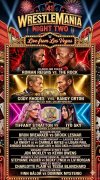
Last edited: